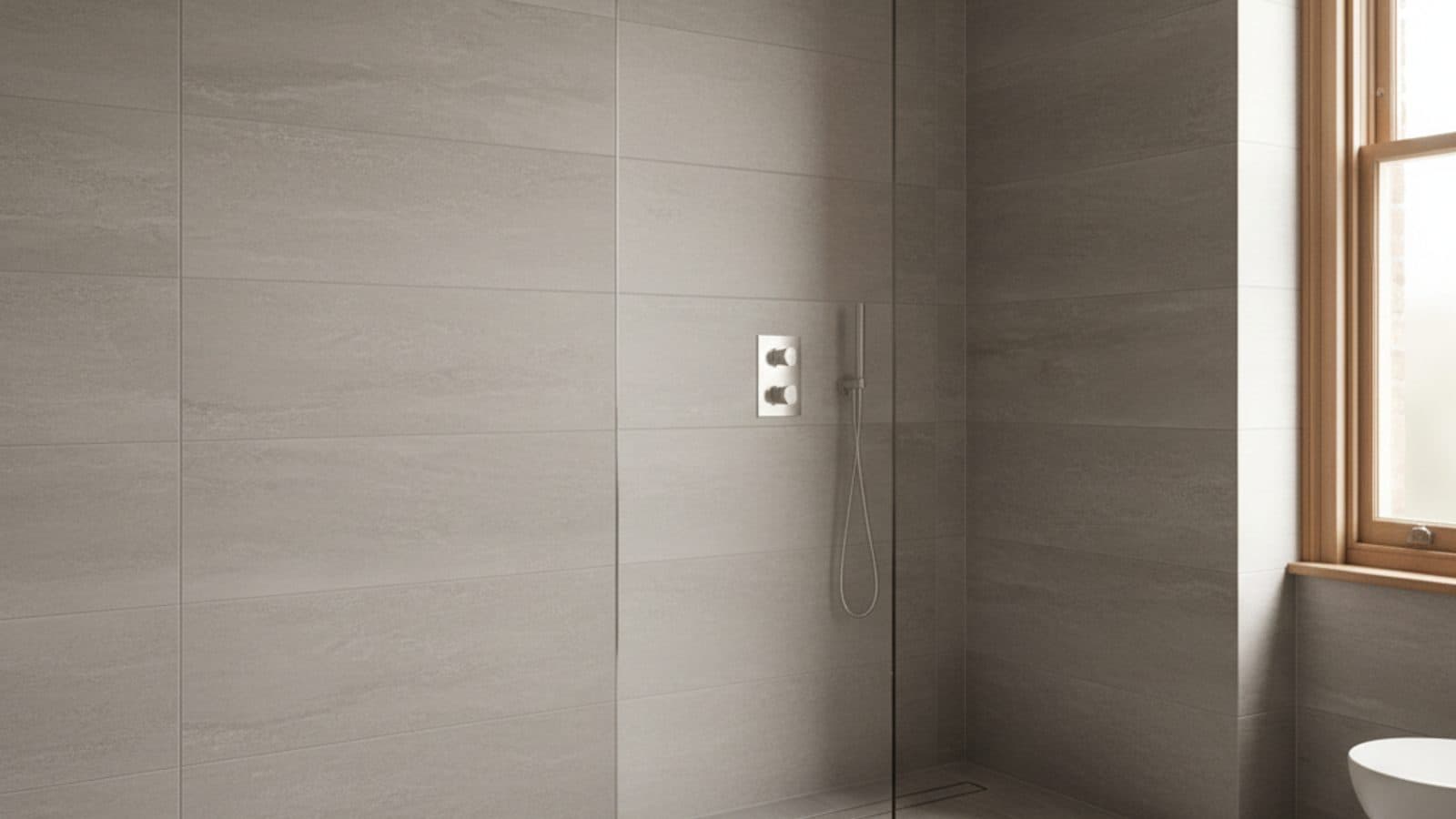
Wet Room Installation in South London
A fully tanked, level-access wet room built around the drain: gradient floor, membrane carried to ceiling height and cured, then tiled.
All Well Property Services provides professional wet room installation across South East London. I price every project individually after a free site visit, so you get a clear written quote with a week-by-week programme rather than a calculator estimate. All projects include a fixed-price contract, single project manager, and full Building Control sign-off. Call 020 3920 9617 for a free consultation.
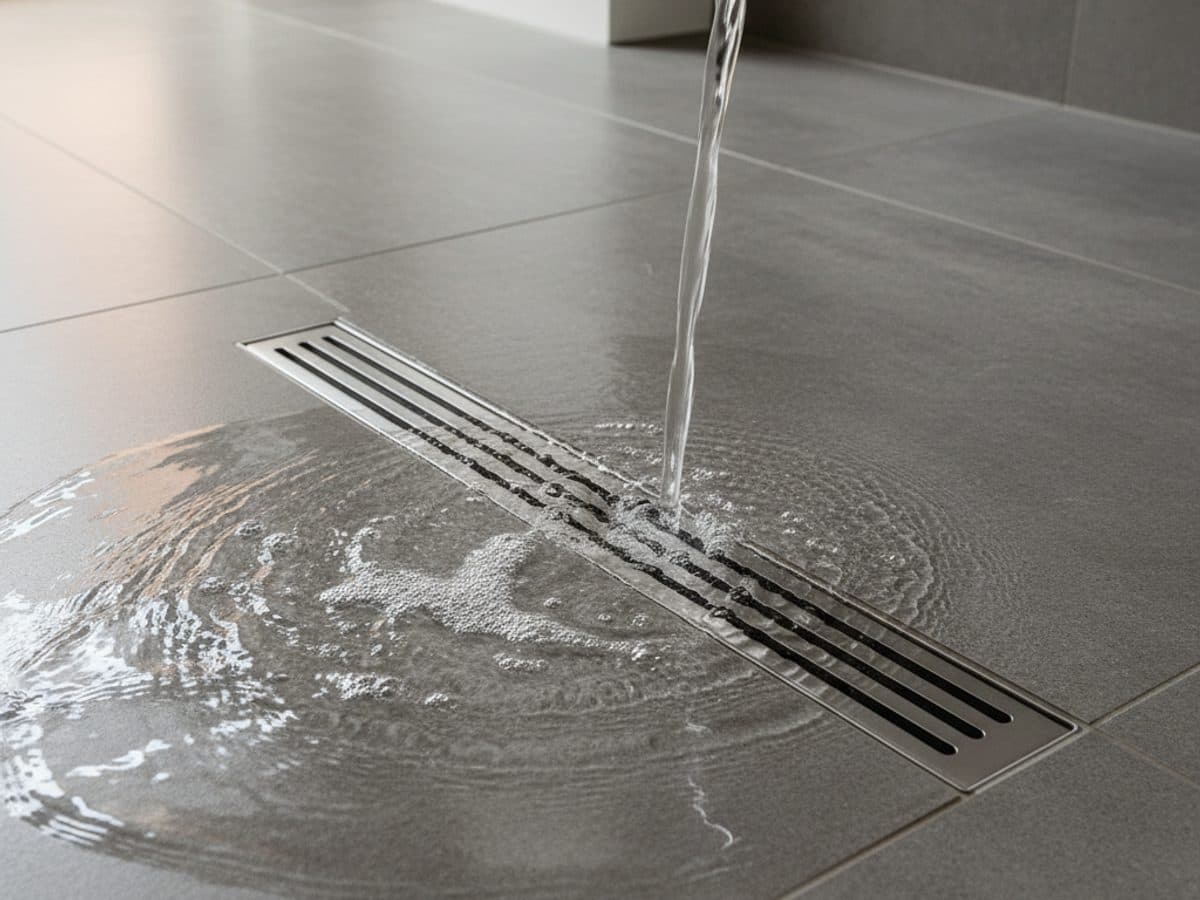
What We Offer
A fully tanked, level-access wet room built around the drain: gradient floor, membrane carried to ceiling height and cured, then tiled. Suited to small en-suites under 4 square metres across South East and South West London.
- ✓Fully tanked open shower floor with level-access drainage
- ✓Schluter or Mapei membrane carried to ceiling height and cured
- ✓Gradient and falls set into the floor build-up before tiling
- ✓Linear or point drains laid to the soil stack
- ✓Underfloor heating option run under the tanked floor
- ✓Suited to small en-suites under 4 square metres
- ✓Slip-resistant tiling on the shower floor
- ✓Timber and concrete floor build-ups both handled
- ✓Fully insured to £5 million
How I price wet rooms
I quote every job after a free site visit. The price covers materials, labour and a realistic programme, all fixed in writing before we start. No hidden costs, no mid-job surprises.
Book a free site visitWhat Affects the Cost?
- •Floor build-up needed for the gradient and falls to the drain (solid concrete vs suspended timber joists)
- •Tanking system specified and how far up the walls the membrane is carried
- •Drainage type and run to the existing soil stack
- •Underfloor heating included or left out
- •Tile size and material (large-format porcelain needs a flatter substrate)
- •Whether the room is a fresh build or a strip-out of a failed previous conversion
Wet room installation across South London
A wet room is the build most bathroom fitters quietly mark up, because the floor has to be opened, the fall has to be set and the whole room has to be tanked before any tile goes down. That waterproofing under the tiles is the work we lead on. Since 2020 I have converted en-suites and family bathrooms into level-access wet rooms across the SE and SW postcodes, and I am on site for the tanking, not just the quote. Done right it is the cleanest-looking bathroom in the house and it never leaks. Done cheap it stains the ceiling below within a year.
Level-access wet rooms
A level-access wet room installation removes the tray and the step, so the floor runs flat out of the doorway and falls away to the drain in the shower zone. That open floor is what makes the room feel larger and what makes it usable for anyone who cannot step over a tray. We set the gradient into the floor build-up so the fall is even across the wet area and the rest of the floor stays level, place the drain where the water naturally runs, and tile in a slip-resistant porcelain on the shower floor. The fall is small, around a centimetre over a metre, which is why it has to be set deliberately rather than guessed.
Wet room conversions in small en-suites
A wet room conversion suits a small en-suite under 4 square metres better than almost any other layout, because losing the shower tray and enclosure gives you back the only space a tight room has. We open the floor, build in the fall to a point or linear drain, tank the floor and walls, and screen the wet zone with a single sheet of glass rather than a full enclosure. On a short floor the gradient has to work over a short run, so the drain position and the falls are planned around exactly where you stand, not dropped in to a standard. That planning is the difference between a small room that drains clean and one that puddles.
Wet rooms on timber and concrete floors
A wet room behaves differently on a suspended timber floor than on solid concrete, and most South London en-suites sit upstairs on timber. Timber flexes, so we stiffen the deck with tile backer board, build the fall into that, and carry the tanking across as one bonded layer that moves with the floor without cracking. On a ground-floor or lower-ground concrete slab the fall is cut or screeded into the slab and the membrane bonded straight to it. Either way the tanking is continuous from floor to wall, because the substrate is what dictates the build-up, and the build-up is what dictates whether the room lasts.
Tanking, drainage and the build that lasts
A wet room is only as good as the layer you cannot see. We do the slow part, the fall and the tanking, before any tile makes the room look finished, because that is the part that decides whether it is still dry in ten years.
Why the tanking decides everything
The waterproofing under a wet room is the whole job, and it is the part a cheap conversion skips. We tank the floor and the walls with a Schluter or Mapei membrane, dress it into every internal corner and around the drain, carry it up the walls to ceiling height in the shower zone, and lap it into the floor as one continuous layer with no break for water to find. Then we let it cure before tiling. Tiles and grout shed water, they do not hold it back, so the membrane is what keeps the room and the floor below it dry. Skimp it and the leak is not a question of if, only when.
Gradient, drainage and underfloor heating
The floor has to fall to the drain across the whole wet area, so we set an even gradient into the build-up and run the waste to the existing soil stack, checking the run fits the joists or the slab before we commit to a drain position. A linear channel against a wall or a discreet point drain both work, and the choice follows the layout. Underfloor heating goes in as an option, laid over the tanked floor and under the tile, which warms the floor and helps the open wet area dry between uses. The heating is electric and certified to Part P, set into the same build-up that carries the fall.
Standards, certification and the credentials
We carry out the notifiable parts of a wet room to the regulations and leave you the certificates: the electrics and underfloor heating to Part P, the drainage and extraction to the standards that cover them. The tanking is done to the membrane manufacturer's system rather than left to guesswork. All Well Property Services operates from Unit 1 Limes Avenue, Anerley, London SE20 8QR. All Well Property Services is Gas Safe registered and NICEIC approved. All Well Property Services holds CHAS accreditation and FENSA registration, carries Public Liability insurance to £5 million, and is registered at Companies House under number 12721034, with 57 verified Google reviews averaging 4.9 out of 5 stars.
Free tools for planning your project
No email required. Get instant estimates and planning answers before you book a consultation.
Best Month
See historic rainfall and temperature for your postcode every month, plus the best window for external work. Live data from the Open-Meteo archive (Met Office and ECMWF).
Listed Check
Check whether your property is a listed building or sits inside a conservation area, and what that means for renovation work. Live data from Planning.data.gov.uk and Historic England.
Planning Risk
Traffic-light check of every planning restriction at your postcode: listed buildings, conservation areas, Article 4 directions, Tree Preservation Orders, flood zones. Live data from Planning.data.gov.uk.
EPC Upgrade
Find your home's current EPC rating and see what it would cost to upgrade to a B. Uses live data from the EPC Open Data register.
Recent Wet Rooms Projects
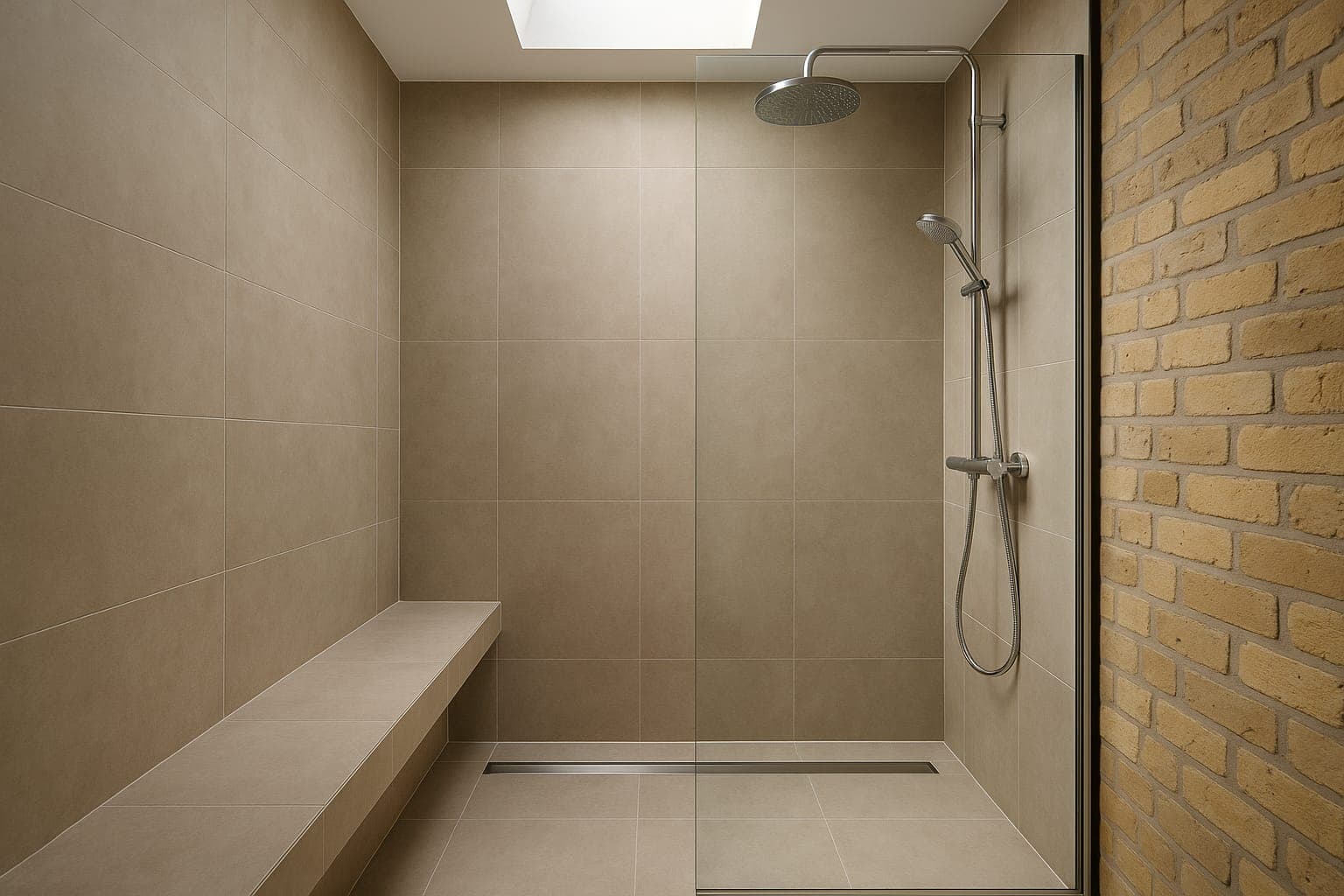
Wet Room Installation across South East London
What Our Customers Say
“So happy with the work done by Les and Richard!! We bought a house that needed new paint, cracks filled, a new bathroom fan and some mold removal and they did it all. The quality of the work is phenomenal; it looks like a brand new house. We’ll definitely be hiring them for our future projects!”

Brenna Bodine
6 months ago
“We've had a media wall put in place with fireplace. Richard was very professional and everything that I had got addressed fast. The medial wall looks great, would def recommend them”

Raluca Andra
a month ago
“A totally outstanding experience from Richard and his team. Les did an absolutely amazing job of turning around the much needed re decoration of my apartment at the end of a long tenancy, pulling out all the stops to deliver a first class job on a tight timeframe. The Electrician assigned also turned things around quickly and again to a high standard. Extremely professional and I don’t hesitate to recommend or use again in the future.”

Charlie Watson
2 months ago
Accredited & Certified
Frequently Asked Questions
- How long does a wet room last before it leaks?
- A wet room that has been tanked properly will run for the life of the bathroom without leaking. The ones that fail leak within a year or two, and they leak for the same reason almost every time: the tanking was skimped. Water in an open shower does not just hit the floor, it runs down the walls, sits in the corners and finds any gap in the waterproofing. So the membrane has to be a continuous layer, bonded at every joint, carried up the walls and lapped into the floor with no break. We use Schluter or Mapei systems, dress the membrane into the internal corners and around the drain, and let it cure before a single tile goes on. Tile and grout are not waterproof. The tanking underneath is. Get that layer right and the room outlasts the tiles.
- Is a wet room a good idea for a small en-suite?
- Yes, and a small en-suite is often the best room in the house for one. A wet room under 4 square metres reads larger because there is no shower tray, no enclosure and no step, just one open floor that drains away. That removes the visual clutter that makes a tight en-suite feel like a cupboard. The whole floor falls gently to the drain, so you lose no usable space to a tray, and a single sheet of glass is usually all the screening a small room needs to keep splash off the WC and basin. The catch with a small room is that the fall still has to work across a short distance, so the gradient is set carefully and the drain placed where the water naturally runs. On a tight floor that planning matters more, not less.
- Can I have a wet room on a timber floor upstairs?
- Yes. Most of the wet rooms we fit in South London go into upstairs en-suites on suspended timber floors, not ground-floor concrete. A timber floor flexes, and a flexing floor cracks rigid tanking and grout, so the build-up is the part that decides whether it lasts. We over-board the joists with a tile backer board fixed at proper centres to stiffen the deck, set the gradient into that build-up, then carry the tanking membrane across the floor and up the walls as one bonded layer. A recessed former or graded boards create the fall to the drain without dropping the finished floor below the doorway. Done this way a timber floor takes a wet room without movement showing through. The waste run has to fit between the joists, which we check at the site visit, because that one detail sets where the drain can go.
- Do wet rooms need building regulations or planning permission?
- Converting a bathroom or en-suite into a wet room does not need planning permission, because it is internal work that does not change the look of the house. Building regulations do apply to parts of it. Any new or altered electrics in the room, including underfloor heating, fall under Part P and have to be installed and certified to that standard. Drainage and ventilation are covered too: the room needs adequate extraction, and the waste has to discharge correctly to the existing soil stack. If we move the drain or add electric underfloor heating, that work is done to the regulations and certified. The tanking itself sits under good-practice standards rather than a regulation, but it is the part we treat as non-negotiable. We sort the notifiable parts as part of the job so you are left with the certificates, not the paperwork.
- What goes wrong with a DIY or cheap wet room conversion?
- Two things, almost always. The first is the fall. The floor has to slope to the drain across the whole wet area, and getting an even gradient into a build-up is fiddly, so a botched job ends up with water pooling away from the drain or sitting against a wall. The second, and worse, is the tanking. People tile over a painted-on waterproofer that was never lapped into the corners or taken high enough up the wall, and water tracks behind it into the floor and the room next door. By the time it shows as a stain on a ceiling below, the floor is already soaked. When we strip out a failed conversion it is nearly always one of those two faults. We set the fall before tiling and tank floor and walls as one continuous, cured membrane, which is the slow part most cheap jobs rush.
Related Services
Get a Free Wet Rooms Quote
Free site visit. No-obligation quote. We respond within 24 hours — usually the same day.
Book Free Consultation