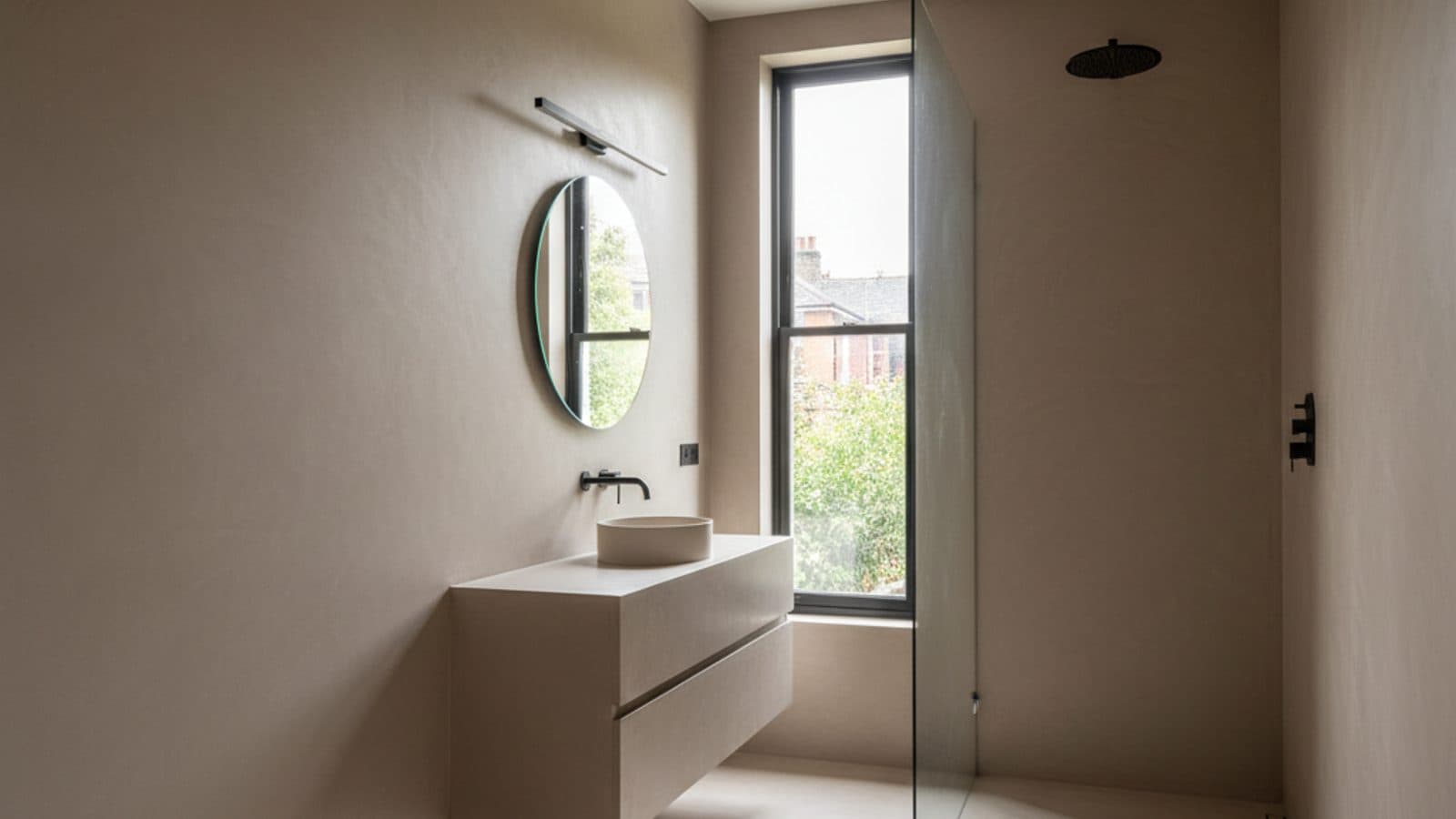
Microcement Bathrooms in South London
A microcement bathroom gives you one continuous polished cement surface across walls and floor, with no grout lines for mould to colonise.
All Well Property Services provides professional microcement bathrooms across South East London. I price every project individually after a free site visit, so you get a clear written quote with a week-by-week programme rather than a calculator estimate. All projects include a fixed-price contract, single project manager, and full Building Control sign-off. Call 020 3920 9617 for a free consultation.
What We Offer
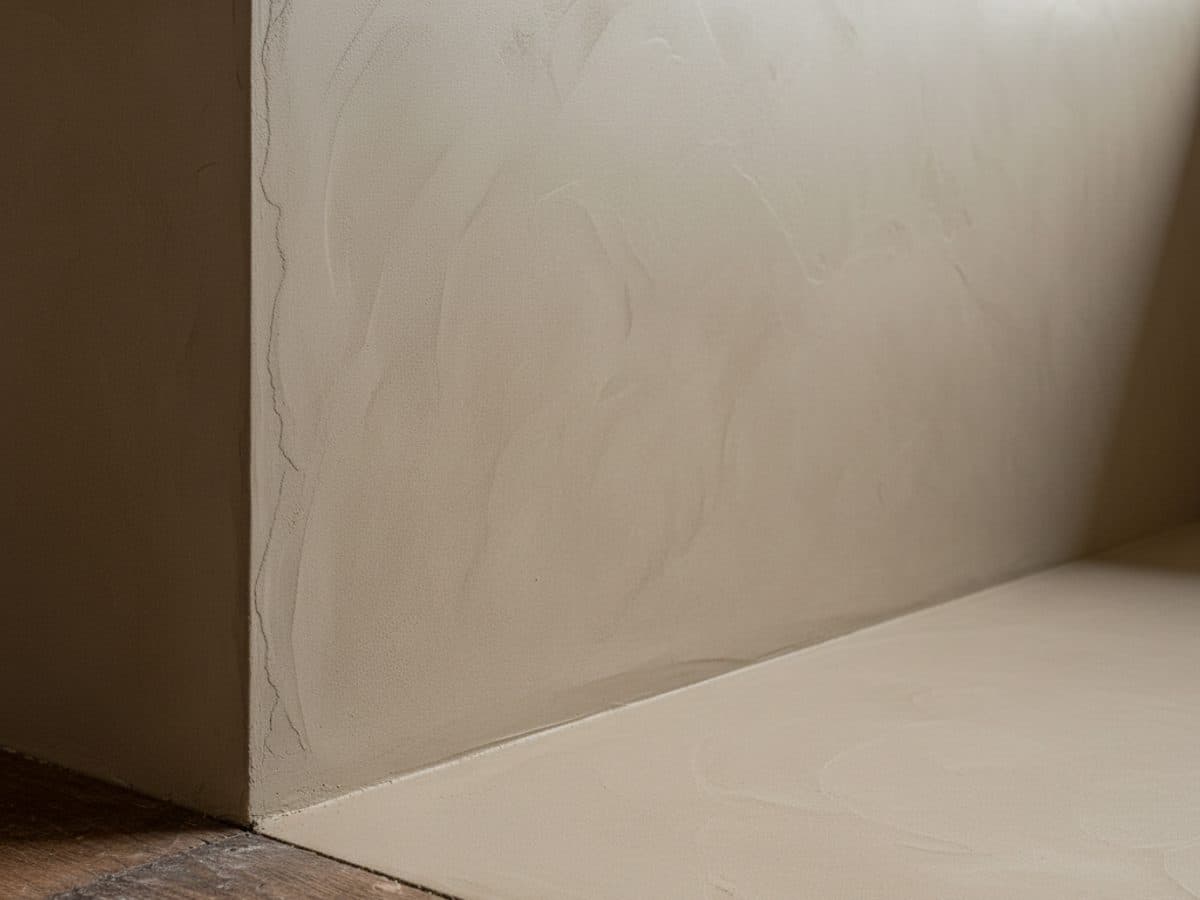
A microcement bathroom gives you one continuous polished cement surface across walls and floor, with no grout lines for mould to colonise. We apply it in thin trowelled layers over a full waterproof membrane, then seal it, across period and design-led homes in South London.
- ✓Continuous polished cement finish with no grout lines
- ✓Thin trowel-applied layers over walls, floors and shower zones
- ✓Full waterproof tanking membrane beneath the microcement
- ✓Applied over existing tiles or sound substrate where suitable
- ✓Two-coat polyurethane sealer in matt or satin
- ✓Topciment and Festfloor systems applied by our own team
- ✓Coved shower benches, niches and reveals in one continuous surface
- ✓Colour and texture sampled before the bathroom is committed
- ✓On-brand finish for period and design-led homes
How I price microcement bathrooms
I quote every job after a free site visit. The price covers materials, labour and a realistic programme, all fixed in writing before we start. No hidden costs, no mid-job surprises.
Book a free site visitWhat Affects the Cost?
- •Wall and floor area to be coated, and whether existing tiles stay or come off
- •Substrate condition and the prep needed to get a sound, flat base
- •Waterproof membrane specification across the shower zone and floor
- •Finish chosen: matt or satin sealer, and the colour and texture you want
- •Curved or detailed areas, such as shower benches, niches and reveals
- •Access and whether you only have the one bathroom in use during the work
Microcement bathrooms across South London
A microcement bathroom is the finish people ask for when they want a bathroom that looks made, not assembled out of tile sheets. Since 2020 I have fitted them across the SE and SW postcodes, from a compact en-suite to a full master bathroom, and the work I am proud of is the work underneath the finish. Microcement is unforgiving: it shows every shortcut in the substrate and every gap in the waterproofing, so the trowelled surface is only half the job. We keep the tanking, the prep and the application in our own wet-room team, because handing a continuous finish to a passing subcontractor is how you get cloud where you wanted calm and a leak where you wanted a wall.
Microcement shower walls and wet zones
Microcement shower walls are where the finish earns its keep and where it is most often botched. We lay a full waterproof membrane across the whole wet zone first, let it cure, then build the microcement up in thin layers over a reinforcing mesh so the surface moves as one piece. No grout lines means nothing to discolour and nothing for mould to colonise in the corner where the wall meets the tray. We cove the internal angles and form the niches and benches in the same continuous material, so the shower reads as one surface rather than a box of joints.
Microcement bathroom floors
A microcement bathroom floor runs unbroken under the vanity and out to the door, which is what makes a small London bathroom read larger than it is. On a floor we are stricter about the substrate than anywhere else, because foot traffic and movement test it daily. We check the screed or board is sound and flat, lay the membrane through to the drain with the correct fall in a wet room, then build the microcement up and seal it for grip. A continuous floor with no tile grid is the detail that ties the whole room together.
Microcement over existing tiles
Microcement over existing tiles is the route that keeps the build short and the skip away from the kerb. Because the layers are 2 to 3mm thick, sound tiling can stay in place: we tap-test for hollow areas, fill the grout lines flush, key and prime the glaze, then coat over the top. Where the old waterproofing behind a shower is doubtful, we take it back and re-tank rather than trust it. On a solid base this is the cleanest way to change the whole character of a bathroom without stripping it back to brick.
Microcement for period and design-led homes
A microcement bathroom is the premium, on-brand finish designers specify in period and design-led South London homes, because it is quiet. In a Victorian or Edwardian house the continuous surface flatters walls that are never quite square, where a tile grid would broadcast every run-off. We sample the colour and texture in the actual room light before committing, and we tend to use it with restraint, a feature wall or the shower enclosure, so it works alongside original cornicing and joinery rather than flattening it.
How we build and seal a microcement bathroom
A microcement bathroom is built in a strict sequence, and the order is not negotiable: waterproof first, coat second, seal last. Skip a stage to save a day and the finish tells on you within months. We do the slow parts properly, and the surface you see at handover is the result of the layers you do not.
Substrate prep and the waterproof membrane
Everything starts below the finish. We make the substrate sound and flat, stabilise anything friable, and lay a full waterproof membrane across the shower zone, the floor and the splash areas, then let it cure before any cement goes near it. The membrane is the waterproofing. The microcement is the surface. Keeping those two roles clear in our heads, and in the build, is what stops a leak ending up behind a wall you cannot see into.
Building up the layers and sealing the finish
Microcement goes on in thin trowelled layers, base coats over a reinforcing mesh that spreads movement, then finer finish coats worked by hand to the colour and texture you signed off. Once it has cured we seal it with a two-coat polyurethane sealer in matt or satin, which is what makes the surface itself water-resistant and wipeable. The sealer is the wearing layer, so we hand over what we used and a maintenance note, and the wet zones want resealing periodically over the years. We work with Topciment and Festfloor systems, applied by our own team.
Standards, sign-off and the All Well credentials
Any electrics in the bathroom, such as underfloor heating, extract or shower-zone lighting, are certified by our NICEIC-approved electrician to BS 7671 Part 7-701, the special-locations rules that govern fittings near a bath or shower, and Building Control sign-off is included where the job needs it. All Well Property Services operates from Unit 1 Limes Avenue, Anerley, London SE20 8QR. All Well Property Services is NICEIC approved and CHAS accredited. All Well Property Services carries Public Liability insurance to £5 million and is registered at Companies House under number 12721034, with 57 verified Google reviews averaging 4.9 out of 5 stars.
Free tools for planning your project
No email required. Get instant estimates and planning answers before you book a consultation.
Best Month
See historic rainfall and temperature for your postcode every month, plus the best window for external work. Live data from the Open-Meteo archive (Met Office and ECMWF).
Listed Check
Check whether your property is a listed building or sits inside a conservation area, and what that means for renovation work. Live data from Planning.data.gov.uk and Historic England.
Planning Risk
Traffic-light check of every planning restriction at your postcode: listed buildings, conservation areas, Article 4 directions, Tree Preservation Orders, flood zones. Live data from Planning.data.gov.uk.
EPC Upgrade
Find your home's current EPC rating and see what it would cost to upgrade to a B. Uses live data from the EPC Open Data register.
Recent Microcement Bathrooms Projects
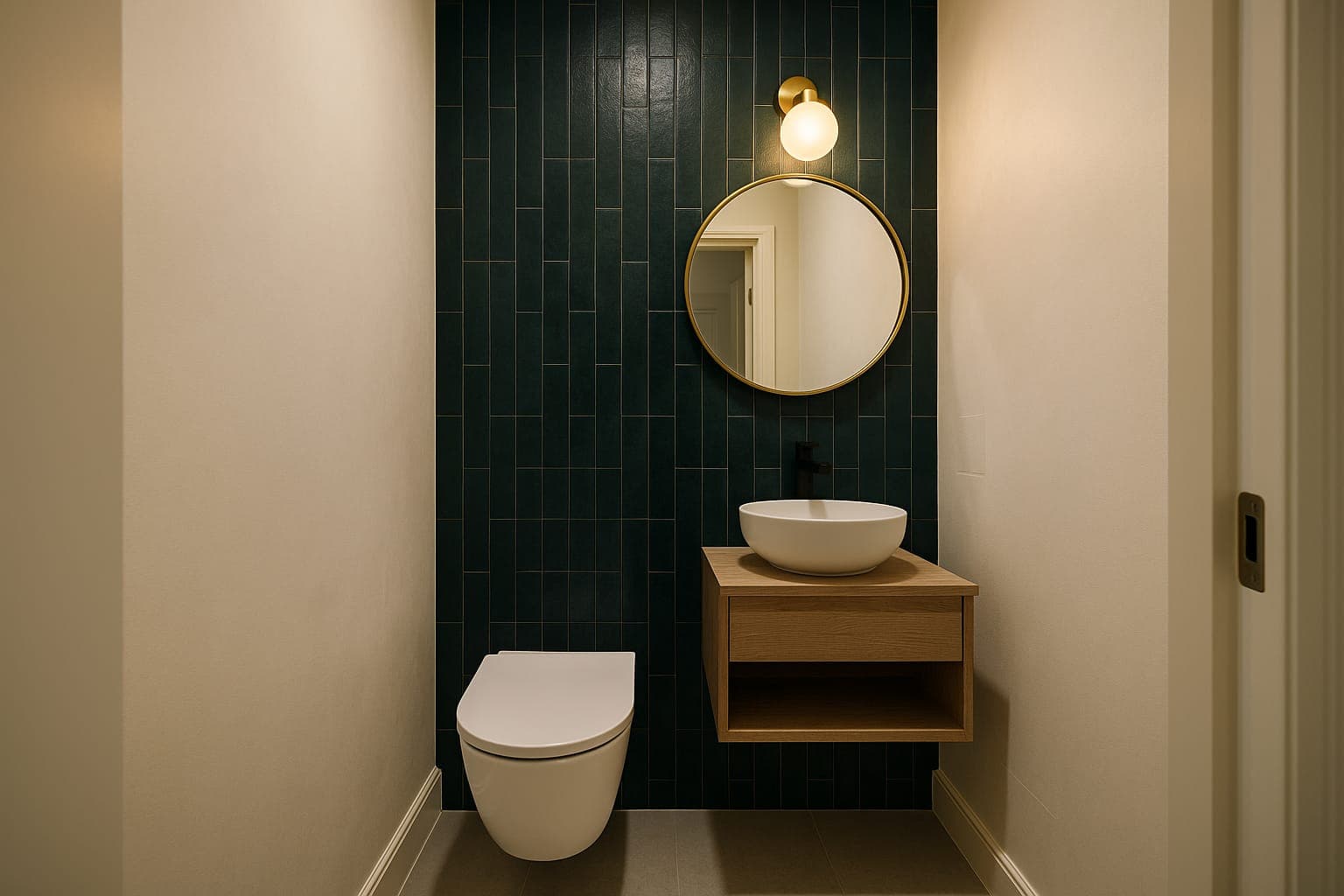
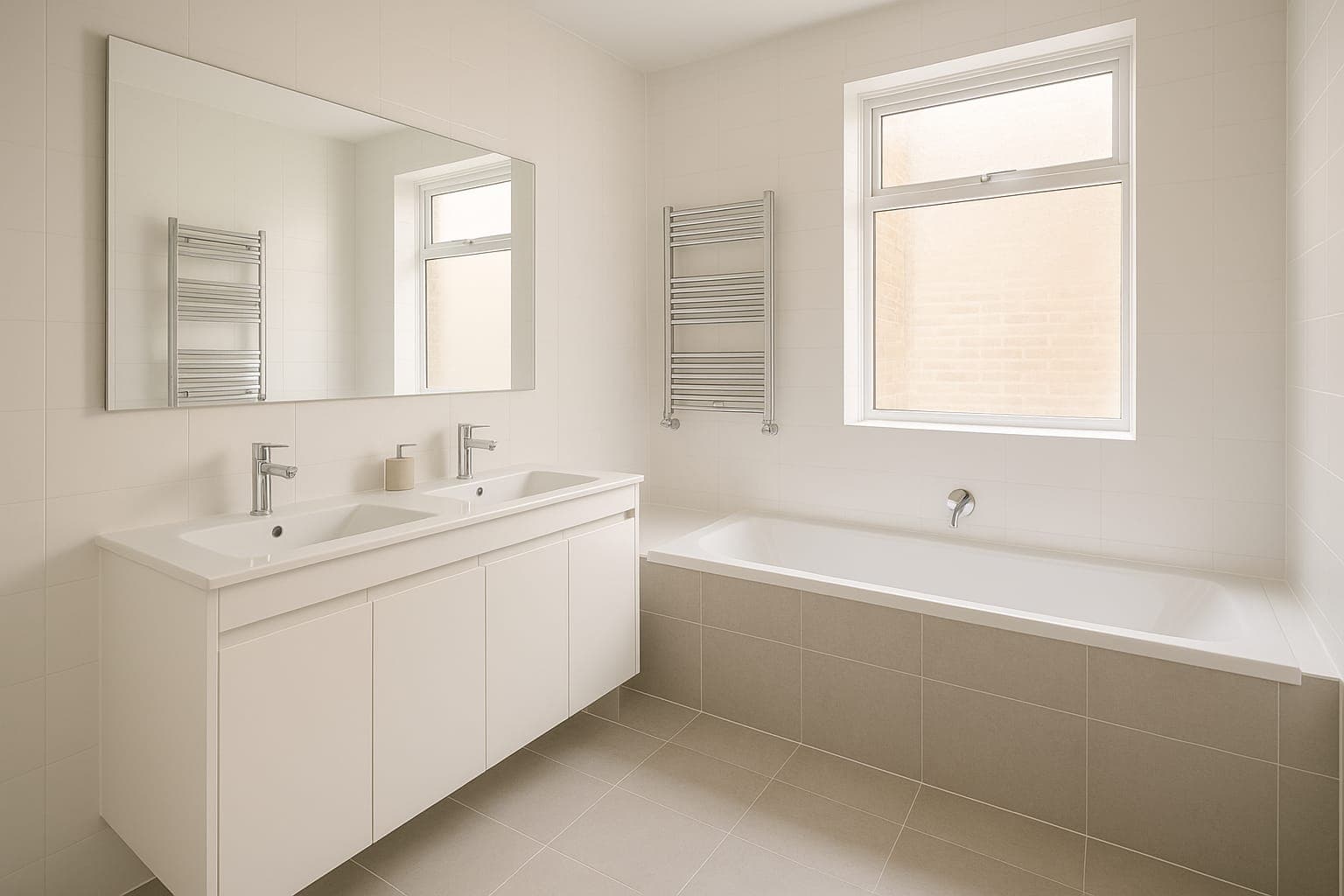
Microcement Bathrooms across South East London
What Our Customers Say
“So happy with the work done by Les and Richard!! We bought a house that needed new paint, cracks filled, a new bathroom fan and some mold removal and they did it all. The quality of the work is phenomenal; it looks like a brand new house. We’ll definitely be hiring them for our future projects!”

Brenna Bodine
6 months ago
“We've had a media wall put in place with fireplace. Richard was very professional and everything that I had got addressed fast. The medial wall looks great, would def recommend them”

Raluca Andra
a month ago
“A totally outstanding experience from Richard and his team. Les did an absolutely amazing job of turning around the much needed re decoration of my apartment at the end of a long tenancy, pulling out all the stops to deliver a first class job on a tight timeframe. The Electrician assigned also turned things around quickly and again to a high standard. Extremely professional and I don’t hesitate to recommend or use again in the future.”

Charlie Watson
2 months ago
Accredited & Certified
Frequently Asked Questions
- Is a microcement bathroom actually waterproof?
- The microcement itself is not what keeps water out. The waterproofing is the membrane underneath it. This is the point most people misunderstand, and it is where cheap installs fail. We lay a full tanking system across the shower zone, the floor and any splash areas first, and let it cure, exactly as we would under tiles. The microcement goes on top of that cured membrane in thin trowelled layers, and once it is built up we seal it with a two-coat polyurethane sealer that makes the surface itself water-resistant and wipeable. So you have two lines of defence: the membrane stops water reaching the substrate, and the sealer stops the cement drinking it. Applied that way a microcement bathroom holds up in daily-use showers. Applied straight onto plasterboard with no membrane, which is what some installers do to save a day, it will let go within a season.
- Can microcement go over existing tiles?
- Often, yes, and it is one of the reasons people choose it. Because the layers are only 2 to 3mm thick, microcement can go over sound, well-bonded tiles without the mess and disruption of a full strip-out. We check the tiles are solid first, tapping for hollow or drummy areas, then key the surface, fill the grout lines flush and prime so the cement has something to grip. If the tiles are loose, cracked or moving, that has to be sorted before anything goes on, because microcement follows the surface beneath it: a problem under the coating becomes a problem in the coating. Where the old waterproofing is suspect in a shower, we take it back and re-tank rather than trust what is there. On a sound base, going over tiles keeps the build shorter and the dust down.
- Does microcement crack or show wear in a bathroom?
- Microcement is a cementitious finish, so it moves with the building and is laid to absorb that. We apply it over a fibreglass mesh in the body coats, which spreads any movement across the surface rather than letting it concentrate into a crack. On a stable, properly prepared substrate it stays sound for years. The one honest caveat is that this is a hand-trowelled finish, so it carries subtle cloud and tonal shift across the surface. That is the look people want, but if you are after flat, factory-uniform colour, large-format porcelain is the better pick and I will tell you so on the site visit. The sealer is the wearing layer. In a heavily used shower it wants reapplying every few years, which is a wipe-down job, not a re-coat of the whole room.
- How do you maintain a microcement bathroom?
- Day to day it is easier than tiling, because there are no grout lines to scrub and discolour. You clean it with a pH-neutral cleaner and a soft cloth or mop, the same as a sealed stone floor. The things to avoid are bleach, strong acids and abrasive pads, because they attack the polyurethane sealer rather than the dirt. In the shower, squeegeeing the walls after use keeps limescale from building on the sealer, which matters in hard-water South London. The sealer is what protects the cement, so the long-term job is keeping that sealer intact. We hand over the product details and a maintenance note at the end so you know exactly what is on your walls. Resealing the wet zones periodically keeps it performing, and we can come back and do it.
- Does a microcement bathroom suit a period home?
- It can sit beautifully in a period home, but the detailing decides whether it reads as considered or as a slab of grey. In a Victorian or Edwardian house we tend to use it on a feature wall, a shower enclosure or the floor rather than wrapping every surface, so it works with original cornicing and joinery instead of fighting them. The continuous surface flatters the awkward, out-of-square walls these houses always have, because there is no grid of tile joints to expose where the wall runs off true. The colour and texture get sampled in the actual room light before we commit, since a sample that looks warm in a showroom can read cold under a north-facing sash window. Done with restraint, microcement is the on-brand finish that designers specify in these homes precisely because it is quiet.
Related Services
Get a Free Microcement Bathrooms Quote
Free site visit. No-obligation quote. We respond within 24 hours — usually the same day.
Book Free Consultation