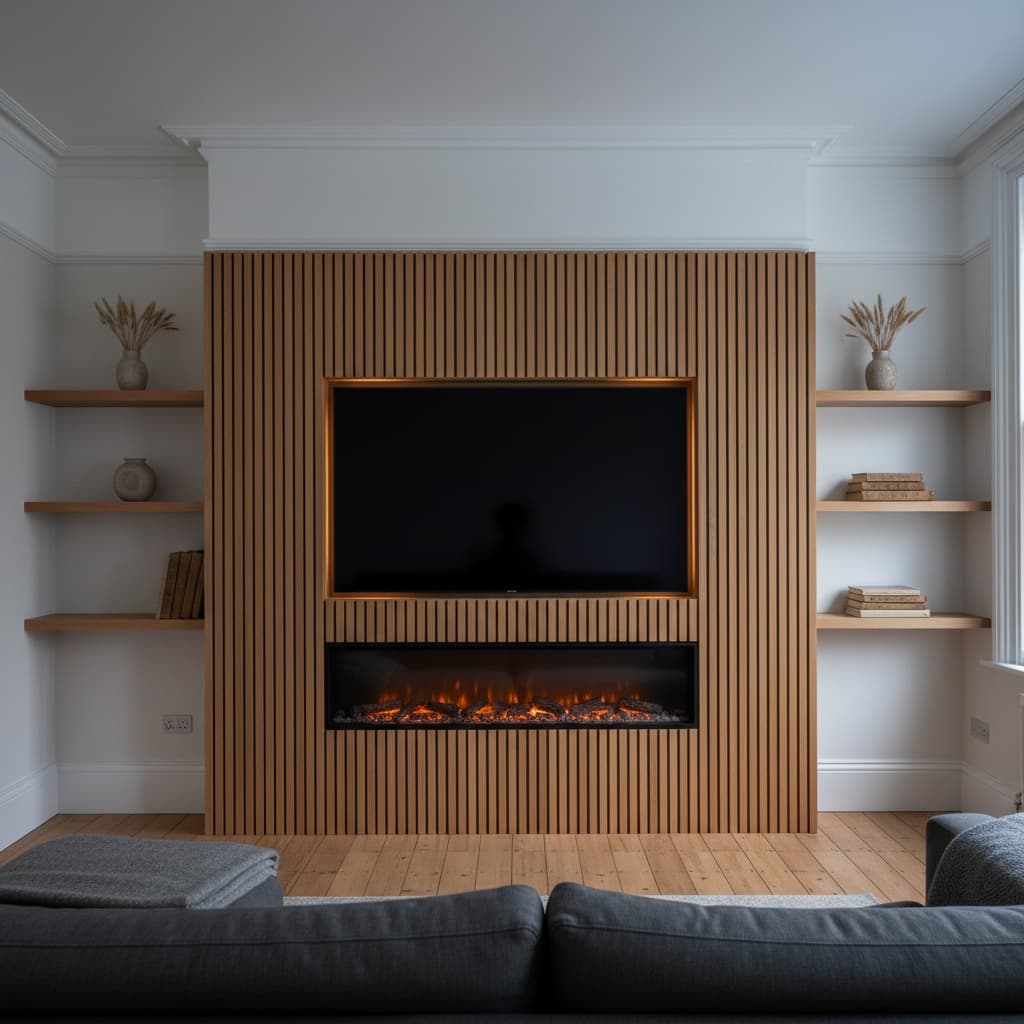
Media Wall Installers in Greenwich (SE10, SE3)
Professional media wall installers in Greenwich, South East London.
Why Choose All Well for Media Wall Installation in Greenwich?
Greenwich asks more design questions of a media wall than anywhere else in South East London. The Georgian terraces of West Greenwich and the streets around the park are some of the oldest domestic buildings we work near, panelled rooms, original fireplaces, listed facades, and a modern TV wall has to be argued into that company carefully. At the other end of the borough, the peninsula's new-build apartments are the opposite brief entirely: no period fabric, metal-stud walls, leasehold consent. Between them sit the Victorian semis of SE3 and SE10 that take the classic build.
Every project comes with a fixed-price contract, single project manager, and full certification including Building Control sign-off.
Media Wall Installation for Greenwich Properties
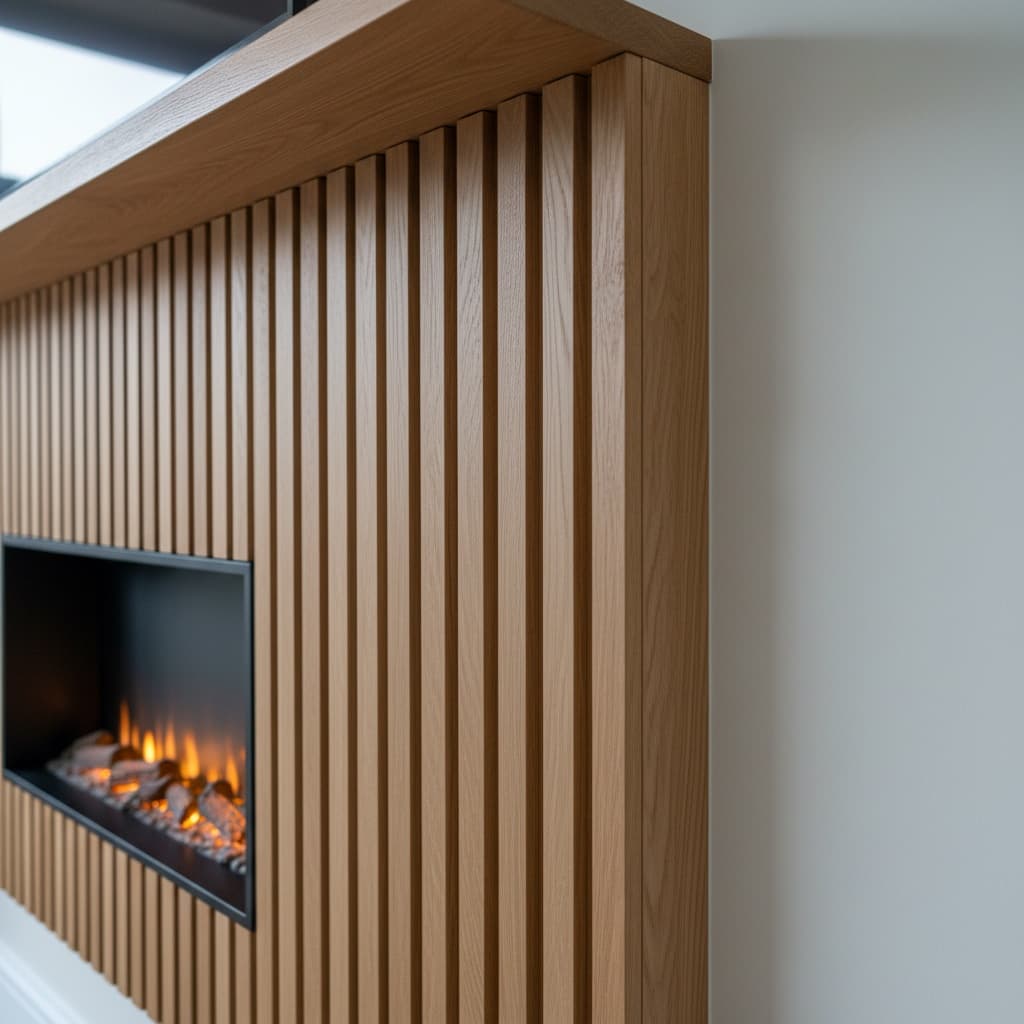
Greenwich is known for its georgian terraces, victorian semis, riverside apartments. Our media wall installation services are tailored to these property types, ensuring results that complement the character of your home.
Postcodes we cover: SE10, SE3
Media Walls Tip for Greenwich Homeowners
Much of West Greenwich and the streets around the park sit within conservation areas, and a meaningful number of the Georgian houses are statutorily listed. Conservation area status controls external appearance only, an internal media wall needs no consent. Listing is the one that matters: in a listed Georgian house, internal alterations that affect historic fabric (fixing through original panelling, framing over an original fireplace) need Listed Building Consent from the Royal Borough, and doing it without consent is a criminal offence, not a paperwork slip. We check the National Heritage List at every Greenwich survey before a single design line is drawn.
Media wall designs for Greenwich's three housing types
Georgian terraces, Victorian semis, and peninsula apartments each call for a different build. Here's how we approach each one across SE10 and SE3.
Georgian and listed-house builds in West Greenwich
Georgian rooms in West Greenwich and the streets around the park, high ceilings, shuttered sashes, sometimes original panelling, get a reversible, free-standing insertion wherever historic fabric is present. The frame touches the original wall as lightly as possible, scribes around (never through) panelling and cornice, and is finished in colours drawn from the room. In listed houses, we obtain Listed Building Consent first where the work affects historic fabric.
Victorian semi and peninsula apartment builds across SE10 and SE3
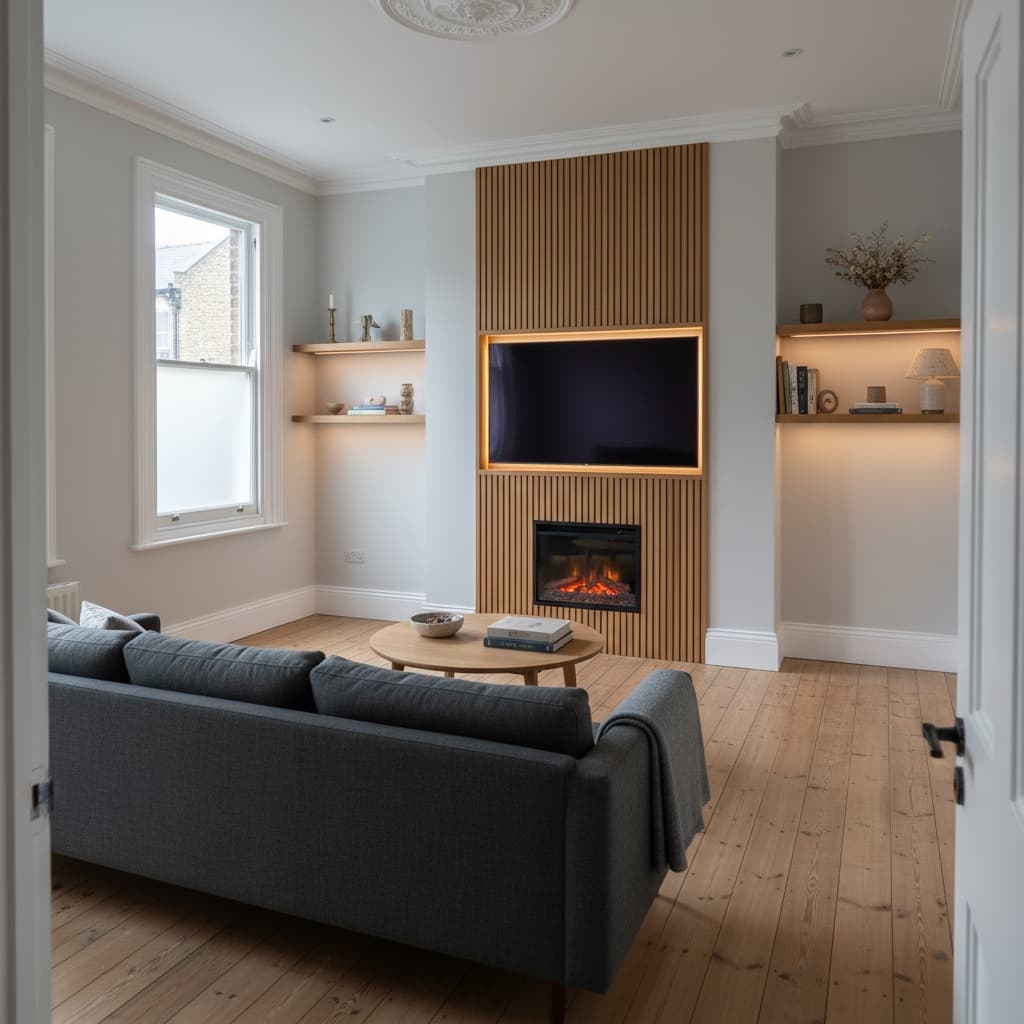
Victorian semis across SE10 and SE3 suit the standard configuration: chimney breast recess, electric fire, alcove joinery, sized for 65 to 75 inch screens and full-height cabinetry. Peninsula towers and mid-rise blocks are a different brief, metal-stud partitions and concrete frames mean a self-supporting floor-to-ceiling structure, slim-profiled at 120 to 150mm, with an electric fire (no flue needed) and every cable inside the new framing. For leasehold properties, we prepare the managing agent's pack as standard.
Fitting a modern media wall inside a 200-year-old Greenwich room
The Georgian question, can a media wall belong in a room that old, has a straight answer: yes, if the new work defers to the old. That means the original fireplace stays the centrepiece, and the design argues its way in carefully.
Reversibility and proportion as design standards in listed Georgian houses
Free-standing frames, fixings into modern plaster patches rather than historic timber, no chasing into original walls, the test is whether the room could be returned to its pre-build state without trace. That standard is mandatory in listed houses (where the Royal Borough's consent process applies) and good practice in the rest. Georgian rooms run tall: joinery carried to dado or panel lines, shelf thicknesses matched to glazing bars and panel mouldings, colour pulled from the room's palette. A flat matt finish and warm-white lighting keep the insertion quiet so the room reads Georgian first, wired second.
Consents, programme, and process for Greenwich media wall projects
Greenwich builds run from our Anerley workshop, 25 to 30 minutes away. Most take one to two weeks on site: framing and first-fix electrics, fire-rated boarding and skim, fire and screen installation, workshop joinery, decoration, and commissioning.
Planning consent and leasehold approval in the Royal Borough of Greenwich
The consent layer depends on the property type. Listed houses: we check the listing entry at survey stage, and where the design touches historic fabric we prepare the Listed Building Consent application, typically an 8 to 12 week determination by the Royal Borough of Greenwich, heritage statement included. Conservation-area-but-not-listed properties in West Greenwich need no consent for internal work. Peninsula apartments require a freeholder consent pack (spec, NICEIC details, £5m insurance, block working hours), allow three to four weeks. The fixed price, confirmed after a free site visit, covers framing, certified electrics, boarding and skim, fire and screen supply, joinery, lighting, decoration, waste, and the 2-year warranty, with consent applications itemised separately so the scope of the paperwork is clear.
Media Walls in Greenwich: What's Included
How I price media walls in Greenwich
I price every media walls job in Greenwichafter I’ve seen it. No two properties are the same, so a number here would only mislead you. What you get instead is a fixed-price contract, a week-by-week programme, and no costs that turn up later.
Get a fixed quoteWhat Our Customers Say
“All Well managed our project from start to finish. The fixed-price contract meant no surprises, and the result is stunning.”
Verified Customer
Greenwich
“Professional team, clear communication throughout. They handled everything including Building Control sign-off.”
Verified Customer
Greenwich
Frequently Asked Questions
- Our Greenwich house is listed — can we have a media wall at all?
- Usually yes, designed and consented properly. Listing protects historic fabric, not modern convenience, the question is whether the build affects that fabric. A free-standing media wall that braces floor-to-ceiling, touches original walls only with light reversible fixings, and covers no original features often needs no consent at all, though we confirm with the conservation officer rather than assume. Anything that fixes through panelling, frames over an original fireplace, or alters historic plaster needs Listed Building Consent from the Royal Borough first, an 8 to 12 week process we prepare and submit, heritage statement included. The one thing never worth doing is proceeding without consent: unauthorised works to a listed building are a criminal offence and surface at every subsequent sale.
- Should the TV go over the original Georgian fireplace?
- Almost never, and not only for heritage reasons. Georgian fireplaces sit low with tall overmantels, a screen above one ends up at neck-craning height, and fixing into the chimney breast risks the original surround and any historic plaster. The better Georgian answer is two focal points: the fireplace keeps the hearth wall, and the media wall takes a secondary wall, often the alcove side or the room's rear wall, with the seating arranged to address both. The screen sits at correct eye level, the original room reads intact, and nothing historic is touched. Where a room genuinely offers no second wall, we design joinery beside the chimney breast that holds the screen at proper height while leaving the surround fully visible.
- What works on the peninsula's new-build walls?
- A self-supporting frame, the standard answer to metal-stud partitions that can't carry a loaded wall and concrete frames that shouldn't be drilled. The structure braces between floor and ceiling, carries the screen, electric fire, and joinery entirely on its own legs, and takes only light restraint fixings. It finishes at 120 to 150mm deep, so a peninsula living room keeps its floor area, and it removes cleanly if the lease ever demands reinstatement. The electric fire passes where nothing else would: no flue, no gas, an appliance on a certified spur. Two practicalities for the towers: the freeholder consent pack comes first (three to four weeks), and acoustic insulation goes in every stud bay so the TV doesn't reach the neighbours.
- We want the tech without the room looking technical — how hidden can it all be?
- Completely, if it's planned at first fix. The screen recesses flush with the wall face; the fire is a glass line with no surround hardware; the soundbar sits in a shadow recess with its power and HDMI run behind the plaster; in-wall speakers vanish entirely under a skim coat with acoustically transparent grilles painted to match; the AV kit, router, and LED drivers live in a ventilated joinery cabinet behind a push-catch door; and the lighting runs scenes from a phone or voice rather than a bank of switches. Hardwired ethernet kills the visible Wi-Fi extender. In a Georgian or panelled room we go one step quieter: matt finishes throughout, warm-white light only, and the joinery detailed to the room's existing mouldings so the wall reads as furniture, not equipment.
All Well has completed 100+ projects across 25 London boroughs since 2020. We are NICEIC approved for electrical work, FENSA registered for glazing, and CHAS certified for site safety, with Public Liability insurance to £5 million. 57+ Google reviews average 4.9 stars. All Well Property Services® is a UK registered trademark, Companies House no. 12721034, operating from Unit 1 Limes Avenue, Anerley SE20 8QR.
Get a Free Quote for Your Greenwich Media Walls
Fixed-price quote, no obligation. Call us or fill out our form.