Media Wall Installers in Dulwich (SE21, SE22)
Professional media wall installers in Dulwich, South East London.
Why Choose All Well for Media Wall Installation in Dulwich?
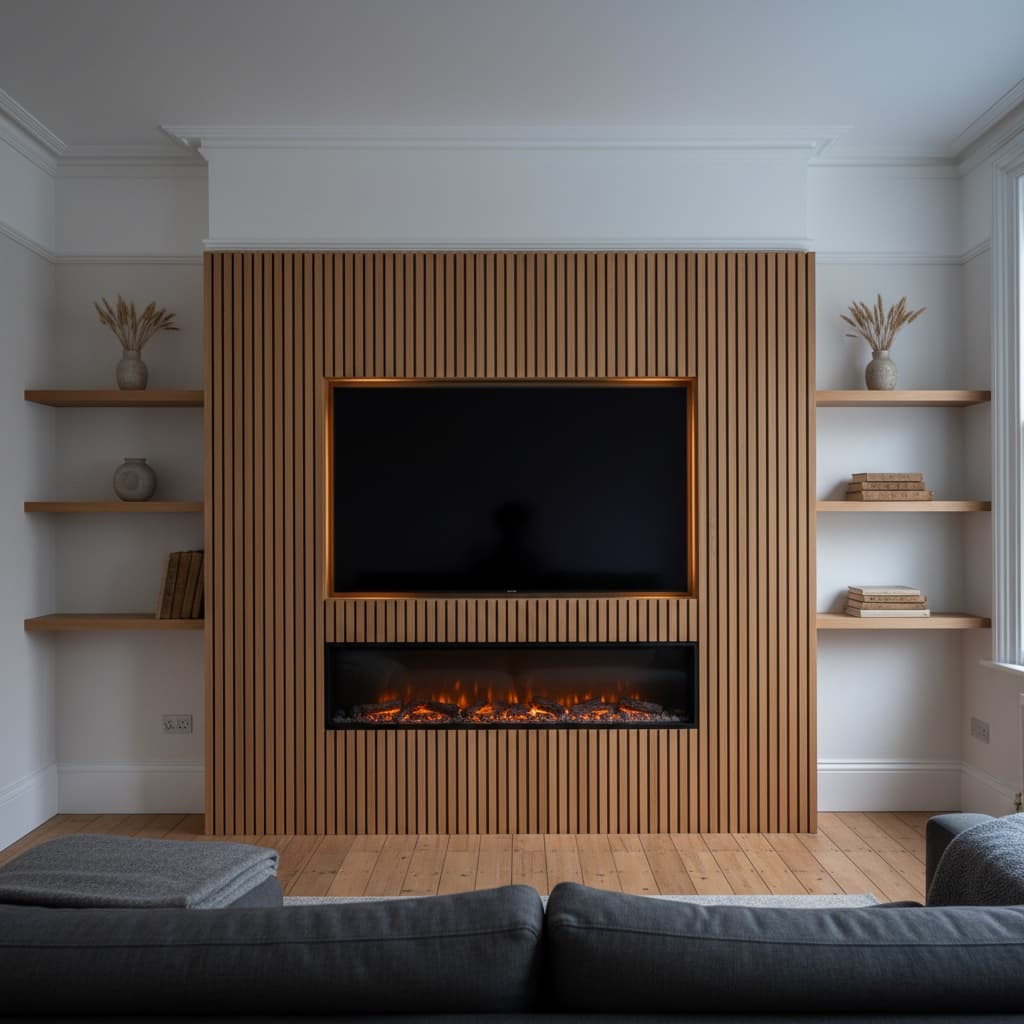
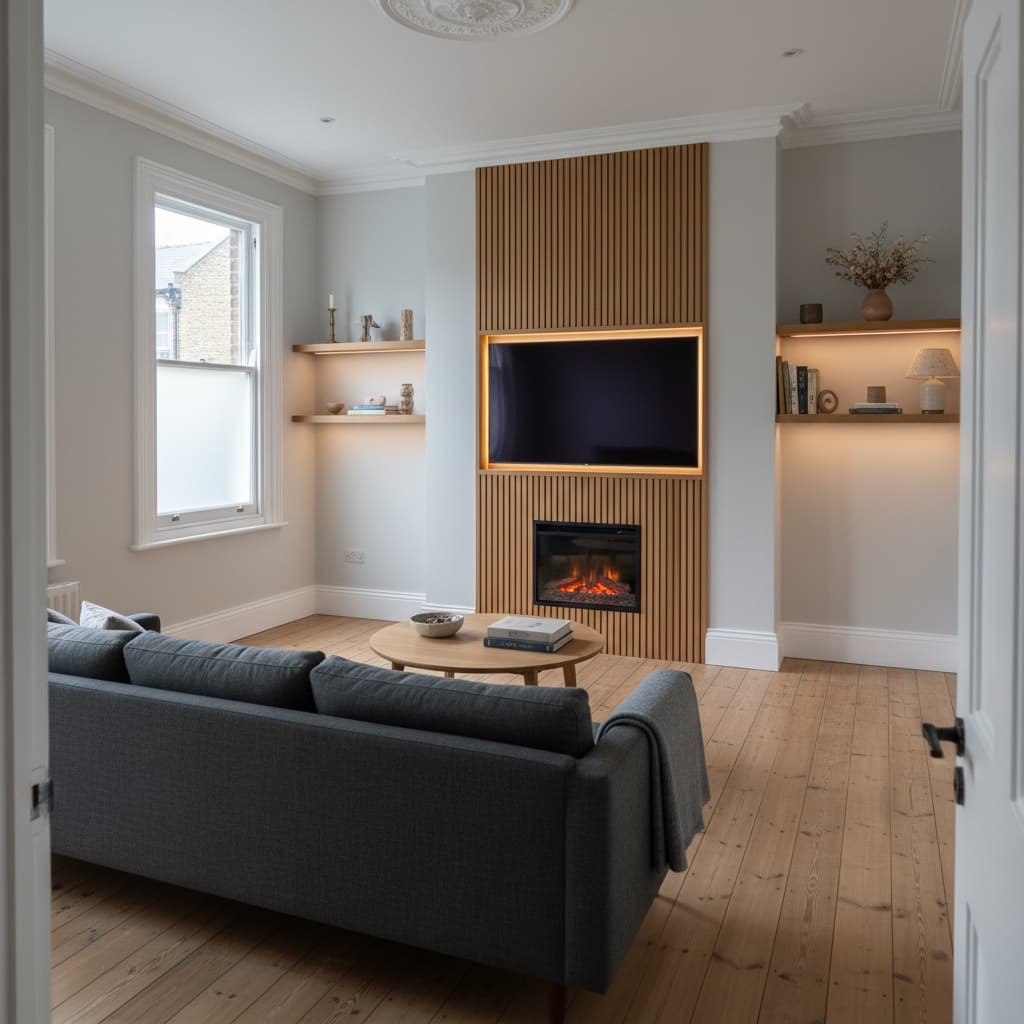
Dulwich is one of the areas where we build the most media walls. The Victorian terraces along Lordship Lane, North Cross Road, and the streets towards Dulwich Village have wide front sitting rooms with original chimney breasts that fit a media wall perfectly — the chimney breast gives the depth you need for the TV and fireplace recess without losing floor space. East Dulwich households tend to be design-conscious, with Farrow & Ball walls, oak floors, and restored cornicing, so the media wall has to look like it belongs in the period. Most projects we do here use slatted oak cladding or marble-effect surrounds.
Every project comes with a fixed-price contract, single project manager, and full certification including Building Control sign-off.
Media Wall Installation for Dulwich Properties
Dulwich is known for its victorian villas, edwardian detached, conservation areas. Our media wall installation services are tailored to these property types, ensuring results that complement the character of your home.
Postcodes we cover: SE21, SE22, SE24
Media Walls Tip for Dulwich Homeowners
Dulwich Village (SE21) is a conservation area that triggers extra Listed Building Consent considerations for many of the larger homes. Media walls are internal and don't require planning, but if you live in a listed building (several on the Village and around Court Lane), any work that touches original features — including framing over an original Victorian fireplace surround — needs Listed Building Consent. We check the property's listing status at the survey and handle the consent application as part of the project if required.
Media wall types we build most in SE21 and SE22
Three patterns cover the majority of our Dulwich work, driven by the housing stock rather than trend.
Victorian chimney-breast media walls in East Dulwich
The most common project. The Victorian terraces off Lordship Lane and around Goose Green have a single front sitting room with an intact chimney breast on one wall. We frame forward of the breast (it sits hidden behind), recess the TV and electric fireplace into the centre, and either run open shelves either side or use the alcoves for full-height bespoke joinery. The result reads as a deliberate Victorian feature, finished in slatted oak cladding or painted plaster; build time 1–2 weeks. For the larger Edwardian houses around Court Lane and the higher ground in SE21 — often with two chimney breasts in a knocked-through double reception — we build coordinating walls: the front wall takes the TV feature, the back wall becomes a complementary shelving and storage piece without a screen. Materials coordinate so both rooms read as one project; build time 2–3 weeks.
Open-plan snug media walls, SE22
East Dulwich families who've extended the rear often retain a small TV snug isolated from the kitchen-diner-living area. That's the right space for a wall-to-wall media wall — no chimney breast, just a clean flat wall with the feature built across the full width. We do these in continuous flush walnut veneer or matte black with a fireplace recess. Simpler to build than the chimney-breast configuration; build time 1–2 weeks.
Design priorities for Dulwich period homes
Three Dulwich-specific factors shape how we approach every build here — none of them apply in the same way elsewhere in South East London.
Working with original cornicing, skirting, and fireplace surrounds
Dulwich homeowners care about original features — cornicing, ceiling roses, deep skirting boards, panelled doors, fireplace surrounds. A media wall here can't simply ignore them. We design the new wall in dialogue with what's already there: the cornicing is painted to match, new floating shelves are proportioned to the existing skirting depth, and the colour palette draws from the room rather than competing with it. Most projects specify Farrow & Ball or Little Greene — common picks are Down Pipe for the central panel, Hague Blue for a more dramatic feature, or Wimborne White against original cornicing. We carry trade accounts with both brands and spray-finish in our workshop for a cleaner result than brushing on-site.
Listed buildings and the SE21 conservation area
Dulwich Village (SE21) is a conservation area, and several properties on the Village, around Court Lane, and on College Road are individually listed. Internal alterations to listed buildings — including framing over an original fireplace — need Listed Building Consent through Southwark Council. The application typically takes 8–12 weeks; we coordinate it as part of the project, including the heritage statement, quoted separately at survey. For non-listed properties in the conservation area, the media wall is internal works with no consent required, but we apply a more careful design review so the new wall sits comfortably with the period character around it.
How a Dulwich media wall project runs, start to finish
Our workshop is 10–15 minutes from any SE21, SE22, or SE24 property. Joinery components — slatted oak panels, shelving, drawer fronts — are pre-built there where cuts are cleaner and spray-paint finishes are dust-free, then assembled on-site over one to two days at the end of the build.
Build sequence and what's included in the fixed price
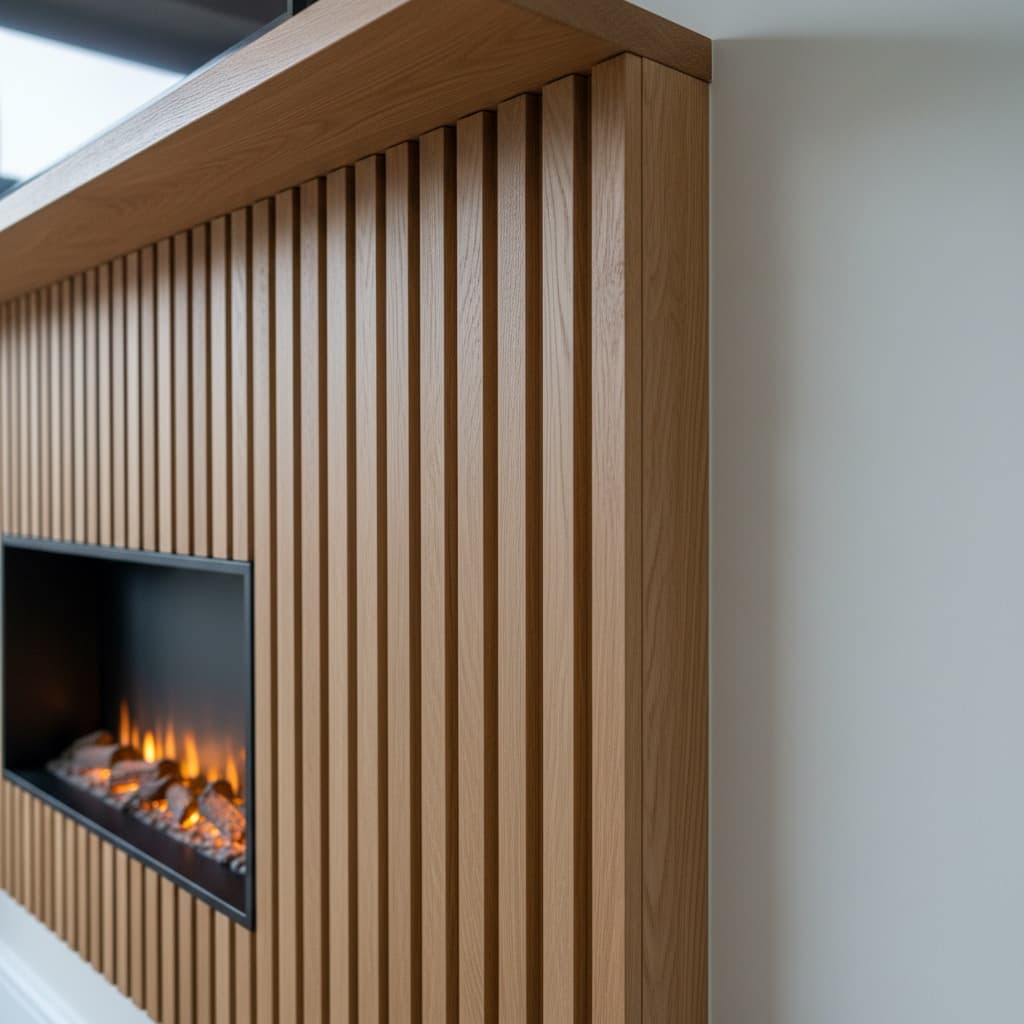
A typical Dulwich project runs 1–2 weeks. Days 1–2: timber stud framework and first-fix electrics (NICEIC certified). Days 3–4: plasterboard, taping, and skimming. Days 5–6: fireplace and TV mount installation, joinery delivery and on-site assembly. Days 7–8: painting, lighting commissioning, and final cable management. Premium cladding — slatted oak, marble-effect porcelain, veneered panels — adds 2–3 days for material acclimatisation. Fixed-price contracts cover timber framing, NICEIC-certified electrics, plasterboarding and skimming, fireplace and TV unit supply (you choose the model), bespoke joinery, LED lighting kit and installation, painting, waste removal, and the 2-year build warranty. Listed Building Consent applications and any structural calculations are quoted separately at survey so you see them line-by-line. The fixed price is confirmed after a free site visit. Building Control sign-off and the NICEIC certificate are delivered as a PDF pack at handover — the documentary proof mortgage lenders and conveyancing solicitors need when you sell.
Media Walls in Dulwich: What's Included
How I price media walls in Dulwich
I price every media walls job in Dulwichafter I’ve seen it. No two properties are the same, so a number here would only mislead you. What you get instead is a fixed-price contract, a week-by-week programme, and no costs that turn up later.
Get a fixed quoteWhat Our Customers Say
“All Well managed our project from start to finish. The fixed-price contract meant no surprises, and the result is stunning.”
Verified Customer
Dulwich
“Professional team, clear communication throughout. They handled everything including Building Control sign-off.”
Verified Customer
Dulwich
Frequently Asked Questions
- Can you build a media wall in a Dulwich Village conservation area home?
- Yes, the media wall itself doesn't require any conservation area consent because it's internal works. Listed Building Consent only applies if your property is individually listed — several on Dulwich Village, around Court Lane, and on College Road are. For listed properties, framing over an original fireplace surround needs LBC through Southwark Council, taking 8-12 weeks. We check the property's listing status on the National Heritage List at the survey (free, takes 5 minutes) and tell you straight away whether LBC is needed. For non-listed properties in the SE21 conservation area, no consent is needed, but we apply our standard sensitive-design approach so the new wall sits comfortably with the period features around it.
- We have a double reception room with two chimney breasts — should we put media walls on both?
- It depends on how you use the space. If the rooms are fully knocked-through and feel like one room, two media walls usually compete for attention — one chimney breast becomes the TV feature, the other becomes a complementary shelving or display piece without the TV. If the rooms are kept separate or have folding doors between them, twin media walls work but the design has to coordinate (same cladding material, complementary colours, same shelf proportions) so the two rooms read as a single project. A coordinated double build shares design, materials, and electrics across both walls.
- Will the media wall ruin the period feel of our Victorian sitting room?
- Not if it's designed right. The risk of a generic media wall in a Victorian room is that the modern feature dominates the period features around it — chunky modern proportions clash with delicate cornicing and slim skirting. We design the new wall to read in proportion to the existing details: shelf depths match the original skirting depth, the slatted cladding or paint colour draws from the existing palette rather than fighting it, and the floor-to-wall transition respects the existing skirting profile rather than cutting through it. Done well, a Victorian media wall reads as if the period builder had access to a flat-screen TV — like it belongs.
- How high should the TV sit? We've seen media walls where the TV is uncomfortably high.
- Too-high TVs are the most common regret we hear from people who had a wall built elsewhere — the fireplace pushes the TV up and you spend every film looking at the ceiling. The rule: the centre of the screen should sit close to seated eye level, which is roughly 1.0-1.2 metres off the floor for a standard sofa. We make that work by using a low-profile fire, keeping its recess tight, and dropping the TV recess so its bottom edge sits just above the fire's required clearance. Dulwich's 2.8-3 metre Victorian ceilings actually help — there's room above the TV for the wall to carry on up without the screen being forced high. At the survey we tape the screen outline on the wall and sit you on your own sofa to check it before anything is built.
- Will the TV recess become obsolete when we replace the TV?
- Only if it's sized to today's TV, which is the mistake. TVs have grown a size roughly every replacement cycle, so we frame the recess for the next TV, not the current one — typically one size up (a 65-inch recess for today's 55, a 75 for today's 65) with a shadow-gap trim that makes the current set look deliberate, not lost. Connections are the other half of future-proofing: the TV goes on a pull-out bracket or behind a removable panel so HDMI ports stay reachable when the next console or streaming box arrives, and we leave a conduit run through the framing so new cable standards can be pulled through without opening the plaster. A hardwired ethernet run to the recess is included as standard — more reliable for streaming than any Wi-Fi mesh.
All Well has completed 100+ projects across 25 London boroughs since 2020. We are NICEIC approved for electrical work, FENSA registered for glazing, and CHAS certified for site safety, with Public Liability insurance to £5 million. 57+ Google reviews average 4.9 stars. All Well Property Services® is a UK registered trademark, Companies House no. 12721034, operating from Unit 1 Limes Avenue, Anerley SE20 8QR.
Get a Free Quote for Your Dulwich Media Walls
Fixed-price quote, no obligation. Call us or fill out our form.