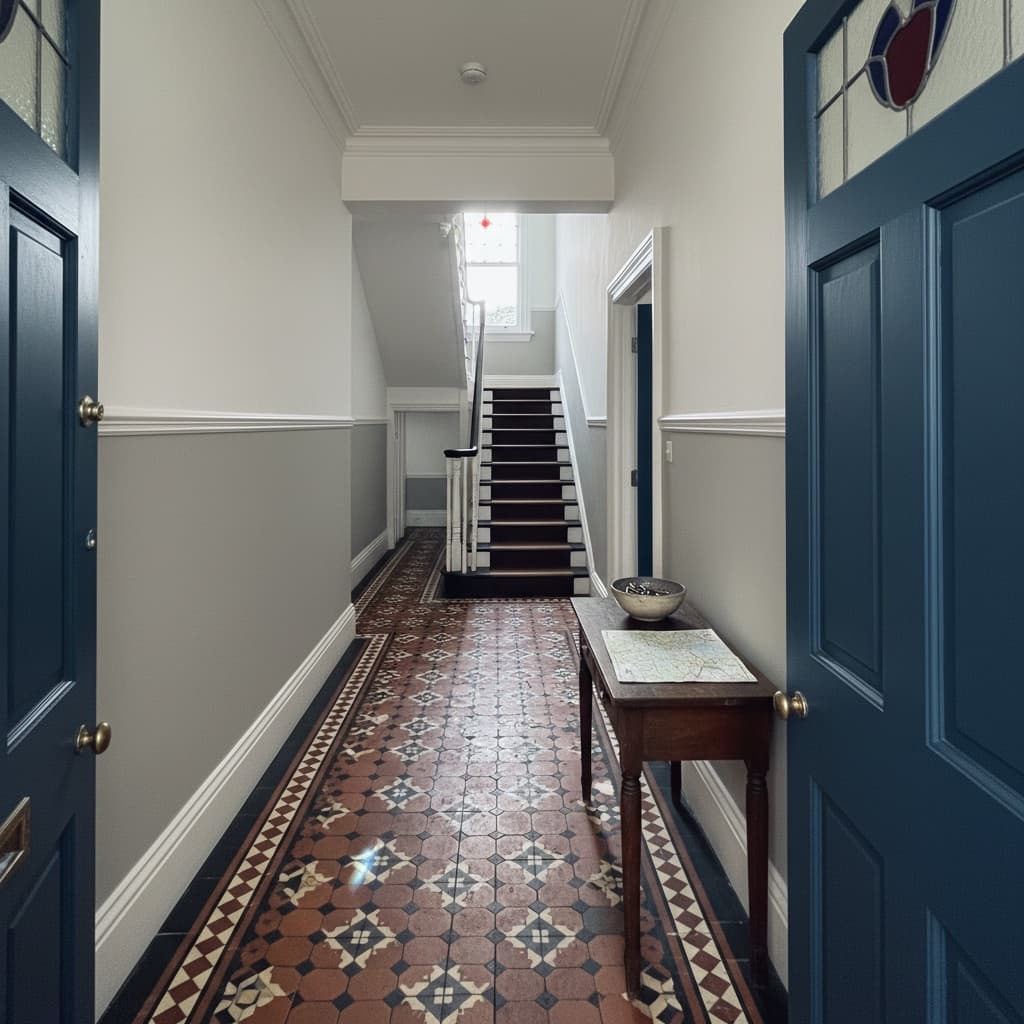
Builders & Renovation Specialists in Catford
Kitchen extensions, loft conversions, bathrooms and full renovations in Catford, South East London (SE6)
NICEIC, Gas Safe, FENSA and CHAS accredited. 57+ Google reviews averaging 4.9 stars. Free site visit, fixed-price quote.
About Catford
Catford is one of South East London's best-value areas for period properties, with Victorian terraces and Edwardian semis available at prices well below neighbouring Lewisham and Forest Hill. The ongoing regeneration of Catford town centre and improved transport links are driving demand for renovated homes, making this an excellent area for homeowners to invest in their property.
Postcodes we cover: SE6
Popular Services in Catford
Property renovation is a leading service in Catford, with many buyers purchasing unrenovated Victorian terraces and Edwardian semis and commissioning a full refurbishment. Kitchen extensions are the natural follow-up, opening up the rear of terraced houses to create modern open-plan living spaces. Loft conversions on Edwardian semis in the streets around Catford Bridge are popular for adding a third or fourth bedroom without extending the building footprint.
Planning & Building Control in Catford
Catford falls under Lewisham Council, which is supportive of residential improvements as part of the broader Catford regeneration programme. Most standard rear extensions and loft conversions proceed under permitted development without issues. The Culverley Green conservation area has additional design requirements. Lewisham Council is responsive on planning queries and their pre-application advice service is useful for larger projects.
Catford Property Insights
The Victorian terraces in Catford are typically well-built with London stock brick and sound structural bones, but many have been neglected and need a full renovation including rewiring, replumbing, and damp treatment. The SE6 postcode sits on London Clay with pockets of river gravel near the Ravensbourne corridor, providing generally stable ground conditions. Properties near the river may need a Flood Risk Assessment for ground-floor extensions.
Common Projects in Catford
Full property renovation on a Victorian terrace
The most common big project in Catford. Buyers pick up unrenovated Victorian terraces at prices below neighbouring Lewisham and Forest Hill, then commission full refurbishments. Scope includes rewiring to BS 7671, replumbing (with replacement of original lead supply pipes common in pre-1970 properties), damp treatment where rising damp is present, knocking through the ground floor, new kitchen and bathrooms, plastering, and complete decoration. Cost is from £65,000 depending on size and scope. Build time 14-20 weeks with one team. Catford property values mean the renovation typically returns 1.4-1.7x its cost in property value uplift.
Single-storey rear kitchen extension
The natural follow-up to a property renovation. The Catford Victorian terraces along Sangley Road, Brownhill Road, and the streets near Catford Bridge have classic dark galley kitchens that get transformed by 4-5 metre rear extensions with bifold doors. Cost is from £45,000 including structural steelwork, foundations on Catford clay (typically 1.0-1.2 metres), glazing, electrics, plumbing, and finishes. Build time 10-14 weeks. Lewisham Council's permitted development process is straightforward for the standard 3-metre rear extension, and we submit a Lawful Development Certificate to give written confirmation.
Loft conversion on an Edwardian semi
The Edwardian semis in the streets around Catford Bridge and Manor Park have hipped roof structures that suit hip-to-gable conversions, creating a master bedroom with en-suite. Cost is from £55,000 including structure, staircase, en-suite plumbing, electrics, plastering, and decoration. Build time 10-14 weeks. The Culverley Green conservation area imposes additional design requirements for visible alterations — front-facing dormers are generally refused, rear dormers are accepted with subordinate proportions. We design to Lewisham's published guidelines from the outset.
Damp proofing on a neglected Victorian terrace
Common on the Catford terraces that have been neglected for decades and bought at below-market prices for renovation. Original slate damp-proof courses have failed and the ground-floor walls show classic rising damp tide marks. Properties near the Ravensbourne corridor have higher persistent groundwater than the higher-ground streets, which makes damp more aggressive. We diagnose first, inject silicone-based DPC cream, allow 4-6 weeks for the wall to dry, then replaster with salt-resistant render. Cost from £2,500 including replastering. 20-year guarantee.
Our Services in Catford
Kitchen Extensions
We design and build kitchen extensions that turn cramped, separate rooms into open-plan spaces you actually want to cook and eat in.
Fixed-price quote
Bathroom Fitting
Full bathroom renovations, from stripping out tired suites to fitting walk-in showers, freestanding baths, and underfloor heating.
Fixed-price quote
Side Return Extensions
That narrow alley down the side of your terrace? We turn it into usable kitchen space.
Fixed-price quote
Loft Conversions
Add a bedroom, en-suite, or home office without moving house.
Fixed-price quote
Painter & Decorator
Clean lines, sharp edges, and a finish that lasts.
Fixed-price quote
Property Renovation
Whole-house renovations managed by one team — structural work, rewiring, replumbing, kitchens, bathrooms, and decoration.
Fixed-price quote
Damp Proofing
Damp ruins walls, damages health, and knocks thousands off your property value.
Fixed-price quote
Garage Conversions
Your garage is wasted space.
Fixed-price quote
End of Tenancy Painting
Tenants out Friday, painters in Monday, keys back by Thursday.
Fixed-price quote
Media Wall Installation
We design and build bespoke media walls — the framework, the joinery, the electrics, and the finish.
Fixed-price quote
Handyman & Property Maintenance
A reliable local handyman backed by a proper building firm.
Fixed-price quote
What Customers Say
“So happy with the work done by Les and Richard!! We bought a house that needed new paint, cracks filled, a new bathroom fan and some mold removal and they did it all. The quality of the work is phenomenal; it looks like a brand new house. We’ll definitely be hiring them for our future projects!”

Brenna Bodine
6 months ago
“We've had a media wall put in place with fireplace. Richard was very professional and everything that I had got addressed fast. The medial wall looks great, would def recommend them”

Raluca Andra
a month ago
All Well has completed 100+ projects across 25 London boroughs since 2020. We are NICEIC approved for electrical work, FENSA registered for glazing, and CHAS certified for site safety, with Public Liability insurance to £5 million. 57+ Google reviews average 4.9 stars. All Well Property Services® is a UK registered trademark, Companies House no. 12721034, operating from Unit 1 Limes Avenue, Anerley SE20 8QR.
Accredited & Certified
Nearby Areas
Frequently Asked Questions
- Why is Catford a good area for renovation projects?
- Three reasons. First, value: property prices in Catford are below neighbouring Lewisham, Forest Hill, and Hither Green, which means the same renovation budget gets a larger property. Second, return: Catford's town centre regeneration and improved transport links are driving property value growth, so renovation work returns 1.4-1.7x its cost in property uplift. Third, planning: Lewisham Council is supportive of residential improvement as part of the Catford regeneration programme, which makes the planning process straightforward for standard projects. The Victorian terraces here are well-built but typically need full updating after long ownership.
- Do I need a Flood Risk Assessment for a Catford extension?
- Possibly, depending on flood zone. Properties near the Ravensbourne corridor may sit in Flood Zone 2 or 3 and need a Flood Risk Assessment as part of the planning application for any new extension. The Environment Agency's flood risk maps confirm the zone designation, and we check this at the survey before quoting. Cost is typically from £600 and we coordinate it as part of the planning process. Most of Catford's higher-ground streets (away from the river corridor) are outside flood zones and don't need an assessment.
- How do I know if my Catford property needs damp treatment?
- The classic signs are a tide mark up to about a metre above floor level on the inside of external walls, with peeling paper, salt deposits (white crystals), and plaster that crumbles when you press it. A musty smell in ground-floor rooms is another indicator. Many Catford terraces show these signs because they've been neglected and the original slate damp-proof courses have failed. We carry calibrated moisture meters and confirm the diagnosis at the survey, free of charge. If damp is present, we recommend treating it before any decoration so the new finish doesn't immediately fail.
- What's the Culverley Green conservation area and does it affect my project?
- It's a small conservation area covering streets around Culverley Green, just east of Catford town centre. Properties within the area need sympathetic design for visible alterations — window replacement, render colour, front door changes, and dormers all need consideration. Rear extensions are usually fine because they're not visible from the street. Lewisham Council can act on retrospective unauthorised changes. Most Catford streets are outside this conservation area and have full permitted development rights for standard residential improvements. We check the conservation area boundary at the survey.
Get a Free Quote in Catford
Tell us your project and we will book a free site visit, then send a fixed-price quote in writing. No obligation.