av63u28ij2phb7imc9d2rz4pew933a

Kitchen Extensions in Fulham

Fulham's Victorian and Edwardian houses have space to extend, but conservation areas and high expectations mean the build needs to be done right. We handle the planning, the party walls, and deliver a finish that matches the house.

5.0
Based on 44 reviews
powered by Google

Get Your Free Consultation

We’ll call back within 48 hours

44+ Verified Reviews

NICEIC & FENSA Certified

Fully insured

Conservation Area Experience

Why Fulham Houses Are Worth Extending

Fulham sits in that sweet spot where the houses are big enough to extend properly but the plots haven’t already been maxed out.

Unlike some parts of inner London where gardens have been chipped away over decades, Fulham houses still have room at the back. The Victorians who built around Parsons Green and the New King’s Road gave most terraces decent-sized gardens. The Edwardian streets near Hurlingham are even more generous. That’s space you can use.

The problem is the kitchen itself. Whether you’re in a three-storey Victorian terrace or a double-fronted Edwardian, the original kitchen was designed for staff. It was a working room at the back of the house, separate from where the family actually lived. Fine in 1895. Less practical when you’re trying to cook, supervise homework, and have a conversation at the same time.

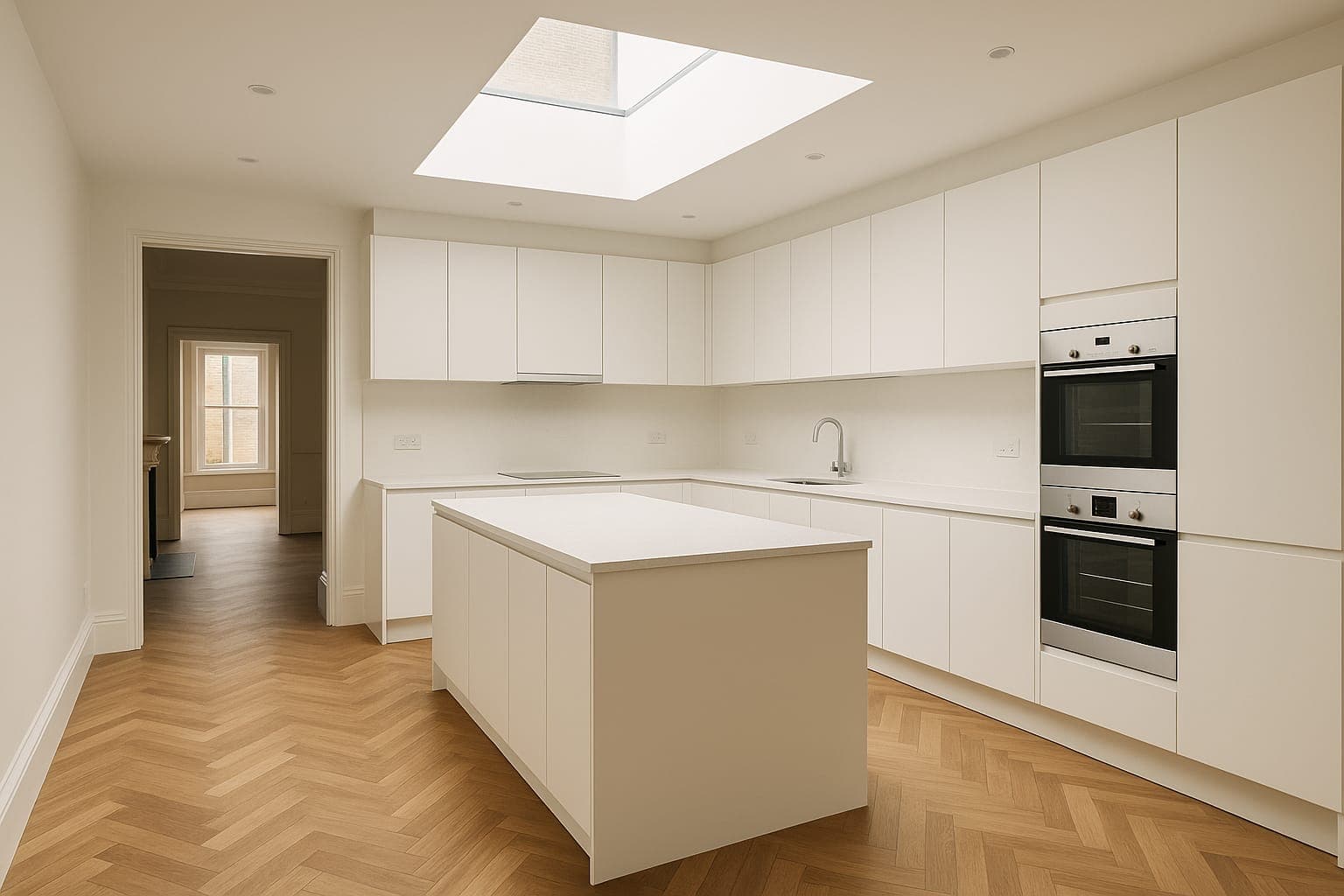
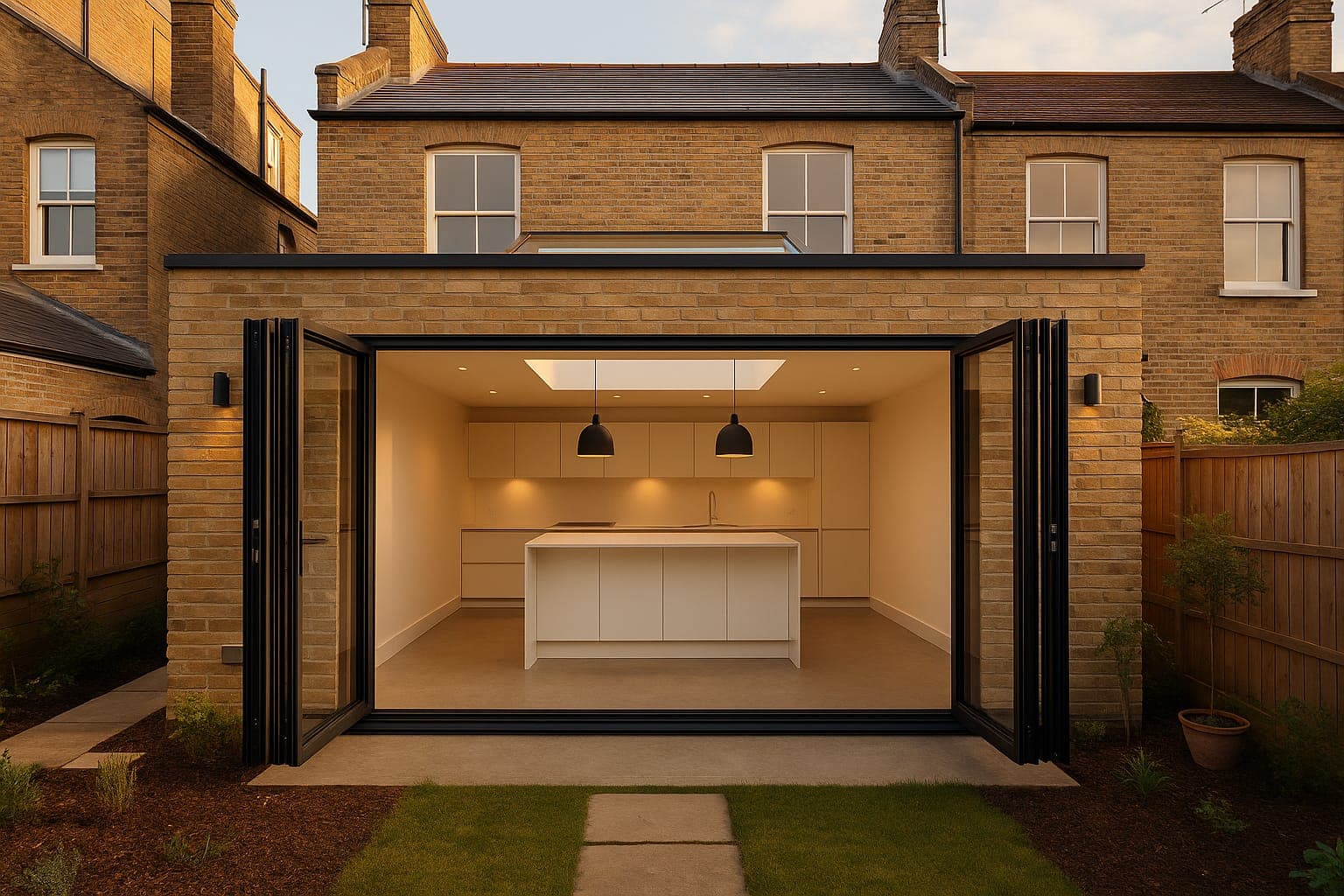
A kitchen extension changes the equation. Fill in the side return on a Victorian terrace and the kitchen gets wider. Push out into the garden by three or four metres and you have space for an island, a dining table, somewhere to actually sit. Add bi-fold doors across the back and suddenly the garden feels like part of the room.

We’ve been building extensions across Fulham for years. From the streets around Moore Park to the terraces off Munster Road, from Sands End to Parsons Green. We know what works with the housing stock, what LBHF planning officers look for, and how to get the finish right in an area where expectations are high.

Extension Options for Fulham Houses

Fulham has more variety in its housing than some areas. Here’s what works well.

Side Return Extensions

The classic Fulham extension. That narrow passage down the side of Victorian terraces becomes part of the kitchen, adding 8–15m² of usable space. A rooflight along the length brings in natural light. Most side returns can be built under Permitted Development unless you’re in a conservation area.

Return Extensions

Fulham gardens are often deeper than inner London averages. A rear extension of 4–6 metres creates a proper kitchen-diner without eating up the whole garden. Works well on Edwardian semis and double-fronted houses where there’s no side passage to extend into.

Combined Side Return + Rear

The most common choice in Fulham. Extend into the side return and push out modestly at the back. Creates an L-shaped kitchen that wraps around the house with space for cooking, eating, and living. In most cases, you keep enough garden for the kids and the dog.

Wraparound Extensions

For larger houses or corner plots, extend around two or three sides of the property. Creates the biggest transformation but usually needs planning permission. Popular on the larger houses near Bishops Park and Hurlingham where the plots can absorb a bigger footprint.

10-15%

Added to property value (RICS)

89%

Planning approval rate (DLUHC)

10-14

Weeks typical build time

78%

Of homeowners prefer extending to moving

"We're in a conservation area near Parsons Green, which made us nervous about the planning process. Joel's team knew exactly what would get approved and designed an extension that the planning officers were happy with first time. The build itself was well organised, the site was kept tidy, and the quality of the plastering and joinery is noticeably better than friends' extensions we've seen elsewhere. We use the new kitchen more than any other room in the house." Mark & Sophie D.

Kitchen Extension Costs in Fulham

Realistic pricing for Fulham projects. These are higher than outer London but reflect client expectations and local build costs.

Project Type Typical Size Typical Price Range
Side return extension
8-12m2
£40,000 – £60,000
Rear extension (3-4m depth)
12-18m2
£50,000 – £75,000
Combined side return + rear
18-28m2
£70,000 – £100,000
Kitchen-diner conversion (no extension)
Existing space
£12,000 – £25,000
Two-storey rear extension
30-50m2 (total)
£95,000-£150,000
What’s included: Groundwork, foundations, structural steelwork, walls, roof, glazing (bi-folds/rooflights), insulation, electrics, plumbing prep, plastering, and decoration to a high standard. Kitchen units, appliances, and flooring are quoted separately or client-supplied. Planning fees, Building Control fees, and party wall surveyor costs are additional.

How It Works

From first meeting to completed kitchen, here’s the process for Fulham extensions.

  • Site Visit

    We visit your house, measure up, look at the existing layout and access, and discuss what you want to achieve. We'll check if you're in a conservation area and flag any obvious constraints. Takes about an hour, no charge, no pressure. No hard sell. We're figuring out whether we can help, not trying to close a deal.No pressure, no hard sell. Just an honest assessment of what's possible.

  • Design & Quote

    Within two weeks you receive a detailed specification and itemised quote. Floor plans, elevations, a full breakdown of costs, and a realistic timeline. If you're in a conservation area, we include advice on what's likely to get planning approval from LBHF.

  • Planning & Party Walls

    If planning permission is required, we handle the application. We submit Building Regulations and manage party wall notices with your neighbours. In Fulham, allow 10–14 weeks for this phase, especially for conservation area applications. LBHF planning can be thorough.

  • Construction

    Build time for a typical side return and rear extension in Fulham is 12–14 weeks. We start with enabling works, then foundations, steel, walls, and roof. First fix services follow, then insulation, plastering, second fix, and decoration. Weekly progress updates and site kept presentable throughout.

  • Handover

    Final Building Control inspection, snagging walkthrough with you, and handover of all certificates. For Fulham clients we pay particular attention to the finish quality, checking details like shadow gaps, reveals, and joinery before we call it done.

Common Questions About Fulham Extensions

Large parts of Fulham are conservation areas. The main ones are: Parsons Green (the streets around the green itself), Moore Park (between Fulham Road and Lillie Road), Walham Green (near Fulham Broadway), and parts of Hurlingham and the New King’s Road. LBHF has maps on their website showing exact boundaries. We check your specific address during the consultation and advise on what it means for your project.

Yes. Conservation area status doesn’t prevent extensions, it just means you need planning permission for work that would otherwise be Permitted Development. Rear extensions are generally fine because they’re not visible from the street. The key is matching materials (stock brick to match the existing house, timber windows if that’s what the originals are) and keeping the scale in proportion with neighbouring properties. We’ve had good success rates with LBHF planning on conservation area applications.

LBHF aims to decide householder applications within 8 weeks, but conservation area applications often take longer. Budget 10–12 weeks to be safe. There’s sometimes a backlog, especially in spring when everyone submits applications. We can track progress and chase when needed, but building in realistic timescales upfront avoids frustration.

Some do, some don’t. The streets around Moore Park and parts of Munster Village have rear lanes, which makes deliveries and waste removal much easier. Most Victorian terraces don’t have rear access, so materials come through the house or over the roof. We plan this carefully before starting. Where there’s rear access, we use it to keep disruption to a minimum.

Higher than average. Fulham clients typically want a finish that matches the quality of the original house. That means details like proper plaster coving where it meets the existing house, shadow gaps around doors and windows if that’s the style, good quality ironmongery, and plastering that’s genuinely flat rather than “flat enough”. We price for this level of finish and work with tradespeople who can deliver it.

RICS research suggests 10–15% for a well-designed kitchen extension. In Fulham, where extended houses with open-plan kitchens command a premium and unextended houses are noticeably cheaper, the uplift can be at the higher end of that range. An £80,000 extension on a £1.5m house could add £150,000–£225,000, though this depends on finish quality and whether the design works well with the original house. Most Fulham clients extend because they want the space, with value uplift as a secondary benefit.

Building Extensions in Fulham

Fulham falls entirely within Hammersmith & Fulham council, which simplifies things compared to areas that straddle borough boundaries. LBHF planning has a reputation for being detail-oriented, particularly in conservation areas. They look carefully at materials, proportions, and how extensions relate to the existing building. That’s not a bad thing if you’re planning properly, though it does mean applications need to be well-prepared.

The housing stock varies more than somewhere like Clapham. Around Parsons Green and Moore Park you’ll find grand Victorian terraces with four or five storeys. The streets off Munster Road and around Fulham Broadway have smaller but still substantial Victorian houses. Towards Sands End and Imperial Wharf the housing is newer and mixed. Each type needs a different approach.

One thing Fulham does have is some rear access. The Victorian streets with mews at the back, the rear lanes behind Moore Park, and some of the larger properties with side gates all make building work easier. Where rear access exists, deliveries can come in without tracking through the house, skips can sit in the back garden, and the disruption to neighbours is reduced.

Parking is controlled across most of Fulham, so we arrange permits for works vehicles in advance. Skip permits through LBHF typically take 5–7 working days. On streets without rear access, we coordinate deliveries carefully to minimise the time materials sit on the pavement.

Expectations in Fulham tend to be high, and the budget usually matches. Clients generally want the extension to feel like it could have been part of the original house, with quality of finish to match. That means spending time on details like how the new roof meets the existing building, how bi-fold doors are framed, and whether the plastering is genuinely flat or just passable. We work to that standard.

Nearby Areas We Cover

We build kitchen extensions across South West London. If you’re near Fulham, we can help.

Battersea

Balham

Brixton

Stockwell

Wandsworth

Tooting

Streatham

Dulwich

Ready to Discuss Your Extension?

Get a free consultation with no obligation. We’ll visit your property, discuss the options, and give you an honest assessment of what’s possible.

Privacy Settings
We use cookies to enhance your experience while using our website. If you are using our Services via a browser you can restrict, block or remove cookies through your web browser settings. We also use content and scripts from third parties that may use tracking technologies. You can selectively provide your consent below to allow such third party embeds. For complete information about the cookies we use, data we collect and how we process them, please check our Privacy Policy