Owning property in London is a serious financial commitment, so looking after it isn't just a chore—it’s a strategy. Professional property maintenance services in London go way beyond just fixing things when they break. It’s about being proactive to protect your asset, boost its value, and make sure you’re ticking all the legal boxes. Think of it less as a cost and more as a smart investment.
Protecting Your London Property Investment
Whether you own a historic townhouse or a sleek commercial building in the capital, you’re up against a unique set of challenges. London’s incredible architectural diversity and its famously strict regulations mean a one-size-fits-all approach to maintenance just won’t cut it. Let things slide, and you'll quickly see your property deteriorate, rental income drop, and maybe even run into legal trouble.
It helps to think of your property like a high-performance car. You wouldn’t dream of skipping its regular service and then expect it to run perfectly. In the same way, proactive maintenance is the engine that keeps your property in good health and performing financially. It’s all about spotting the small issues before they blow up into expensive emergencies, keeping the building safe, and making sure it stays attractive to tenants or buyers.
A well-maintained property is more than just bricks and mortar; it’s a consistently performing asset. By investing in regular upkeep, owners not only prevent expensive structural problems but also boost tenant retention and secure higher market values.
This guide will walk you through everything you need to know about property upkeep in London. We’ll break down the essential services on offer, explain how to budget for them, and show you what to look for when choosing a reliable maintenance partner. Our aim is to give landlords, homeowners, and business managers the knowledge to make smart, informed decisions.
A structured approach is the key to getting it right. As you'll see, a solid strategy is built on a few key pillars:
- Proactive Care: Scheduling regular checks to prevent problems you can see coming.
- Swift Repairs: Getting on top of unexpected issues fast to minimise damage.
- Value Enhancement: Making strategic improvements that boost appeal and income.
- Legal Compliance: Meeting all safety and regulatory duties without fail.
By getting a handle on these elements, you can finally break the stressful cycle of reactive repairs and move to a calm, controlled plan. For anyone just starting out, you can learn more about why every home needs a maintenance plan in our detailed article. This guide will show you how partnering with experts like All Well Property Services gives you the framework you need to protect your investment for years to come.
The Four Types of Property Maintenance Explained
Effective property maintenance isn't a single action, but a smart strategy that blends different approaches to protect and grow your investment. When you hear people talk about property maintenance services London, it all gets a lot clearer once you understand the four main types. Each plays a different role, a bit like specialists in a medical team all working together to keep things healthy for the long run.
From surprise emergencies to strategic upgrades, a professional service weaves these four pillars together, giving you complete peace of mind.
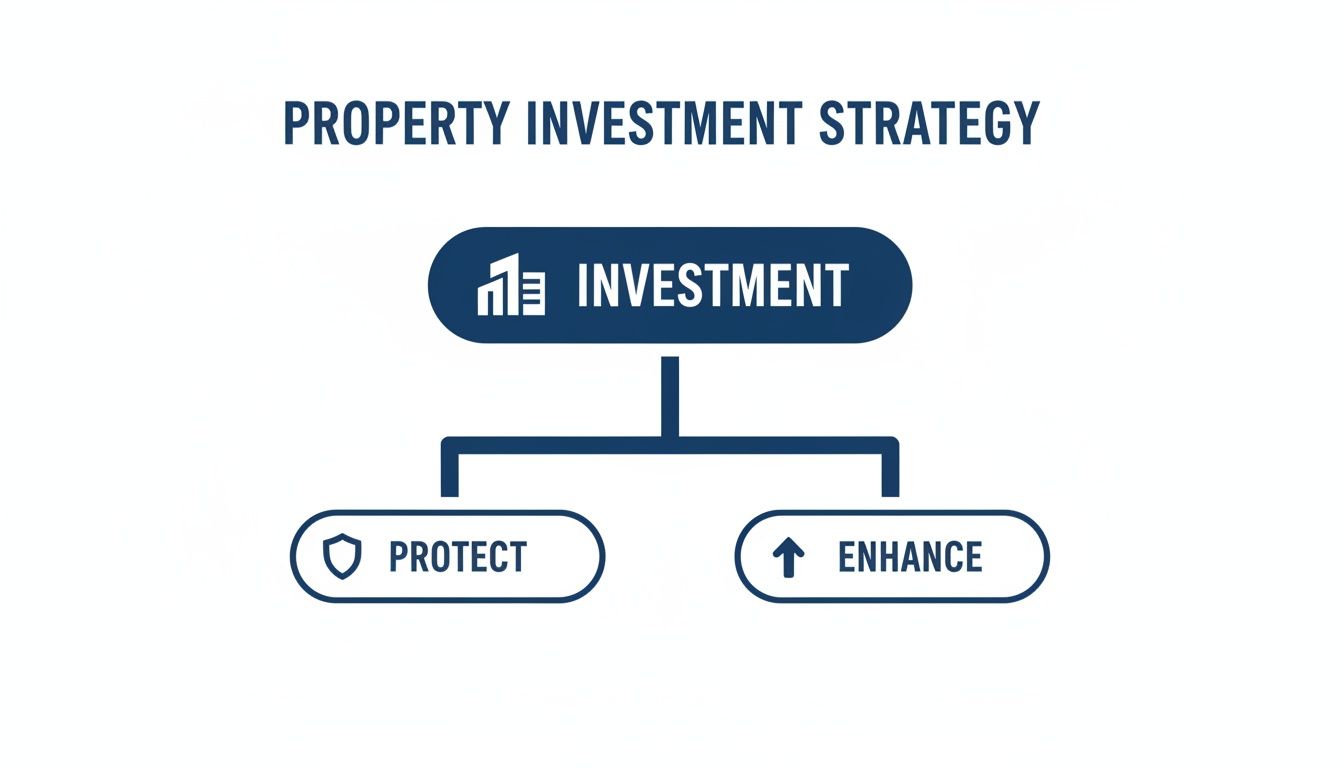
This image nails it: a solid strategy isn't just about holding onto what you have. It’s about growth, turning simple upkeep into an activity that actively builds value.
Reactive Maintenance: The Emergency Response
Reactive maintenance is the one we're all familiar with: something breaks, you call someone to fix it. Think of it as the A&E for your property. A burst pipe, a boiler failing in the dead of winter, or a smashed window are all classic examples that need someone on-site, fast.
While it’s essential to have a plan for emergencies, relying only on reactive maintenance is a risky and expensive game. It almost always means paying a premium for emergency call-outs and dealing with serious disruption. Worse, it often leads to knock-on damage—that slow leak you ignored can cause mould and structural rot if left until it becomes a full-blown crisis.
Planned Preventive Maintenance: The Health Check-Up
Planned Preventive Maintenance (PPM) is the complete opposite of reactive work. This is the proactive, scheduled care that keeps your property ticking over perfectly, much like an annual health MOT. The whole point is to spot and fix small issues before they snowball into expensive failures.
Common PPM tasks include:
- Annual Boiler Servicing: Making sure your heating is safe, efficient, and ready for action before the cold snap hits.
- Gutter Cleaning: Stopping blockages that can lead to damp, water damage, and decaying brickwork.
- Roof Inspections: Checking for loose tiles or storm damage to prevent leaks before they start.
- Exterior Painting Cycles: Shielding timber and masonry from the elements with a fresh coat of paint every few years.
This approach is non-negotiable for commercial property owners. With operational costs being the top headache for 24% of UK property managers, proactive maintenance is a financial necessity, not a luxury. Emergency repairs can easily cost double what planned work does, which is why scheduled upkeep from firms like All Well Property Services is vital for London businesses wanting to minimise downtime and keep budgets under control. You can read more about how smart building technology is reshaping property maintenance.
Refurbishment and Renovation: The Value-Adding Upgrade
This side of maintenance moves beyond just keeping things running. It’s about actively improving and modernising your property. Refurbishment and renovation projects are strategic investments, designed to increase your rental income, boost its capital value, or repurpose a space.
These projects can be anything from a light touch-up to a complete overhaul:
- Minor: Redecorating a rental flat between tenancies or fitting a new bathroom suite.
- Major: A full kitchen remodel, a loft conversion, or completely reconfiguring the internal layout.
For landlords and homeowners in a high-value market like London, clever refurbishment is how you maximise your returns. This is where a contractor’s skill in everything from heritage restoration to modern fit-outs really pays off.
Statutory Compliance: The Legal Essentials
Finally, statutory compliance covers all the maintenance and safety checks that are required by UK law. These aren't optional—they’re legally mandated tasks to ensure the safety of tenants, residents, and the public.
For landlords, getting compliance wrong can lead to serious consequences, including massive fines, voided insurance policies, and even prison time. It’s one area where professional oversight is absolutely critical.
Key compliance tasks involve:
- Gas Safety: Annual checks carried out by a Gas Safe registered engineer.
- Electrical Safety: Electrical Installation Condition Reports (EICRs) every five years.
- Fire Safety: Regular fire risk assessments, plus routine maintenance of alarms and extinguishers.
A dependable maintenance partner like All Well Property Services has certified specialists on hand, from BAFE-registered fire assessors to NICEIC electricians, to ensure every legal box is ticked. This integrated approach pulls all four types of maintenance together into a single, seamless strategy that protects your asset, boosts its value, and keeps you fully compliant.
To help you see how these four approaches fit together, here’s a quick comparison.
Comparing Maintenance Approaches For London Properties
This table breaks down the four maintenance types, showing where each one shines and how it impacts your bottom line and property value over time.
| Maintenance Type | Best For | Typical Cost | Impact on Value |
|---|---|---|---|
| Reactive | Unforeseen emergencies like burst pipes or electrical faults. | High | Prevents immediate value loss but doesn't add long-term value. |
| Planned (PPM) | Routine upkeep, servicing, and preventing future failures. | Low-Medium | Protects and preserves existing value by extending asset life. |
| Refurbishment | Modernising, improving functionality, or increasing appeal. | Medium-High | Directly increases rental income and capital appreciation. |
| Compliance | Meeting legal safety obligations (gas, electrical, fire). | Low | Essential for legal operation; protects against fines and liability. |
Ultimately, a balanced strategy that uses all four types is the most effective way to manage a London property. It shifts you from just fixing problems to proactively protecting your investment and finding smart ways to enhance its worth.
How to Choose the Right London Maintenance Contractor
Picking a partner for your property maintenance services in London is one of the biggest calls you’ll make as a property owner. Get it right, and you’ve found a guardian for your investment. Get it wrong, and you’re in for a world of costly mistakes, delays, and stress. It’s about looking past the initial quote and really digging into a company’s credentials, how they work, and what people are saying about them.
Your goal is to find a team that isn’t just skilled, but also reliable, transparent, and properly insured. Think of it as building a long-term relationship with someone you can trust with your most valuable asset. The time you spend doing your homework now will pay you back tenfold in peace of mind and quality work down the line.
Key Questions to Ask Potential Contractors
Before you sign anything, have a list of critical questions ready. The way a contractor answers will tell you a lot about their professionalism and whether they’re the right fit. A good company will welcome the scrutiny and give you clear, confident answers.
Start with these must-asks:
- Are you fully insured? Ask to see their public liability and employer’s liability insurance certificates. This is non-negotiable—it’s your safety net.
- What qualifications do your tradespeople hold? For specialised jobs, you need certified pros. A professional outfit will have no problem confirming their team’s credentials.
- Can you provide a fixed, written quote? Steer clear of vague estimates that can balloon later. A fixed quote, like the ones we provide at All Well Property Services, locks in the price so there are no nasty surprises.
- How do you manage communication during a project? Look for a clear plan for regular updates. Knowing who your point of contact is and how they'll keep you in the loop is vital.
- Can you share recent, verifiable customer reviews? Check their Google Business Profile or other independent review sites to see what real clients are saying.
The Importance of Certifications
In the UK, certain jobs legally require a certified professional. These accreditations are a benchmark for quality and safety, proving a contractor sticks to strict industry standards. When you're vetting a company, look for these logos—they’re a sign of competence.
Certifications are more than just badges on a van. They’re your guarantee that a contractor is competent, compliant, and committed to safety. Never cut corners on qualifications, especially for high-risk work like electrics and fire safety.
Essential certifications to look for include:
- NICEIC (National Inspection Council for Electrical Installation Contracting): Your assurance that any electrical work is done safely and to the highest UK standards.
- BAFE (British Approvals for Fire Equipment): This shows competence in fire protection, from risk assessments to alarm installation.
- CHAS (The Contractors Health and Safety Assessment Scheme): Proof that a contractor meets tough health and safety benchmarks.
Choosing a company like All Well Property Services, whose partners hold these qualifications, takes the guesswork out of it. It ensures every part of your maintenance is compliant and handled by pros. You can find more tips in our dedicated guide on choosing the right renovation contractor in London.
Decoding Landlord and Tenant Responsibilities
When we're providing property maintenance services in London, one of the first questions landlords ask is where their duties end and the tenant’s begin. It’s a classic grey area for many, but getting it right is crucial.
Understanding the legal line between landlord and tenant responsibilities isn't just good practice—it's the foundation of a smooth, dispute-free tenancy. It protects your investment, keeps your tenants happy, and ensures your property is a safe, habitable, and legally sound asset. The rulebook for this is primarily the Landlord and Tenant Act 1985, which lays out the basic duties for anyone letting a property in the UK.
The Landlord’s Legal Obligations
As the property owner, the buck stops with you when it comes to the building’s structural health and the essential services. Think of yourself as the captain of the ship; you're ultimately responsible for making sure the vessel is seaworthy and safe for everyone on board.
This legal duty is often called the 'covenant to repair', and you absolutely cannot pass these core responsibilities on to your tenant. Your main obligations cover:
- Structure and Exterior: This is the big stuff—the roof, drains, gutters, external pipes, walls, and foundations. If any of these fail, it’s squarely on your shoulders to fix.
- Essential Utilities: You must keep the systems for supplying water, gas, electricity, and sanitation in proper working order. That includes the basins, sinks, baths, and toilets.
- Heating and Hot Water: The boiler and any systems providing heat and hot water have to be maintained and functional. This is a non-negotiable part of providing a habitable home, especially in the winter.
Beyond these fundamental duties, landlords have a set of legal safety responsibilities that are strictly enforced. Local authorities regularly check for compliance, and you'll need certified professionals to carry out the inspections.
Failing to meet these statutory safety duties is one of the most serious mistakes a landlord can make. It doesn't just put your tenants at risk; it opens you up to severe penalties, including unlimited fines and even imprisonment.
Key Compliance Duties for Landlords
To stay compliant, you need to arrange several recurring safety checks. These are your absolute must-dos:
- Gas Safety: A Gas Safe registered engineer must conduct an inspection of all gas appliances and flues every single year. You have to give a copy of that safety certificate to your tenants.
- Electrical Safety: An Electrical Installation Condition Report (EICR) is legally required every five years. A qualified electrician has to carry this out to confirm all electrical systems are safe.
- Fire Safety: You must follow the Fire Safety (England) Regulations 2022. This means installing smoke and carbon monoxide alarms and carrying out regular fire risk assessments, particularly in properties with shared communal areas.
The Tenant’s Role in Property Care
While you handle the big-ticket items, your tenants have a duty to act in a ‘tenant-like manner’. In simple terms, this means they need to take care of the small, day-to-day things.
A tenant's responsibilities generally include:
- Handling minor jobs, like changing a light bulb or replacing the batteries in a smoke alarm.
- Keeping the property reasonably clean and tidy to avoid things like pest infestations.
- Using fixtures and fittings correctly to prevent causing unnecessary damage.
- Reporting any major repair issues to you promptly so they don’t get worse.
Getting this balance right is what makes a tenancy work. For trickier situations like decorating at the end of a lease, you can check out our detailed landlord’s guide to end-of-tenancy decorating regulations. By working with a knowledgeable team like All Well Property Services, you can be confident that your portfolio not only meets but exceeds all legal standards, giving you total peace of mind.
Real-World Examples of Maintenance Excellence
It’s one thing to talk about good property maintenance, but seeing it in action really brings the benefits home. Let’s look at a few real-world scenarios the All Well Property Services team has handled. These examples show how a professional approach tackles specific challenges with skill, precision, and a bit of creative problem-solving.
From the delicate touch needed for heritage buildings to the time-sensitive demands of a busy shop, the right contractor knows how to adapt. That’s what turns a maintenance headache into a stress-free success story.
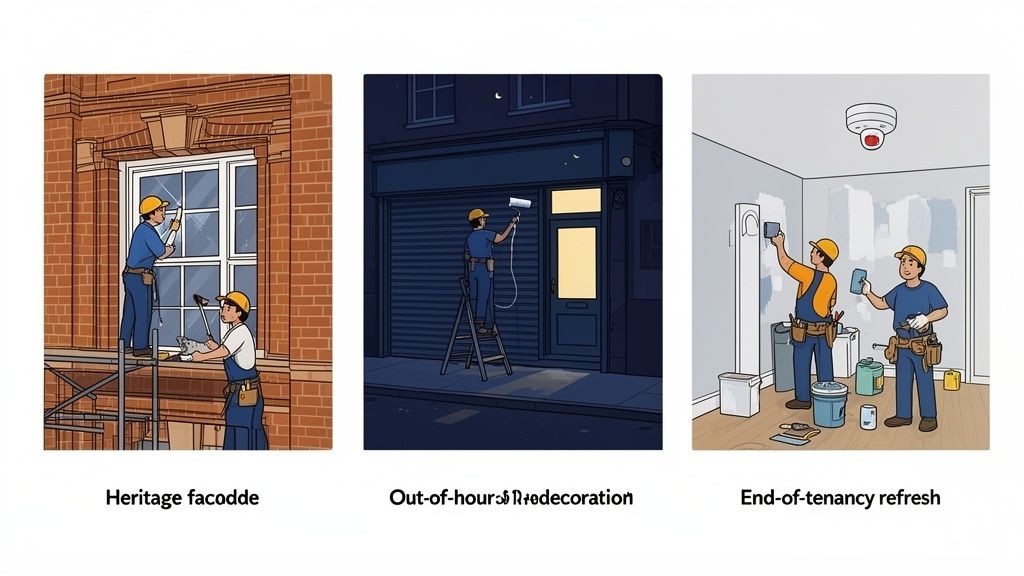
Case Study 1: Heritage Facade Restoration
One of the biggest challenges in London is keeping the character of Victorian and Edwardian properties alive. We had a client with a beautiful terraced house in a conservation area, but its facade was starting to show its age. The brickwork was decaying, and the original sash windows had become draughty and stubborn.
This wasn't a job for just any builder; it required a delicate touch. Our team’s background in heritage work was crucial to delivering a restoration that met the strict conservation guidelines.
Here’s what we did:
- Specialist Brickwork: We used traditional lime mortar to repoint the London stock brickwork. This is essential as modern cement is too hard and can damage the soft, historic bricks.
- Sash Window Overhaul: We carefully repaired and rebalanced the original sash windows, keeping their period charm while massively improving their thermal efficiency.
- Detailed Finishing: The team restored decorative cornices and made sure all the paintwork was historically accurate, right down to the colour.
The result? A stunningly restored facade that not only looks the part but is now properly protected from the elements for decades. It’s a perfect example of how the right work can boost a property's kerb appeal and value.
Case Study 2: Out-of-Hours Commercial Redecoration
A busy retail store in Central London was desperate for an interior refresh but couldn't afford to close its doors for even a single day. Any downtime meant a serious loss of revenue. This is where a contractor’s flexibility becomes a game-changer.
All Well Property Services planned the entire project to happen outside of the store’s opening hours. Our team worked nights and weekends to guarantee zero disruption. It took meticulous planning, from coordinating deliveries to using dust-control measures that left the shop floor spotless and ready for customers each morning.
For commercial clients, the true cost of maintenance isn't just the invoice—it's the potential disruption to their business. A contractor who can work flexibly out-of-hours provides immense value by protecting their revenue stream.
By completing the redecoration entirely behind the scenes, the business launched its new look without losing a single hour of trading. It was a massive win for them.
Case Study 3: End-of-Tenancy and Safety Upgrade
For landlords, the gap between tenancies is a critical window to get maintenance done. We worked with a portfolio landlord who needed a fast turnaround on a recently vacated flat. The brief was twofold: refresh the interior to attract a top-tier new tenant and bring the property’s fire safety systems up to the latest legal standards.
Our end-to-end service managed the whole thing seamlessly. We handled a full redecoration, patching up walls and repainting with durable, low-VOC paints. At the same time, our BAFE-registered partners carried out a fire risk assessment and installed an upgraded, interconnected smoke alarm system to ensure the property was fully compliant.
This integrated approach meant the landlord didn't have to waste time juggling multiple contractors. The flat was back on the market looking its best and fully compliant in record time, which kept that costly void period to an absolute minimum.
Budgeting for Property Maintenance Costs in London
Let's talk about the financial side of keeping a London property in good nick. For many owners, this is the biggest headache. Costs can feel like they come out of nowhere, making it a nightmare to budget properly. But here's the thing: with a bit of insight into typical expenses and the right service plan, you can get a firm grip on your maintenance spending and protect your investment without getting rinsed.
Forecasting costs for property maintenance services in London means looking at two things: the jobs you know are coming and the emergencies you hope won't. A sudden leak is hard to predict, sure, but annual servicing and compliance checks are fixed points on your calendar. A smart budget plans for both. You set aside funds for the knowns and a contingency pot for the unknowns. It’s this proactive thinking that saves you from the financial shock of a massive, unexpected repair bill.

Typical Cost Ranges for London Maintenance
While prices obviously shift depending on the job, the type of property, and where you are in London, it helps to have a rough idea of what to expect. This is how you build a budget that actually works.
Here are some ballpark figures for common jobs in the capital:
- Emergency Plumbing Call-Out: Expect to pay somewhere between £90 – £150 for the first hour during the day. If it's out-of-hours or a weekend, that rate will climb.
- Annual Boiler Service: A standard service will typically set you back £80 – £120. This is a non-negotiable preventative job to keep it running safely and efficiently.
- Electrical Installation Condition Report (EICR): For a one or two-bedroom flat, an EICR can range from £150 – £250. This is a legal must-have for landlords every five years.
- Handyman Day Rate: For a list of odd jobs like putting up shelves, fixing door handles, or touching up paint, a day rate usually falls between £250 – £400.
These numbers really drive home the value of planning. A scheduled boiler service, for instance, is a fraction of the cost of an emergency call-out for a total system failure in the middle of a December cold snap.
The Power of a Fixed Quote Over an Estimate
One of the biggest sources of financial stress in property maintenance is the dreaded "estimate." An estimate is just a guess, and it can easily balloon once the work starts, leaving you on the hook for spiralling costs. This is where a fixed quote is worth its weight in gold.
A fixed quote is a firm, binding price for the exact scope of work we've agreed on. It shifts the financial risk from you to us, the contractor. The price you're quoted is the price you pay—no hidden fees, no nasty surprises.
At All Well Property Services, we give detailed, fixed quotes for every single project. This transparency means you can budget with absolute certainty, knowing your costs are locked in before we even pick up a tool. It's our commitment to clear communication and financial fairness, protecting your bottom line.
Choosing Your Service Model: Ad-Hoc vs Contract
When it comes to getting work done, you generally have two ways to play it. Each has its own impact on your wallet.
Ad-Hoc (Pay-As-You-Go): You only call a contractor when something goes wrong. This model feels flexible and might seem cheaper if your property rarely has issues. The catch? You risk paying premium rates for urgent repairs and you don't have a go-to relationship with a trusted team who knows your property.
Maintenance Contracts: You pay a regular fee for a package of services. This usually includes scheduled preventative work, compliance checks, and priority access when something does go wrong. It makes budgeting far more predictable and almost always works out cheaper in the long run by catching small problems before they become expensive emergencies.
Ultimately, the right choice depends on your property and your appetite for risk. For most landlords and commercial property managers, a maintenance contract delivers far better value. It ensures you're legally compliant, minimises downtime, and turns unpredictable expenses into a manageable, fixed operational cost. It’s the strategic way to make sure your property remains a well-protected and financially sound asset.
Frequently Asked Questions About Property Maintenance
Diving into the world of property upkeep throws up a lot of questions, especially if you’re a busy London landlord or homeowner. Getting straight, clear answers is the only way to make good decisions and properly look after your investment. Here are a few of the most common queries we tackle day in, day out.
We’re here to cut through the jargon and give you simple, practical advice. Getting your head around these details will make working with whichever maintenance company you choose a whole lot smoother.
How Often Should My Rental Property Be Inspected?
With rental properties, catching small issues before they become big, expensive problems is the name of the game. While there isn't a strict legal rule on how often you must inspect, the general consensus and best practice point to at least one professional inspection a year.
It’s also smart to do your own quick checks between tenancies. This kind of schedule helps you meet your duty of care as a landlord, keeps the property in good nick, and protects its value in the long run. Honestly, regular checks are the foundation of any decent plan for property maintenance services in London.
What Is the Difference Between a Fixed Quote and an Estimate?
This is a really important one, and it hits your budget directly. An estimate is basically an educated guess. It’s what the contractor thinks the job will cost, but that figure can easily change as work gets underway and unexpected issues pop up. It offers a bit of flexibility but comes with the risk of the final bill being higher.
A fixed quote is a firm, guaranteed price for a very clearly defined job. The price you are quoted is the price you pay, full stop. This moves the financial risk from you to the contractor, meaning you can budget precisely without any nasty surprises down the line.
At All Well Property Services, we stick to fixed quotes. It’s just cleaner and ensures total transparency for our clients.
Are Out-of-Hours Emergency Services More Expensive?
Yes, they are. Emergency call-outs outside of normal working hours—evenings, weekends, and bank holidays—will always cost more. That premium covers the extra expense of having skilled tradespeople on standby, ready to drop everything and deal with urgent problems like a burst pipe or a total electrical failure.
While the initial call-out fee is higher, acting fast almost always saves you a fortune in the long run by preventing the kind of widespread damage that water or electrical faults can cause. It's worth noting that some planned maintenance contracts offer better rates for these emergency calls.
What Are My Key Fire Safety Duties as a Landlord?
As a landlord in the UK, you have several fire safety responsibilities that are completely non-negotiable. Getting these wrong can lead to serious fines or worse. Your main duties are:
- Risk Assessment: You must carry out a detailed fire risk assessment for the property and make sure you review it regularly.
- Alarms: You are legally required to fit at least one smoke alarm on every floor and a carbon monoxide alarm in any room that has a solid fuel-burning appliance (like a wood-burning stove).
- Access: Tenants must have a clear, easy way to get out in an emergency. Escape routes can't be blocked, ever.
- Furnishings: If you're letting the property furnished, all furniture and furnishings must meet fire resistance standards.
Working with a professional service means you can hand these duties over to certified experts, like our BAFE-registered assessors, who will make sure your property and your tenants are kept safe.
Ready to take the stress out of property maintenance? The team at All Well Property Services offers fixed quotes, certified expertise, and a commitment to quality that protects your London property. https://allwellpropertyservices.co.uk
Published via Outrank tool

