In the UK, the rules for testing emergency lighting aren't just suggestions—they're a serious legal duty laid out in the Regulatory Reform (Fire Safety) Order 2005. The law is crystal clear: a designated 'Responsible Person' must make sure all emergency lights are tested monthly and annually, ensuring they'll actually work during a power cut. And yes, every single test needs to be properly recorded.
Why Your Legal Duties for Emergency Lighting Matter
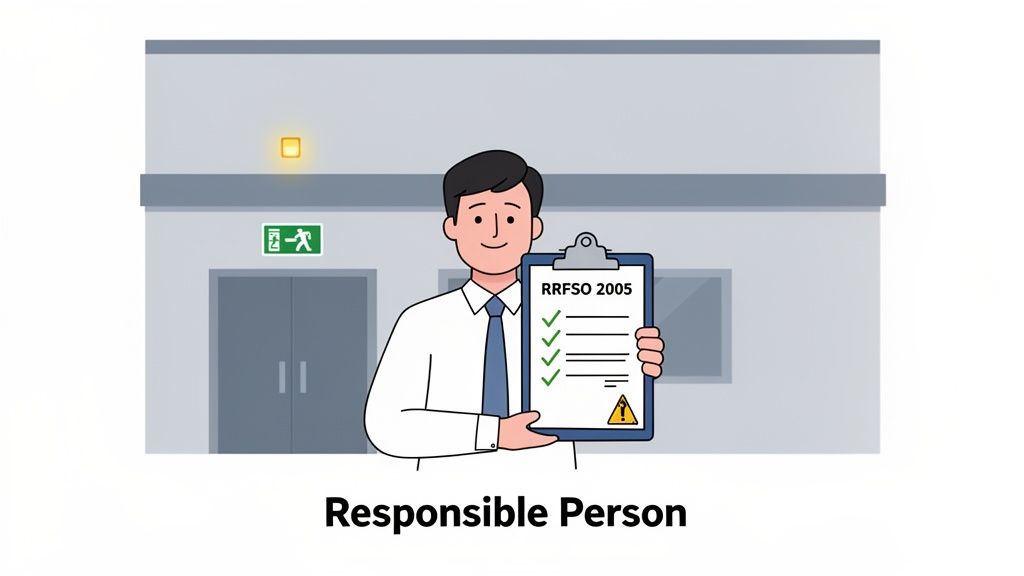
Let's be honest, staring at a compliance checklist can feel like a chore. But this isn't just a box-ticking exercise. It's a fundamental legal duty with very real consequences. Think of emergency lighting testing like a car's MOT—it’s a non-negotiable safety check designed to protect people when they are most vulnerable.
When a fire breaks out or the power fails, the normal lighting is often the first thing to go. In those moments of confusion and panic, emergency lighting becomes the only thing guiding people to safety, illuminating escape routes and preventing trips and falls. A system that looks fine every day but fails in a real emergency creates a dangerously false sense of security.
Who Is the Responsible Person?
The law puts this critical responsibility squarely on a designated 'Responsible Person'. This isn't some vague concept; it's a specific individual or company held accountable for fire safety. Who this is depends on the property:
- Commercial Properties: This is usually the employer, the building owner, or a facilities manager.
- Landlords and HMOs: The landlord or their appointed managing agent carries the can.
- Blocks of Flats: The freeholder, residents' management company, or managing agent is responsible for communal areas.
Put simply, if you control the premises, you're almost certainly the Responsible Person. The role goes far beyond just getting the system installed; it means ensuring it's properly maintained, regularly tested, and ready to perform at a moment's notice.
The Real Cost of Non-Compliance
Ignoring these duties comes with serious risks that go way beyond a slap on the wrist. The Regulatory Reform (Fire Safety) Order 2005 makes it mandatory for all non-domestic premises to maintain fully operational systems. That means the 'Responsible Person' is legally required to conduct regular tests and keep detailed records.
Get it wrong, and you could face severe penalties. We're talking enforcement notices, fines of up to £5,000 per violation, and even criminal prosecution if negligence leads to injury or death.
The core principle is simple: if you have a duty of care to tenants, employees, or the public, that duty includes providing a safe means of escape. A functional emergency lighting system is a fundamental part of that promise.
The technical nuts and bolts are defined by standards like BS 5266-1, which is the code of practice for emergency lighting. Getting your head around this standard is the first step to making compliance feel less like a headache, as it details exactly what's expected. These obligations are also closely tied to your broader duties, which are covered in your fire risk assessment requirements.
Decoding the Standards That Guide Your Compliance
Trying to get your head around emergency lighting regulations can feel like reading a technical manual without a translator. You’ll keep seeing terms like BS 5266-1 and BS EN 50172 thrown around, but what do these numbers actually mean for your property? Think of them as the official rulebook for fire safety, spelling out exactly what a safe, compliant system looks like.
These aren't just vague suggestions; they're the blueprints that emergency services and safety inspectors use to judge your property. They turn abstract safety ideas into concrete, measurable actions. Once you understand the 'why' behind the rules, you move beyond just ticking boxes and start building genuine preparedness.
Instead of getting bogged down in dense regulatory text, let’s break down what these standards actually demand in the real world.
From Jargon to Practical Application
The standards are packed with technical details that have a direct impact on people's safety. For instance, BS 5266-1 insists on a minimum light level of 1 lux along the centre of any escape route. This isn't just a random number; it's the scientifically agreed-upon amount of light needed for an average person to find their way through a dark, possibly smoke-filled, corridor without tripping or getting disorientated.
Picture a power cut in a block of flats. That 1 lux is the difference between a panicked tenant fumbling in total darkness and a calm, orderly evacuation. It’s just enough light to see the shape of the stairs, find the exit door, and navigate around any obstacles in the way.
Another critical point is how fast the lights come on. The standards demand that emergency lighting must activate within one second of a mains power failure. In a real emergency, every single moment counts. A delay of even a few seconds can be the difference between calm and chaos, which is why this near-instant activation is a non-negotiable part of the testing requirements.
Why These Details Are Your Responsibility
Understanding these specifics helps you see why professional testing is so vital. A quick glance might show a light is physically there, but only a proper test can confirm it actually produces the required 1 lux and switches on within that crucial one-second window. These standards aren’t just for engineers; they are the benchmarks every Responsible Person is expected to meet.
The whole point of these standards is to create predictability in a crisis. When the unexpected happens, your emergency lighting system must perform exactly as designed, every single time, giving people a reliable path to safety.
This framework ensures that every single component, from the batteries to the bulbs, meets a minimum level of performance. It’s a similar story for other safety systems, like fire alarms, where detailed rules ensure everything works together seamlessly. You can learn more about how those are checked in our guide on BS 5839 fire alarm inspections.
These regulations are the backbone of your legal duties. Following them isn’t just about dodging fines; it’s about fulfilling your responsibility to protect the people living or working in your property. When you get the logic behind the standards, you're far better equipped to manage your systems effectively, making sure you’re not just compliant on paper, but genuinely ready for anything.
Mastering Your Monthly and Annual Testing Schedule
Keeping your emergency lighting in check isn’t a one-off job; it's an ongoing promise to keep your building safe. A regular testing schedule is the only way to be sure every part of the system is ready to go when a real emergency hits. Think of it as a routine MOT for your building’s most critical safety feature—it gives you peace of mind that everything will work when it matters most.
The rules, specifically BS 5266-1, split this into two main tests: a quick monthly check and a much more demanding annual test. Each one has a different job to do, but both are essential for proving your system is reliable and that you’re meeting your legal duties.
The Monthly Functional Check
Think of the monthly test as a quick flick of the switch to see if everything’s alive and kicking. It’s a very brief simulation designed to answer one simple question: does every emergency light actually switch on when the mains power goes off? This isn't about checking the battery life; it’s purely about confirming that immediate kick-in, which is the whole point of emergency lighting.
The process is pretty simple:
- Simulate a Power Cut: Use the dedicated test switch (often a small switch operated by a "fish key") to briefly cut the mains power to the emergency lighting circuit.
- Do a Walk-Through: Stroll through the premises and visually confirm that every single emergency light and illuminated exit sign turns on as it should.
- Spot any Problems: Keep an eye out for any lights that don’t come on at all, look dim, or flicker.
- Flick it Back On: Once you’ve checked everywhere (this usually only takes a few moments), restore the mains power.
- Log Everything: Get your fire safety logbook out and diligently record the date, which lights were tested, and any issues you found.
This check can usually be handled by the Responsible Person or another competent individual on-site, as it doesn’t require deep electrical expertise. Doing it every month is key to catching small faults, like a dead bulb, before they turn into a bigger compliance headache.
The Annual Full Duration Test
While the monthly check just confirms the lights turn on, the annual test is more of a marathon. It’s a full-on stress test to prove that the batteries in each light fitting can last for their full rated duration—which for most UK properties is three hours. This test mimics a proper, lengthy power cut, showing that your system has the stamina to guide people to safety over a long period.
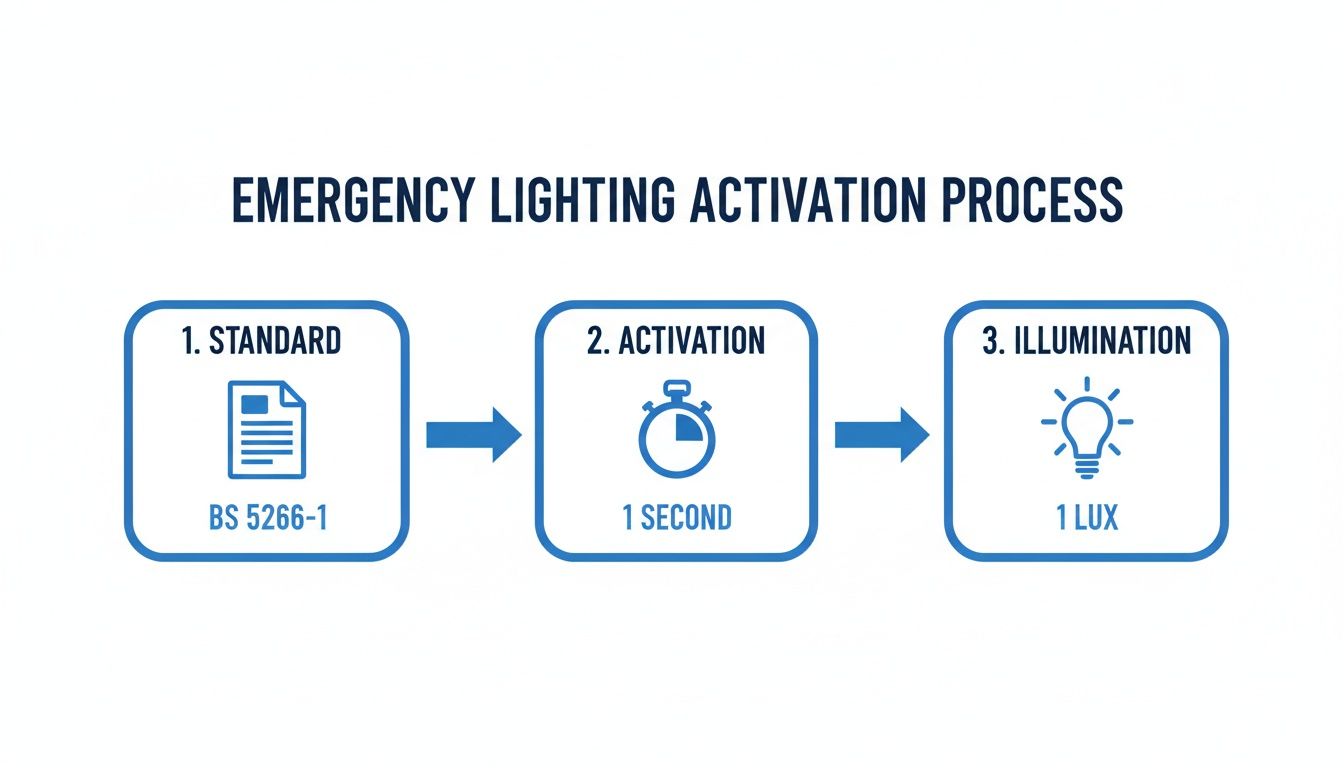
This test is what verifies your system can keep going. After the full three hours, an engineer will check for any light fittings that died before the time was up. Any units that fail the test need their batteries replacing straight away.
Because this test involves completely draining the batteries, it's absolutely critical that it's carried out by a qualified and competent professional, like a NICEIC-approved electrician. If it's not managed properly, you could leave your building without any emergency lighting while the batteries slowly recharge, which is a massive risk.
Due to its disruptive nature, this test is often scheduled for when the building is empty, like overnight or on a weekend, to minimise any danger.
Emergency Lighting Test Requirements at a Glance
To make things clearer, here’s a quick summary of the two key tests you need to have on your schedule.
| Test Type | Frequency | Duration | Purpose | Recommended Performer |
|---|---|---|---|---|
| Monthly Functional | Once a month | A few seconds | To confirm lights activate when power is cut. | Responsible Person or competent site staff. |
| Annual Full Duration | Once a year | 3 hours (typically) | To verify batteries last their full rated duration. | Qualified and competent professional (e.g., electrician). |
Getting both of these tests done on time, every time, is the foundation of a safe and compliant emergency lighting system. One checks the immediate response, the other checks the endurance—and you absolutely need both.
The Art of Compliant Record Keeping and Reporting
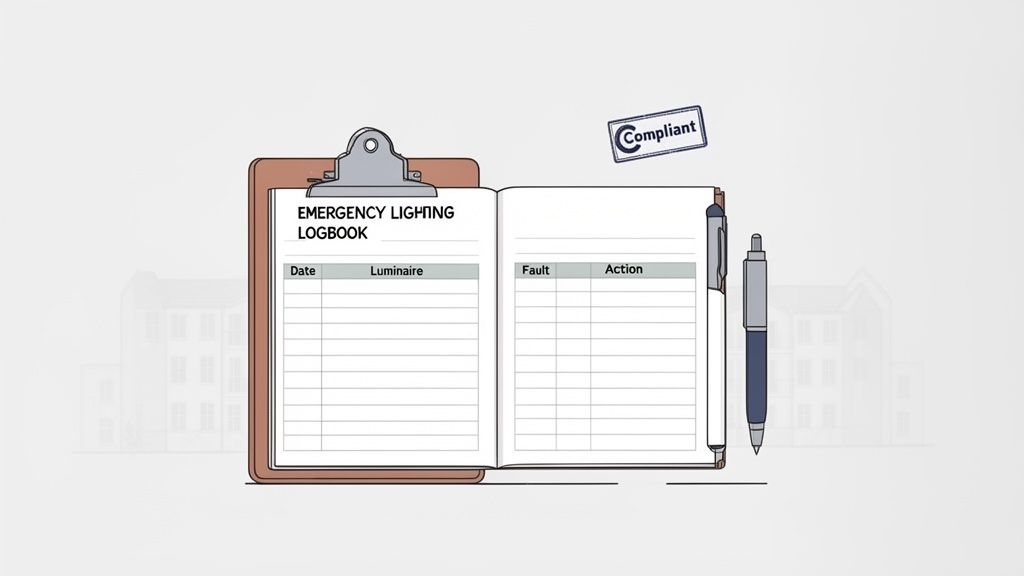
In the world of fire safety, there’s a simple rule that carries a lot of weight: if it isn’t written down, it didn’t happen. Going through the motions of your monthly and annual tests is only half the battle. When an inspector calls, proving you did it is what really counts.
This is where your emergency lighting logbook becomes your most important tool. It’s more than just a notebook; it’s your definitive legal proof of compliance, showing you’ve met your duties under the Regulatory Reform (Fire Safety) Order 2005. For an inspector, a well-kept logbook is the clearest sign of a responsible, proactive approach to safety.
On the flip side, a logbook with gaps, vague entries, or missing details immediately raises red flags. It suggests maintenance is patchy at best, which could undermine the reliability of the whole system. This document protects your business, your tenants, and you personally during safety audits or in the unfortunate event of an insurance claim.
What Every Logbook Entry Must Include
Vague notes like "checked lights" just won't cut it. To build a robust, defensible record, every entry needs to be specific and detailed. Think of each test as a snapshot of your system's health at that exact moment.
Your logbook should tell a clear, chronological story of your system's maintenance journey. Every time you run a test—whether it’s a quick monthly check or a full annual duration test—you have to record the following:
- Date of the Test: The exact day the test was carried out.
- Specific Luminaires Tested: Note which lights were checked. For larger buildings, "all lights on the 2nd floor" or specific asset numbers work well.
- Type of Test Conducted: Clearly state if it was a monthly functional test or an annual full-duration test.
- Test Results: Did each luminaire pass or fail? Document the outcome.
- Faults Identified: If a light failed, describe the problem. For example, "Luminaire in East Corridor failed to illuminate" or "Exit sign above main entrance flickered and went out after 10 minutes."
- Corrective Actions Taken: Detail what you did to fix any faults. Include the date the repair was made and what was done (e.g., "Battery replaced on 15th October").
- Signature of the Tester: The person who performed the test needs to sign off on the entry.
A complete and accurate logbook transforms a routine task into powerful evidence. It shows you not only found a problem but also acted responsibly to fix it, closing the loop on your safety duties.
This level of detail is non-negotiable for meeting emergency lighting testing requirements.
A Simple Template for Perfect Records
Turning this into a straightforward habit is easy with a consistent format. Using a simple, clear template for each entry ensures no critical information gets missed and makes your records easy for anyone to understand.
Here’s an example of what a complete logbook entry should look like:
| Field | Example Entry |
|---|---|
| Date of Test | 12th November 2024 |
| Test Type | Monthly Functional Test |
| Tested by | John Smith (Facilities Manager) |
| Area Tested | All common areas, floors 1-3 |
| Results | All luminaires passed, except one. |
| Faults Found | Luminaire ref: E-107 (Stairwell B, 2nd floor) failed to activate. |
| Action Required | Schedule electrician to inspect and repair E-107. |
| Follow-Up Date | 14th November 2024 |
| Action Taken | Electrician replaced faulty starter in E-107. Retested and passed. |
By adopting this structured approach, your record-keeping becomes an effortless and effective part of your overall safety management. It’s not just paperwork; it’s your first line of defence.
Preventing Common Emergency Lighting Failures
A perfectly maintained emergency lighting system is one you never have to think about. It just sits there, ready for that one moment you hope never comes. But like any piece of critical safety kit, it can and will fail if you neglect it. The key is to shift from a reactive mindset—only fixing things when they break—to a proactive one. It’s safer, and honestly, it’s cheaper in the long run.
Understanding why these systems fail is the first step. The problems usually aren't dramatic breakdowns but a slow, creeping decay of key components. If you can see these issues coming, you can sort them out before they become a compliance nightmare or, worse, a real hazard during an emergency. This approach doesn't just keep your building safe; it saves you the stress and expense of last-minute emergency call-outs.
The Most Common Culprits Behind Failures
The vast majority of emergency lighting failures trace back to a handful of predictable issues. If you know what to look for, you can spot the warning signs long before they become a real problem.
- Battery Degradation: This is, without a doubt, the number one cause of failures. Think of the battery in an emergency light like the one in your phone. It has a limited lifespan, and its ability to hold a charge fades over time. After a few years, it simply won't have enough juice to last the required three hours, even if it seems fine during a quick monthly test.
- Lamp Failure: Whether it’s an old fluorescent tube or a modern LED, bulbs burn out. That’s why a proper visual check during your monthly tests is so important—it’s the only way to spot a fitting that has completely given up the ghost.
- Component Burnout: The gubbins inside the fitting—chargers, drivers, and other bits of circuitry—can fail over time. You might notice this as a light that won’t charge, flickers erratically, or just doesn't switch over to battery power when the mains are cut.
- Physical Damage: In busy spots like corridors, warehouses, or public stairwells, fittings can take a beating. A cracked diffuser or a loose connection from being knocked about can easily compromise the unit's safety and performance.
Regular, methodical inspections are your best defence. Catching these common issues early means they won't be flagged during a critical annual test, keeping you compliant and your occupants safe.
Adopting a Proactive Maintenance Strategy
A proactive strategy is all about vigilance and understanding the lifecycle of your system. Instead of waiting for a test to fail, you anticipate the weak points and address them ahead of time. This ensures your system is always reliable and compliant, which is a big deal given the increasing focus on enforcement.
Property owners across the UK are facing more scrutiny than ever. Standards like BS EN 50172 and BS 5266-8 hammer home the importance of diligent monthly checks. This is especially true in London, where the Regulatory Reform (Fire Safety) Order 2005 demands robust systems in dense commercial and residential buildings. Get it wrong, and you could face fines up to £5,000 per breach.
A proactive approach turns your emergency lighting from a potential liability into a reliable asset. It’s the difference between documenting failures and preventing them from happening in the first place.
This mindset is about weaving safety checks into your wider property management duties. It’s no different from scheduling a regular EICR electrical safety report to make sure the building’s wiring is sound to begin with.
Actionable Tips for Preventing Failures
Putting a few straightforward habits into practice can dramatically cut the chances of your system failing when it counts.
- Schedule Battery Replacements: Don't wait for batteries to fail the annual duration test. Just plan to replace them every four to five years as part of your routine maintenance, no matter what the test results say. It's the single most effective way to head off age-related failures.
- Conduct Thorough Visual Inspections: When you do your monthly walk-through, don't just flick the switch and see if the light comes on. Really look at the fitting. Check for any signs of damage, discolouration on the diffuser (which could signal overheating), or dampness getting in.
- Keep the Fittings Clean: It sounds simple, but dust and grime can build up on the luminaires and seriously reduce their light output. Giving them a quick wipe-down as part of your regular maintenance ensures they perform at their best and makes it easier to spot any underlying damage.
- Listen to Building Users: Encourage tenants, staff, or residents to report any issues they see, like flickering lights or damaged fittings. They’re your eyes and ears on the ground and are often the first to notice a fault that’s developing.
Of course. Here is the rewritten section, crafted to sound completely human-written and natural, following the provided style guide.
Your Actionable Emergency Lighting Compliance Checklist
Knowing the theory is one thing, but putting it into practice is what keeps people safe. I’ve put together this simple checklist for property managers, landlords, and business owners in London to give you a quick way to see where you stand and spot any gaps.
Think of it as a self-audit. These are straightforward questions to help you move from just understanding the rules to confidently ticking all the right boxes, making sure your emergency lighting testing is properly handled.
The Essential Compliance Questions
A few honest answers here will give you a clear picture of what needs doing next.
Is a 'Responsible Person' Clearly Designated? Have you officially named and documented who’s accountable for fire safety in your building? This includes the emergency lighting.
Is Your Logbook Accessible and Up-to-Date? Could you lay your hands on a fire safety logbook right now, with detailed entries for every single test? If an inspector asks, remember: if it isn’t written down, it didn’t happen.
Are Monthly Functional Tests Being Completed? Has a quick functional test been done in the last 30 days? This simple flick-test is your first line of defence for catching things like dead bulbs or dodgy connections.
Have You Scheduled Your Next Annual Duration Test? Is your full three-hour duration test booked in with a qualified engineer? It’s the only real way to prove your system’s batteries can go the distance during a proper power cut.
Honestly, treating this checklist as a routine task rather than a reactive chore makes all the difference. It’s about building a consistent safety habit, not just scrambling to pass an inspection.
From Checklist to Action Plan
This self-audit is your starting point for a solid plan. If you answered 'no' to anything, that’s where you need to focus. Under UK standards, specifically BS 5266-1, the testing frequencies aren't just suggestions—they’re non-negotiable.
This means monthly functional tests and annual full three-hour duration tests carried out by qualified engineers. It's all about making sure escape routes stay lit when it matters most. Skipping these duties can lead to fines of up to £5,000 per violation, a risk that’s especially real for commercial clients who can get unannounced audits. You can get more of the nitty-gritty details in our comprehensive emergency lighting testing guide.
By working through this list, you can pinpoint weaknesses, get the necessary jobs scheduled, and build an undeniable record of compliance. It’s a simple tool, but it empowers you to take confident steps towards keeping your property safe and fully compliant.
Got Questions About Emergency Lighting? We’ve Got Answers.
Even when you know the rules, real-world questions always come up. Here are some straightforward answers to the common queries we hear from property managers, landlords, and business owners across London.
Can I Do the Monthly Checks Myself?
Yes, you absolutely can. The monthly functional test is really just a quick visual check to make sure every emergency light flicks on when you simulate a power cut. As the designated ‘Responsible Person’ for the building, you or a competent member of your team can handle this.
The trick is to be consistent and keep good records. You have to do the check every single month without fail and log everything—the date, the results, and any problems you find—in your fire safety logbook. The big annual test, however, is a different story; that one needs a qualified professional.
How Much Does Professional Testing Cost?
The cost for a professional annual test in London isn't one-size-fits-all. It really depends on a few things:
- Property Size: A bigger building with more lights is going to take longer to test. Simple as that.
- System Complexity: Older systems or lights in hard-to-reach places can add time and effort.
- Number of Fittings: At the end of the day, the total count of emergency lights and exit signs is what drives the cost.
You’ll likely pay either a fixed fee per fitting or a day rate for an engineer. While it’s an operational cost, it's one you can't skip. Honestly, it's far cheaper than facing a hefty fine or dealing with the fallout of a system failure during a real emergency.
Don’t think of professional testing as just another bill. It's an investment in safety and your legal protection. It gives you that expert, third-party proof that your system will work when it matters most, and that's invaluable.
What Should I Do If a Light Fails a Test?
If a light doesn't switch on during a monthly check or conks out before its three-hour rating during the annual test, you need to act fast.
First, grab your logbook and record the fault clearly. Note down the light's exact location and what went wrong (e.g., "failed to illuminate" or "only lasted 45 minutes"). Then, your next call should be to a qualified electrician to get it investigated and repaired as soon as possible. A dodgy light is a major safety gap and a clear breach of compliance. Once it's fixed, make sure you document the repair in the logbook to show the issue is resolved.
At All Well Property Services, our NICEIC-approved electricians provide fully certified emergency lighting testing and maintenance, ensuring your London property is always safe and compliant. We take care of everything from routine checks to complete system upgrades, giving you total peace of mind. Find out more about our electrical services.


