If you live in a period London home, you’re probably familiar with the quirks of original sash windows—the rattles, the draughts, the sashes painted shut decades ago. It's a common story. But before you think about tearing them out, consider this: choosing sash window restoration in London is often a far smarter investment in your property's character and value than a full-scale replacement. It's about preserving a piece of history while bringing its performance up to modern standards.
Why Restore Sash Windows Instead Of Replacing Them
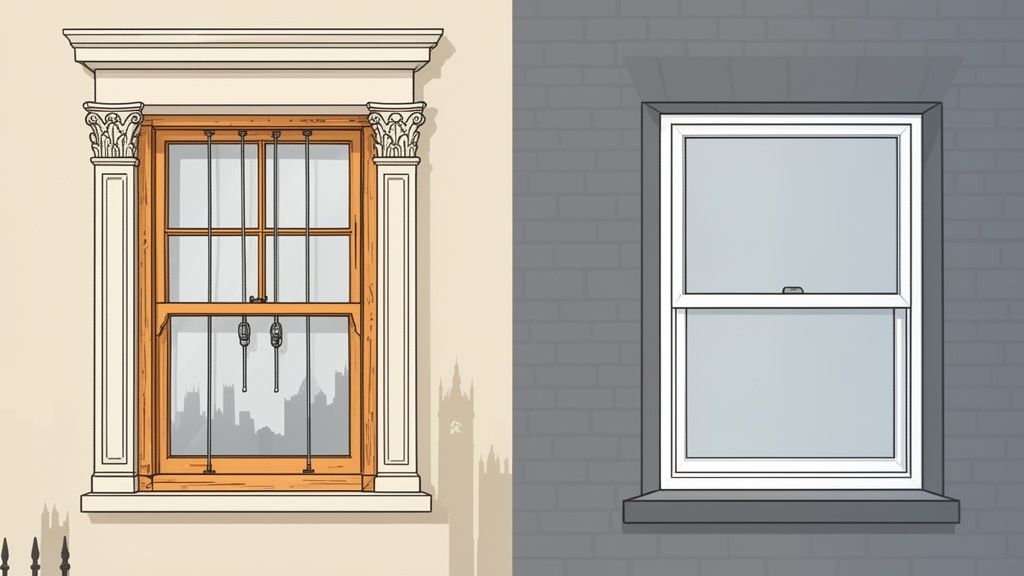
When an original window starts to fail, the knee-jerk reaction for many London homeowners is to replace it. But that often means overlooking a more sustainable and architecturally sympathetic option. Restoration isn't just a quick paint job; it’s a deep refurbishment that breathes new life into the window's original structure and function.
Think of it like having a classic piece of furniture professionally restored instead of swapping it for a flat-pack imitation. The original timber, often slow-grown Victorian pine, is of a quality you just can’t find today. This dense, hardy wood has already survived more than a century of British weather. With the right care, it can easily last another hundred years.
Preserving Architectural Integrity
Your sash windows are a huge part of your home’s personality, contributing to the charm that makes London’s streetscapes so unique. Swapping them for modern alternatives, even well-made replicas, can quietly strip away that authenticity. The subtle imperfections and the unique profile of original glazing bars are part of your home’s story.
Restoration keeps that history alive. It ensures the windows stay true to the building's original design, which is vital for maintaining—and often increasing—your property's value. This is non-negotiable in conservation areas or for listed buildings, where unauthorised replacements can land you in hot water with the council. You can find out more about how modern materials stack up in our guide comparing uPVC and aluminium windows.
A Smart Financial and Environmental Choice
Across London's Victorian and Edwardian housing stock, an estimated 75% of period properties still have their original sash windows. That’s a testament to their incredible durability. With a professional restoration, we can reduce heat loss by up to 54% by fitting discreet draught-proofing and slimline double glazing, all without changing the window's authentic look.
Choosing to restore over replace is an investment in longevity. Original timber sash windows were designed to be repaired, with individual components that can be mended or replaced, unlike modern sealed units that often require complete removal when they fail.
This approach brings some serious advantages:
- Cost-Effectiveness: Restoration is almost always more affordable than sourcing and installing high-quality, bespoke timber replacements.
- Sustainability: Repairing what you already have cuts down on landfill waste and avoids the carbon footprint of manufacturing new units.
- Performance: We can seamlessly integrate modern draught-proofing and improved glazing, making your home warmer, quieter, and more energy-efficient.
Ultimately, choosing sash window restoration in London gives you the best of both worlds. You get to preserve your home’s priceless heritage while enjoying the comfort and performance you'd expect from a modern property.
Understanding The Real Cost Of Sash Window Restoration
When you’re planning any home improvement, the bottom line is always front and centre. For sash window restoration in London, getting to grips with the actual figures helps you see the real value behind the work, moving past vague estimates to appreciate what it means for your property in the long run.
Think of it like this: restoring a beautiful antique piece of furniture is an investment in craftsmanship that holds its value. Swapping it for a mass-produced, flat-pack alternative might seem cheaper at first, but it has no character, won't last as long, and you'll be lucky if it's worth anything in a few years. The very same principle applies to your original timber sash windows.
A Transparent Look At Restoration Costs
So, let's break down the typical costs. The final figure for restoration really depends on the state of your windows, but it almost always works out to be more economical than a like-for-like replacement. The key services are priced individually, which lets you build a solution that fits your specific needs.
- Draught-Proofing: This is a seriously effective, low-cost upgrade. It makes a massive difference to thermal efficiency and how comfortable your home feels.
- Timber Repairs: Tackling things like rot or damaged sills is a precise craft. It saves the original frame without needing to rip the whole thing out.
- Full Refurbishment: This is the full works—repairs, re-cording, re-balancing, and draught-proofing—for a window that operates as if it were brand new.
A full refurbishment of a single window in London typically lands somewhere between £600 and £1,200. It's a sound investment, especially when you consider the national average cost for sash window restoration is around £770 per window. You can dig deeper into these numbers over on Checkatrade's blog about sash window refurbishment costs.
By choosing restoration, you aren't just fixing a window; you're reinvesting in one of your home's core architectural assets. This process boosts kerb appeal and can directly bump up your property's valuation.
Restoration Versus Replacement: The Financial Reality
When homeowners start comparing costs, it’s vital to look at the right alternatives. A cheap uPVC window just isn't a fair comparison to a handcrafted, original timber sash. The real comparison is between restoration and a bespoke timber replacement—and that’s where the financial sense of restoration becomes crystal clear.
A new bespoke timber sash window in London can easily set you back over £1,500 per unit, and often a lot more. That makes restoration less than half the price in many situations. Even modern uPVC sash windows, which can seriously compromise the character of a period home, often cost between £700-£800.
Let’s put this into perspective with a straightforward comparison.
Cost Comparison: Sash Window Restoration Vs Replacement In London
This table breaks down the typical costs for restoring an existing sash window versus replacing it with timber or uPVC alternatives in the London market.
| Service / Product | Typical Restoration Cost (per window) | Typical Replacement Cost (per window) |
|---|---|---|
| Full Sash Window Restoration | £600 – £1,200 | N/A |
| New Bespoke Timber Sash Window | N/A | £1,500 – £2,500+ |
| New uPVC Sash Window | N/A | £700 – £900 |
The numbers really speak for themselves. Restoration offers a financially sensible path to getting modern performance without sacrificing the historical soul of your property.
Are There Grants Or Funding Available?
For certain properties, you might find some financial help is available. If your home is a listed building or sits within one of London's many conservation areas, you could be eligible for a grant to help with the costs. These schemes are there to encourage homeowners to preserve the city’s architectural heritage.
Local authorities and organisations like Historic England sometimes offer funding for conservation-grade repairs. It’s not a guarantee, but it’s always worth looking into. A specialist contractor experienced in sash window restoration in London can often give you some pointers on how to navigate these potential funding streams, making sure your project is both beautiful and compliant.
A Look Inside The Restoration Process
Ever wondered what really goes on during a professional sash window restoration in London? It’s not just a quick paint job; it’s a meticulous craft, blending traditional joinery with a few modern upgrades to boost performance. Knowing what’s involved helps demystify the whole thing, showing you the care and precision needed to bring your period windows back to life.
Breaking it down shows you exactly what to expect when a skilled team gets to work on your home. It’s all about being transparent, from the first look at the job to the final, flawless coat of paint. Let's walk through each phase of this transformative journey.
Initial Assessment And Careful Removal
The very first step is a detailed inspection. A specialist will assess the condition of each window, identifying any rot, checking the state of the timber, examining the pulley mechanisms, and noting any frayed or broken sash cords. Think of it as a diagnostic phase, where a clear plan of action is mapped out for each individual window.
Once the assessment is done, the delicate work of removal begins. The staff beads and parting beads—those are the timber strips holding the sashes in place—are carefully taken out. The sashes themselves are then removed from the main box frame. This is always done with extreme care to protect the surrounding plasterwork and the original frame, which stays put throughout the process.
A key principle of professional restoration is to be as non-invasive as possible. The goal is always to repair and preserve the original box frame on-site, removing only the moving sashes for workshop-based refurbishment.
This approach keeps disruption in your home to a minimum. While the sashes are whisked away for their intensive treatment, the window openings are securely boarded up to keep your property safe and weatherproof.
Stripping, Repairing, And Upgrading The Sashes
With the sashes safely at the workshop, the real restoration kicks off. Decades of old, flaking paint are painstakingly stripped away, taking the timber right back to its bare form. This is a crucial step because it reveals the true condition of the wood, uncovering any hidden damage or rot that wasn't visible before.
Next up is the timber repair, a true test of craftsmanship. Any rotten or damaged sections of the sash are carefully cut out. New, seasoned timber is then precisely spliced in, creating a seamless and structurally sound repair. This technique, known as timber splicing, is far superior to just using fillers, as it replaces decayed wood with solid timber for long-lasting strength. You can explore more about these specialist techniques in our detailed guide on professional sash window repair.
This is also the point where we integrate some modern upgrades:
- Draught-Proofing System: We route discreet grooves into the sash rails to house a high-performance draught-proofing pile. The system is designed to be completely invisible when the window is closed but creates a powerful seal against wind, noise, and dust.
- Glazing Work: If the original glass is broken, it's replaced. This is also when slimline double glazing can be retrofitted into the original sashes, offering a significant boost in thermal and acoustic insulation without changing the window's historic look.
These steps ensure the restored sashes won't just look authentic but will also perform to modern standards.
This infographic gives you a quick cost overview, comparing restoration against the usual replacement options you’ll see in the London market.
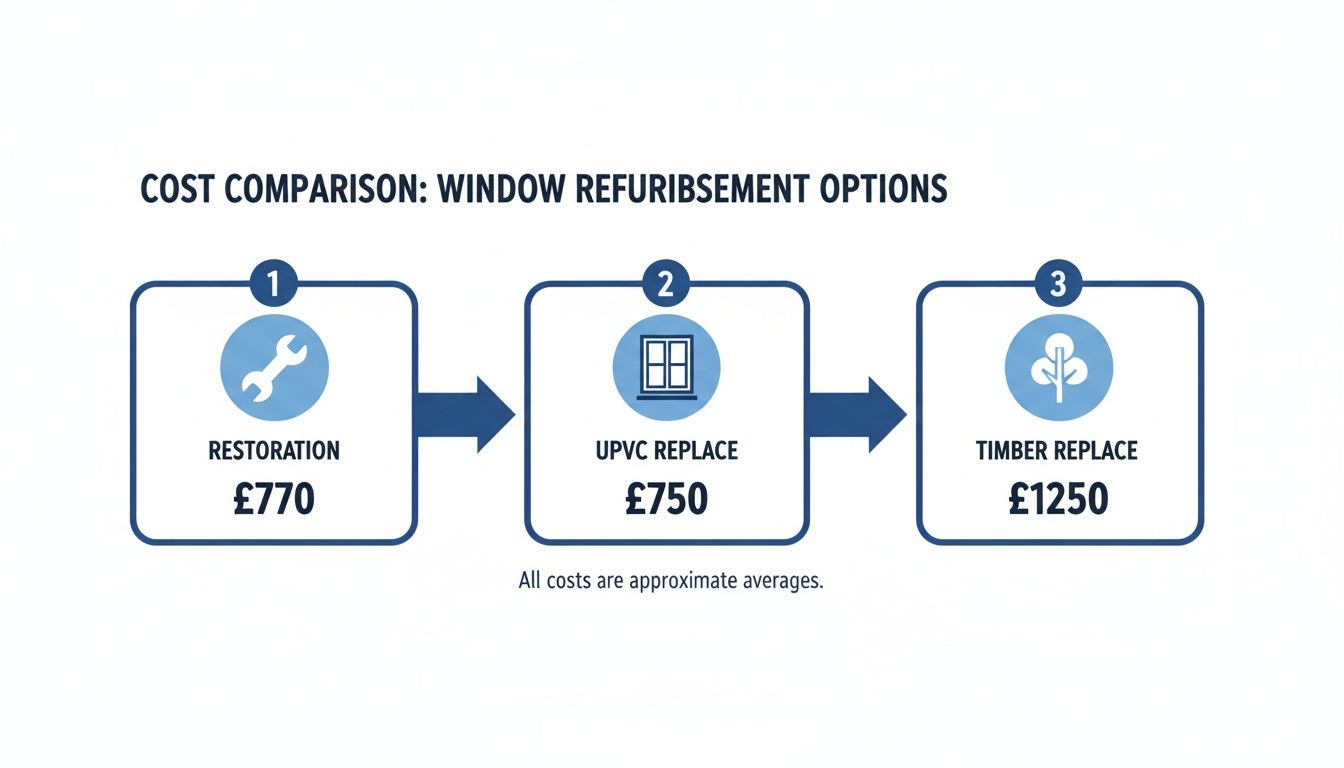
As you can see, restoration is highly competitive on price. It often works out as more affordable than a bespoke timber replacement while preserving valuable original features.
Re-cording, Re-balancing, And Finishing
While the sashes are getting their workshop treatment, attention turns back to the box frame at your property. It’s thoroughly cleaned, repaired where needed, and prepped for the sashes' return. New, durable sash cords are fitted, running smoothly over serviced or replaced pulleys.
The final, critical stage is re-balancing. Original sash windows used cast-iron weights hidden inside the box frame to counterbalance the sash, allowing it to glide open and stay put. We weigh the restored sashes and adjust the counterweights to match them perfectly. This is what ensures the window operates effortlessly, with no sticking, jamming, or dropping shut.
Finally, the restored sashes are refitted, along with new parting beads and staff beads. The entire window is then primed and painted with high-quality, weather-resistant paint, providing a beautiful finish that will protect the timber for years. The result is a window that looks stunning, functions perfectly, and preserves a piece of your home's unique London heritage.
Navigating Conservation Areas And Listed Buildings
Owning a period property in London is a privilege, but it often comes with a special set of responsibilities. If your home is in one of the city's many conservation areas or is a listed building, you're not just a homeowner—you're a custodian of its heritage. This means any work, especially something as visible as a sash window restoration in London, needs to be handled with care and a real understanding of the rules.
These regulations aren't just red tape designed to make your life difficult. They exist to protect the unique architectural fabric of London's historic neighbourhoods. A conservation area designation protects the special character of an entire district, while listed building status protects a single property of exceptional architectural or historical interest.
Repair Versus Replacement: The Critical Distinction
When it comes to your original sash windows, planning authorities draw a very clear line in the sand: repair versus replacement. Grasping this distinction is the single most important thing you can do before your project even begins.
Think of it like this: a 'repair' is like mending a tear in a priceless tapestry. You're carefully fixing what's there, preserving the original material and character. A 'replacement' is cutting that section out and stitching in a new piece. Even a perfect replica is still a new piece, and the original is lost for good.
For planning authorities, the default position is always to repair and retain original features wherever possible. Restoration is seen as a positive act of preservation, whereas replacement is viewed as a last resort that requires a very strong justification.
This means that most professional restoration work—repairing timber, installing draught-proofing, and re-glazing—often falls under 'like-for-like' repairs and may not need formal consent. However, ripping out an entire window unit almost always will.
When Is Planning Permission Required?
The need for official consent really hinges on your property's status and the scope of the work. Getting this wrong can lead to serious headaches, including hefty fines and enforcement notices ordering you to reverse the work at your own cost.
Here’s a general guide to help you figure it out:
- Listed Buildings: For any listed building (Grade I, II*, or II), you will need Listed Building Consent for any alteration that could affect its character. This absolutely includes replacing a sash window, even with a seemingly identical timber one. Unauthorised work on a listed building is a criminal offence.
- Conservation Areas: If you live in a conservation area, you will likely need planning permission to replace windows. Many London boroughs also have an 'Article 4 Direction' in place, which removes certain permitted development rights and gives them much tighter control over minor alterations.
- Repairs and Refurbishment: Genuine repairs, such as splicing new timber into a rotten sill or fitting discreet draught-proofing, are generally encouraged. In most cases, this kind of work doesn't require consent.
Staying Compliant and Protecting Your Home
The best first step is always to seek advice. A quick chat with your local council’s conservation officer can provide clarity and save you a huge amount of stress and money down the line.
At All Well Property Services, we have years of hands-on experience working on period properties across London. We understand the nuances of heritage regulations and can help you create a restoration plan that both enhances your home and satisfies local planning requirements, ensuring your project goes off without a hitch.
The Hidden Benefits Of Restored Sash Windows
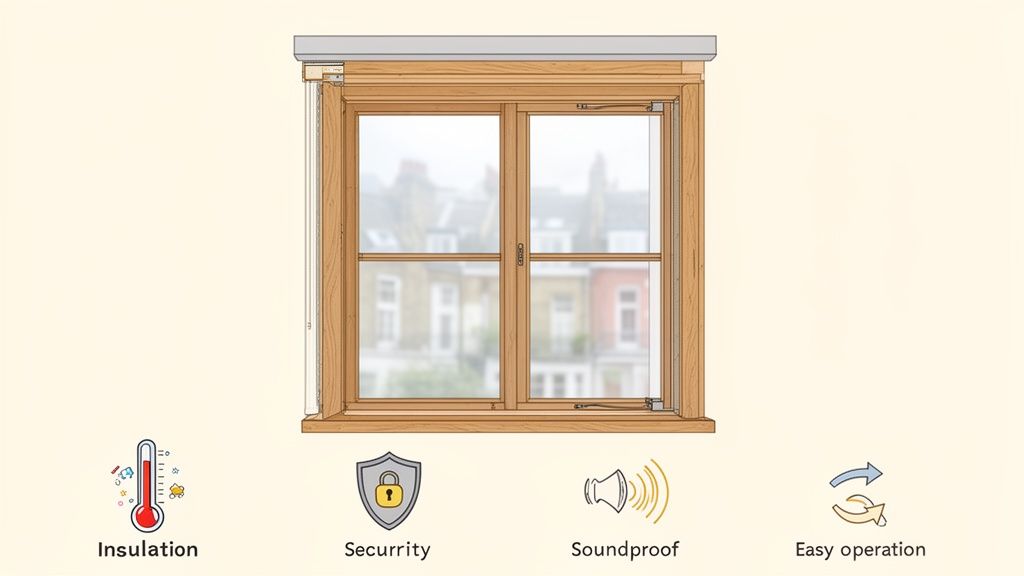
While the visual transformation of a beautifully restored sash window is undeniable, the biggest upgrades are often the ones you feel rather than see. A professional sash window restoration in London is far more than a cosmetic touch-up; it’s a deep functional overhaul that brings modern comfort and performance to your period home.
These are the practical, day-to-day advantages that make a real difference. Think of it as upgrading the engine of a classic car—it still looks timeless, but now it runs smoothly, quietly, and efficiently. Proper restoration tackles the core issues of old windows, turning them from a charming weakness into a reliable strength.
The table below gives a quick overview of the key improvements you can expect.
Performance Upgrades Through Sash Window Restoration
| Restoration Feature | Key Benefit | Impact on Your Home |
|---|---|---|
| Draught-Proofing System | Superior Energy Efficiency | Reduces heat loss by over 50%, lowers energy bills, and creates a warmer, cosier living space. |
| Modern Security Locks | Enhanced Home Security | Fortifies weak points with robust, key-operated locks and sash stops without altering the window's classic look. |
| Acoustic Sealing | A Quieter Living Space | The same seals that block draughts also dampen external noise, creating a more peaceful indoor environment. |
| Rebalancing & New Cords | Effortless Operation | Correctly weighted sashes with new cords mean your windows glide open and shut smoothly, just as they were designed to. |
Each of these upgrades contributes to a home that's not just more beautiful, but fundamentally better to live in. Let's dig into what each of these means for you.
Superior Energy Efficiency
Draughty windows are a notorious feature of older London properties, letting precious heat escape and cold air creep in. This isn't just uncomfortable; it's a constant drain on your energy bills. Professional restoration directly confronts this problem.
By integrating a discreet, high-performance draught-proofing system into the original sashes, we create an airtight seal when the window is closed. This simple upgrade has a huge impact, with studies showing it can reduce heat loss through the window by over 50%. This means a warmer home in winter, lower heating bills, and a significantly smaller carbon footprint.
The greatest trick of modern sash window restoration is that the best upgrades are completely invisible. Draught-proofing systems are concealed within the window's structure, preserving the authentic look while delivering modern thermal performance.
Enhanced Home Security
Original sash windows can sometimes be a security concern, with ageing catches and vulnerable single glazing. However, a full restoration provides the perfect opportunity to fortify your home’s defences without compromising its historic character.
During the process, we can install a range of modern, high-security locks that are specifically designed for timber sash windows.
- Sash Stops: These restrict how far the window can be opened, providing ventilation with peace of mind.
- Key-Operated Fitch Locks: These replace old, simple catches with robust locking mechanisms.
- Reinforced Glazing: Where appropriate, tougher laminated glass can be fitted to resist impact.
These security enhancements are fitted seamlessly into the original frames, giving you confidence in your home's safety while maintaining its traditional appearance.
A Quieter Living Space
The constant hum of city life is part of living in London, but it shouldn't invade your home. The same gaps that cause draughts also let in unwanted noise from traffic, sirens, and pedestrians.
The draught-proofing system installed during restoration works as a brilliant acoustic barrier. By sealing the air gaps, it significantly dampens external sounds, creating a much quieter and more peaceful indoor environment. This is one of the most immediate benefits clients notice and appreciate, especially those living on busy London streets.
Effortless Operation And Functionality
Are you tired of windows that are painted shut, rattle in the wind, or refuse to stay open? This is a common frustration, but it’s completely fixable. The restoration process addresses the core mechanics of the window.
We ensure the sashes are correctly weighted and balanced, and we fit new, durable sash cords. This means your windows will glide open and shut with minimal effort, just as they were originally designed to do. You can explore more of the surprising benefits of updating home windows in our related article. This return to smooth functionality makes your home more comfortable and enjoyable to live in every single day.
How To Choose The right Restoration Expert
Picking the right craftsperson for your sash window restoration in London is the single most important decision you’ll make. Honestly, it’s the difference between a flawless, long-lasting repair and a costly mistake that you'll regret for years.
When you place your home’s heritage features in someone's hands, you need a true specialist who respects the original character of your property.
Think of it like hiring a classic car mechanic instead of a general garage. A general builder might make the window look good on the surface, but a specialist understands the unique mechanics, the properties of aged timber, and the specific techniques needed for a lasting, authentic result. Your goal is to find that specialist.
Vetting Your Potential Contractor
Finding a true expert requires more than a quick Google search. You need to ask targeted questions that reveal their experience, professionalism, and genuine dedication to their craft. A real specialist will welcome detailed questions and provide confident, transparent answers.
Use this checklist to guide your conversations with potential contractors. This isn't just a list of questions; it's a framework for understanding who you’re trusting with your home.
A true sash window expert sells craftsmanship, not just a service. They will be passionate about preservation and able to explain their process in detail, demonstrating a deep respect for the architectural integrity of your home.
Key Questions To Ask Before You Hire
Arming yourself with the right questions is crucial. Each one is designed to uncover a different aspect of their business and expertise, helping you make a fully informed choice.
1. Can you provide references and examples of recent, local projects?
- Why it matters: This is non-negotiable. Any reputable expert will be proud to share their work and connect you with satisfied clients. Ask for addresses in your part of London so you can see the quality of their finish from the outside.
2. What is your specific experience with listed buildings or homes in conservation areas?
- Why it matters: Working on protected properties requires specialist knowledge of regulations. An experienced contractor will understand the nuances of ‘like-for-like’ repairs and what requires formal consent, protecting you from potential legal headaches with the council.
3. Do you have dedicated workshop facilities, or is all work done on-site?
- Why it matters: A professional setup often involves taking the sashes to a workshop for intensive repairs like paint stripping and timber splicing. This approach minimises the mess and disruption in your home and usually results in a higher-quality finish.
4. Are you fully insured, and what guarantees do you offer on your work?
- Why it matters: Public Liability Insurance is a must-have to protect your property from any accidents. On top of that, a confident craftsperson will always stand by their work with a guarantee, giving you long-term peace of mind.
Got Questions About Sash Window Restoration?
Even when you're sold on the benefits, it's completely normal to have a few lingering questions before you commit. A sash window restoration in London is a proper investment in your home’s future, so you need to be clear on the details. We've pulled together the most common queries we get from homeowners, just to give you that final bit of confidence.
Think of this as the practical bit—quick, straightforward answers to the things that really matter, from how long it all takes to what you need to do afterwards.
How Long Does Sash Window Restoration Typically Take?
Honestly, it all comes down to how many windows you have and what state they're in. As a rough guide, a single sash window can usually be fully restored within 2-3 days. That covers everything from taking it out, doing the repairs back at the workshop, and fitting it back in place.
For a typical London terrace with five to eight windows, you’re usually looking at one to two weeks from start to finish. Any decent contractor will give you a detailed schedule with their quote so you know exactly what’s happening and when, keeping disruption to a minimum.
Can You Put Double Glazing in Original Sash Windows?
Yes, absolutely—and it’s become one of the most popular upgrades we do. Specialists can expertly fit modern, slimline double-glazing units directly into your original timber sashes. These units are designed to be incredibly low-profile, so you get all the thermal and acoustic insulation you want without wrecking the window's classic, slender look.
This technique is a real game-changer, especially for listed buildings or homes in conservation areas where ripping out the original frames is a complete non-starter. You get the perfect blend of historic charm and modern energy efficiency, which keeps both the heritage officers and your heating bill happy.
It’s the best way to preserve the authentic character of your home while making it a much more comfortable place to live.
My Sash Windows Are Painted Shut. Can They Be Restored?
Without a doubt. This is probably one of the most common problems we see, and it's completely fixable. In period properties, it’s almost inevitable that after years of redecoration, a few windows will have been painted stuck.
The restoration process involves carefully freeing the sashes from the frame where they’ve been sealed shut by layers of old paint. Our craftsmen then strip back the build-up, service the pulleys and cords, and re-balance the window so it works properly. Once we're done, your windows will slide up and down smoothly, just like they were meant to.
What Kind of Maintenance is Required After Restoration?
You’ll be pleasantly surprised at how low-maintenance restored timber sash windows are. The secret is in the prep and the paint. We use high-quality, durable paints that protect the timber for years, so you’ll only really need to give the paintwork a quick check for any cracks every 5-7 years.
Other than that, just give the glass a clean now and then and make sure the sliding channels are clear of any debris. Do that, and they’ll continue to operate perfectly for decades. We always leave homeowners with a simple maintenance guide once the job is finished.
Ready to bring your period windows back to life with modern performance? The team at All Well Property Services has the specialist expertise to handle your sash window restoration with the care and precision your London home deserves. Contact us today for a detailed, no-obligation quote.


