


An unused attic is more than just storage space; it's untapped potential waiting to be realised. For many London homeowners, particularly those in period properties, a loft conversion is the most effective way to add valuable square footage, enhance property value, and create bespoke living areas without the complexities and planning hurdles of a ground-floor extension. The visual appeal of loft conversions before and after is undeniable, but what does the transformation truly involve beyond the stunning final photographs?
This guide moves past simple aesthetics to provide a strategic breakdown of eight inspiring, real-world projects completed across London. We will dissect the crucial details behind each conversion, offering a transparent look at what it takes to turn a forgotten space into a functional, beautiful part of your home. You will gain a clear understanding of the entire process, from initial concept to final execution.
Inside this comprehensive gallery, we will explore:
- Detailed Project Scopes: From structural works and dormer types to interior layouts.
- Transparent Costings: Real-world budget ranges for different specifications.
- Practical Timelines: An honest look at project duration from start to finish.
- Key Challenges & Solutions: How issues like Party Wall agreements, planning permission, and structural constraints were successfully navigated.
- Actionable Takeaways: Replicable strategies and design insights for your own project.
Whether you're envisioning a luxurious master suite in your Victorian terrace, a modern home office with city views, or a practical guest suite, these case studies provide the detailed, actionable insights you need to confidently begin your own loft conversion journey.
1. Victorian Terraced House Master Suite Loft Conversion – £45,000–£55,000
The classic Victorian terraced house loft conversion is a masterclass in blending period character with modern functionality. This type of project transforms a dusty, underused attic into a luxurious master bedroom with an ensuite bathroom, adding significant value and liveable space without altering the home's historic charm. The goal is to create a seamless extension that feels like it has always been part of the original house.
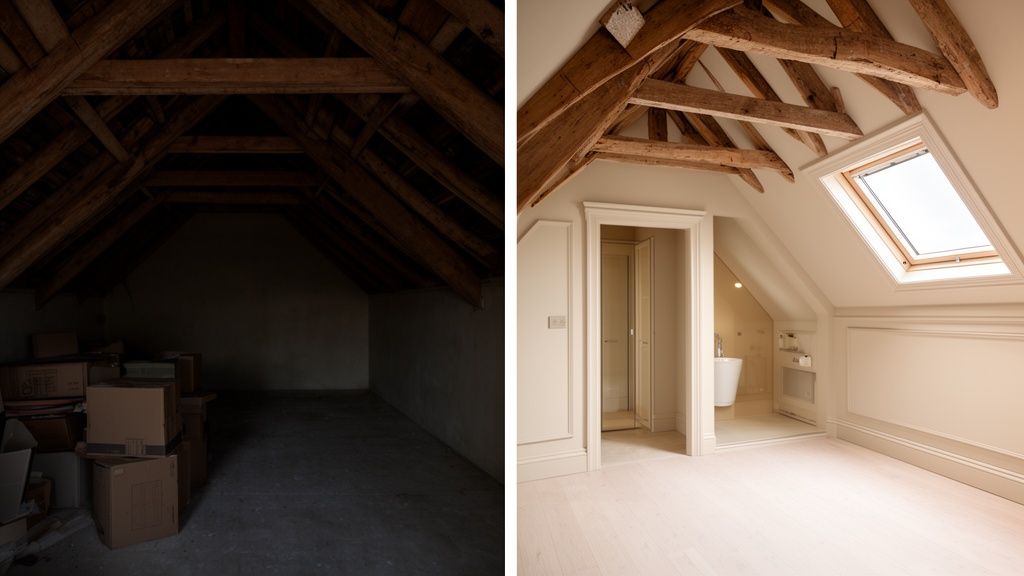

This approach focuses on architectural sympathy. Instead of generic designs, it involves carefully considered dormer windows, often with period-appropriate sashes, and retaining or replicating original features like cornicing or exposed roof trusses. The result, as seen in many loft conversions before and after galleries, is a bright, airy sanctuary that respects the property's heritage.
Strategic Implementation: Case Studies
- Dulwich Village Townhouse: A single-storey conversion created a stunning master suite, boosting the property's rental yield by an impressive 22% by adding a premium bedroom and bathroom.
- Clapham Victorian Terrace: This project successfully retained the original coving while adding a new period-style sash dormer, making the new space feel authentic and integrated.
- Balham Heritage Property: By using traditional heritage lime plaster, this conversion not only preserved the building’s character but also ensured breathability, passing building control on the first submission.
Actionable Takeaways for Homeowners
To ensure your Victorian loft conversion is a success, focus on early and detailed planning.
Key Strategy: Early engagement with a structural engineer and your Building Control officer is non-negotiable for period properties. This pre-application communication identifies potential structural or heritage constraints, preventing costly delays and redesigns later in the project.
Follow these critical steps:
- Assess Roof Structure Early: Engage a structural engineer to evaluate existing roof trusses and load-bearing walls before finalising designs. This informs what is structurally possible.
- Use Breathable Materials: Opt for lime-based plaster, as it allows the historic brickwork to breathe and prevents moisture build-up, a common issue in older homes. For more period-specific advice, explore these Victorian and Edwardian house renovation tips.
- Finalise Stairwell Position First: The staircase location dictates the entire layout. Repositioning it mid-project can add £5,000–£8,000 and 2–4 weeks to the timeline.
- Integrate Fire Safety from the Start: Install BAFE-compliant fire doors and interconnected smoke detection systems during the initial construction phase to avoid expensive and disruptive retrofitting.
2. Modern Flat-Roof Loft Conversion with Skylight – £35,000–£48,000
Ideal for properties built from the 1970s onwards, the modern flat-roof loft conversion maximises both ceiling height and usable floor space. This contemporary approach transforms cramped attics into functional, light-filled rooms like a home office, guest room, or an extra bedroom. The design is defined by its clean lines, minimal structural intrusions, and the strategic use of large, often frameless, skylights to flood the space with natural light.
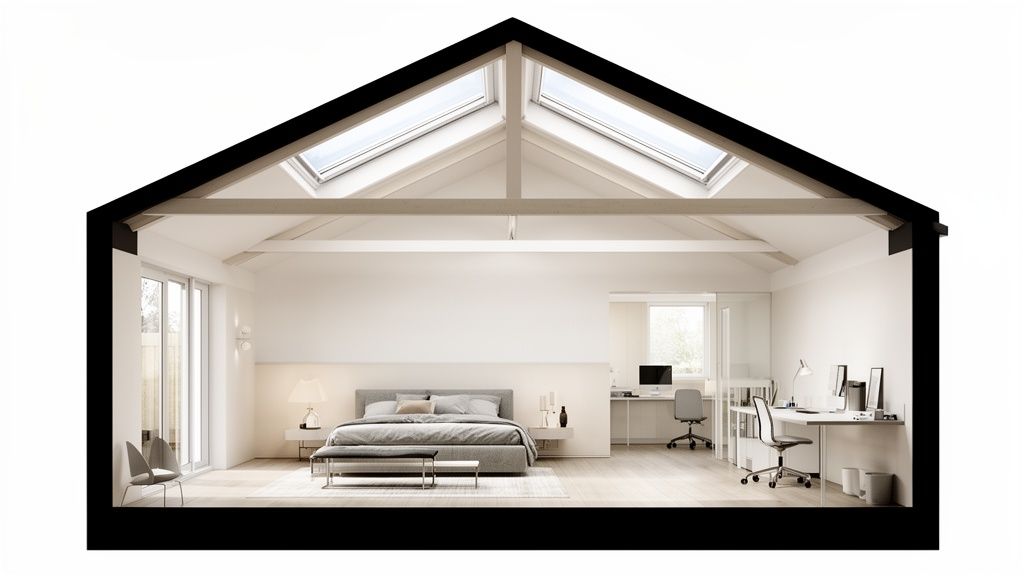
This style of conversion offers a cost-effective way to gain significant square footage, often falling under permitted development rights. The emphasis is on modern living principles, creating versatile, open-plan areas with contemporary finishes. As seen in many loft conversions before and after portfolios, the result is a sleek, highly practical addition that boosts both property value and functionality.
Strategic Implementation: Case Studies
- Fulham 1980s Semi-Detached: This project delivered a new bedroom and a dedicated home office in just eight weeks, using a streamlined flat-roof design to meet a tight deadline.
- Crystal Palace Semi-Detached: A dual-use space was created, functioning as a guest room and creative studio. The conversion increased the property's rental income by an impressive £300 per month.
- Forest Hill Terraced House: This build prioritised sustainability, incorporating large frameless skylights for passive light and high-performance, eco-friendly insulation to exceed thermal efficiency standards.
Actionable Takeaways for Homeowners
To achieve a successful modern loft conversion, prioritise technical specifications and material performance from the outset.
Key Strategy: Specify a high-quality, single-ply waterproofing membrane (like EPDM or TPO) and engage a specialist flat-roof contractor. Proper installation is critical to prevent leaks and ensure the roof's longevity, protecting your investment for decades.
Follow these critical steps:
- Specify High-Performance Insulation: Use PIR or phenolic boards to meet or exceed Part L Building Regulations for thermal efficiency, reducing future energy bills.
- Plan Skylight Placement Carefully: Position skylights to maximise light without overlooking neighbouring properties. This ensures compliance with planning policies, a topic covered in these loft conversion planning permission guidelines.
- Integrate Smart Features: Install motorised blinds on large skylights to easily manage thermal gain during summer and enhance privacy.
- Ensure Adequate Ventilation: A well-designed ventilation layer within the roof structure is essential to prevent condensation and moisture build-up, protecting the timber frame from rot.
3. Dual-Storey Loft Conversion with Ensuite and Dressing Room – £65,000–£85,000
This ambitious conversion transforms the entire roof volume into a multi-room luxury suite, often spanning two levels within the loft space itself. It’s an extensive project involving significant structural reconfiguration to create a master bedroom, a spa-inspired ensuite, and a dedicated dressing room. The result is a high-end, self-contained retreat that significantly increases the property's square footage and market value.
This type of conversion is a complex undertaking, requiring specialist coordination between structural engineers, architects, and MEP (mechanical, electrical, plumbing) consultants. Looking at loft conversions before and after examples of this scale reveals a complete spatial reimagining, turning a void into a boutique hotel-style living space that feels seamlessly integrated with the rest of the home.
Strategic Implementation: Case Studies
- Kensington Victorian Mansion: A £78,000 conversion delivered a complete master suite complex, featuring a marble-clad ensuite and a dressing room with handmade joinery, adding substantial luxury appeal.
- Fulham Period Townhouse: This project integrated underfloor heating and smart home technology throughout the new dual-storey space, creating a modern, high-tech sanctuary.
- South Kensington Property: A complex conversion added 28 m² of high-value floor space, accommodating a freestanding soaking tub and a rainfall shower suite within the new ensuite.
Actionable Takeaways for Homeowners
For a project of this complexity, rigorous planning and expert coordination are paramount to manage costs and timelines effectively.
Key Strategy: Engage your structural engineer and MEP specialist during the initial design phase, not after. This integrated approach ensures that steel beam placement, soil pipe runs, and ventilation routes are planned in harmony, preventing expensive rework and delays caused by disciplinary clashes.
Follow these critical steps:
- Appoint an Experienced Project Manager: A dedicated manager or a contractor with proven project management expertise is essential to coordinate the multiple specialist trades involved.
- Specify High-Performance Ventilation: To manage moisture in a large ensuite or wet room, install a high-quality mechanical ventilation system with humidity sensors from the outset.
- Plan Underfloor Heating Early: Integrating underfloor heating requires careful planning of floor heights and pipework layouts. Retrofitting is exceptionally disruptive and costly.
- Order Luxury Items with Long Lead Times: High-end bathroom suppliers often have lead times of 8–12 weeks. Place orders as soon as the design is finalised to avoid holding up the project.
- Schedule Building Control Inspections: Proactively book the required inspections at key milestones: beam installation, MEP first fix, and final completion to ensure compliance and avoid project stalls.
4. Bathroom and Wet Room Conversion – £28,000–£42,000
A dedicated loft conversion for a bathroom or wet room is a strategic move to enhance a home's functionality and luxury. This project transforms an unused attic into a high-end standalone bathroom, often serving an adjacent master bedroom or adding a much-needed second facility for a growing family or rental property. The focus is on robust waterproofing, expert plumbing, and spa-like finishes to create a stylish and highly practical asset.
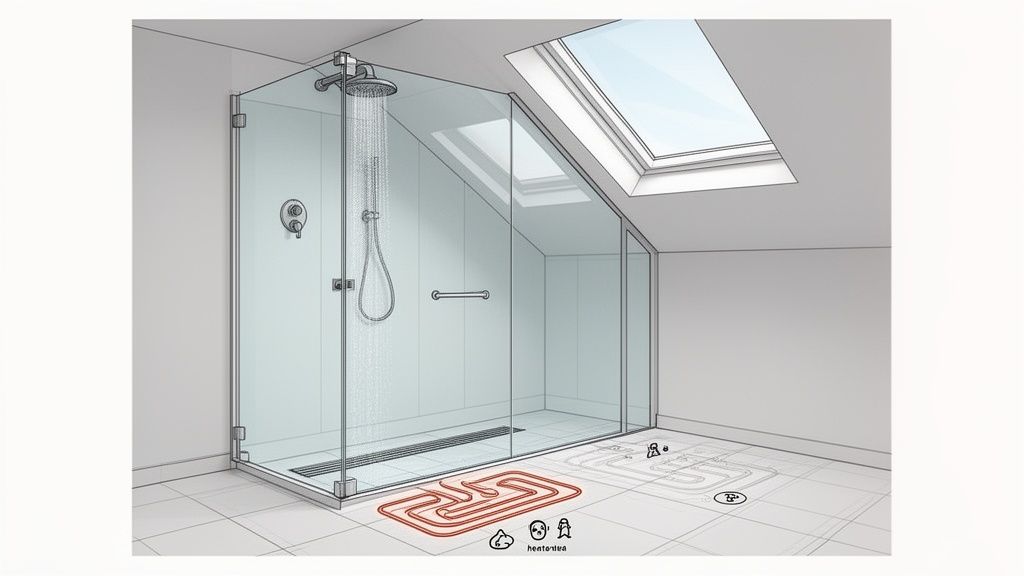
This type of conversion requires meticulous technical planning to manage plumbing, ventilation, and moisture control. By using professional tanking systems and water-resistant materials, the space becomes a durable, leak-proof sanctuary. The stunning results often seen in loft conversions before and after showcases demonstrate how a dark, empty space can become a bright, functional, and valuable wet room or bathroom.
Strategic Implementation: Case Studies
- Clapham 2-Bed Property: Adding a second bathroom in the loft increased the property's rental income by a notable £350 per month, attracting higher-quality tenants.
- Balham HMO Conversion: The installation of a durable wet room helped this House in Multiple Occupation achieve a 98% occupancy rate, up from 85% previously, due to improved facilities.
- Dulwich Family Home: A luxurious ensuite wet room was added to the master bedroom, creating a private retreat for the homeowners and significantly increasing the property's market value.
Actionable Takeaways for Homeowners
To achieve a flawless loft bathroom, technical specifications must be prioritised from the very beginning.
Key Strategy: Specify a professional-grade tanking system like Schlüter or Wedi from the outset. Relying on DIY sealants is a false economy that risks catastrophic water damage, leading to expensive structural repairs and invalidating insurance claims.
Follow these critical steps:
- Engage a Plumber Early: Involve a qualified plumber during the design phase to map out efficient drainage routes and ensure correct fall gradients, preventing future blockages.
- Prioritise Ventilation: Install a humidity-controlled extract fan with a minimum extraction capacity of 100 litres per hour to manage steam and prevent damp or mould growth.
- Choose Durable Materials: Use high-quality porcelain tiles for their superior durability and water resistance over standard ceramic. Ensure floor tiles have a slip-resistance rating of 60 or higher for safety.
- Plan for Comfort and Safety: Integrate underfloor heating for a spa-like feel and ensure all drainage connects correctly to the existing soil stack as required by Building Control. Explore these brilliant bathroom design ideas to inspire your next makeover for more inspiration.
5. Home Office and Studio Conversion – £32,000–£50,000
With the rise of remote and hybrid working, converting a loft into a dedicated home office or creative studio has become a popular and strategic investment. This type of project moves beyond a simple bedroom conversion to create a high-performance workspace, prioritising acoustic insulation, robust electrical infrastructure, excellent natural light, and effective climate control. The goal is a professional environment that enhances productivity and separates work from home life.
This conversion balances professional aesthetics with practical functionality. Soundproofing is crucial to minimise household distractions, while specialist lighting and dedicated data cabling ensure the space is equipped for business needs. Showcased in many loft conversions before and after galleries, these transformations turn neglected attics into valuable assets that can even generate rental income.
Strategic Implementation: Case Studies
- Fulham Photographer's Studio: A conversion focused on maximising natural light with large Velux windows, creating an ideal studio that now generates £800 per month in rental income.
- Kensington Professional's Home Office: This project included a multi-workstation setup for a consulting business, with dedicated electrical circuits and CAT6 cabling for reliable connectivity.
- Clapham Co-working Space: A clever conversion created a small co-working hub with three workstations, which are let at £400 per person per month, demonstrating a clear return on investment.
Actionable Takeaways for Homeowners
To create a truly functional workspace, technical specifications must be planned from day one.
Key Strategy: Engage an acoustician and a certified electrician during the initial design phase. This ensures that wall and ceiling systems are specified for sound isolation and that the electrical infrastructure can safely support multiple workstations and specialist equipment without overloading circuits.
Follow these critical steps:
- Specify Acoustic Performance Early: Incorporate resilient channels, dense mineral wool, and acoustic plasterboard into the design to isolate the office from the rest of the house.
- Run Dedicated Electrical and Data Circuits: Install separate, dedicated circuits for each primary workstation and run CAT6 data cabling during construction. This is far cheaper and neater than retrofitting and avoids daisy-chaining power strips.
- Plan for Climate Control and Ventilation: Specify zoned heating with its own thermostat. Ensure extract ventilation meets Building Regulations for occupancy (typically 10 litres/second per person) to maintain air quality and comfort.
- Install Layered Task Lighting: Do not rely solely on ambient ceiling lights. Integrate task lighting, such as adjustable LEDs, directly over work areas to reduce eye strain and improve focus.
6. Accessible Mobility-Friendly Loft Conversion – £55,000–£75,000
An accessible loft conversion is a purpose-designed project that prioritises universal design and mobility support for residents with reduced mobility or for multi-generational living. This thoughtful approach transforms an attic into a safe, independent living space by incorporating features like step-free access, wider doorways, accessible wet rooms, and smart home controls. The goal is to create a dignified and functional sanctuary that supports ageing-in-place and enhances quality of life.
This type of conversion moves beyond standard building regulations, focusing on creating a truly bespoke environment tailored to specific user needs. It involves close collaboration with accessibility specialists to ensure every element, from grab rail placement to light switch height, is optimised for ease of use. The result, evident in forward-thinking loft conversions before and after, is a space that provides freedom and security without compromising on style.
Strategic Implementation: Case Studies
- Dulwich Family Home: A platform lift was installed to provide seamless access to a new master suite for an elderly parent, creating an independent living area and costing approximately £68,000.
- Balham Property: An accessible ensuite with specialist fixtures was designed to support a resident with arthritis, significantly improving their daily comfort and autonomy.
- Clapham Multi-generational Home: A self-contained, fully accessible suite was created for a grandparent, allowing them to live with family while retaining their independence and privacy.
Actionable Takeaways for Homeowners
To deliver a successful mobility-friendly conversion, a user-centric design process from the very start is essential.
Key Strategy: Engage an occupational therapist during the initial design phase. Their professional assessment will specify the personalised accessibility features required, ensuring the final layout and fixtures are perfectly suited to the user's current and future needs, preventing costly and impractical design flaws.
Follow these critical steps:
- Consult Building Control on Part M: Discuss your plans with your Building Control officer early to understand the specific requirements for Part M (Access to and use of buildings) compliance, ensuring your design meets all legal accessibility standards.
- Prioritise a Platform Lift: Where budget allows, a platform lift is a more compact, reliable, and user-friendly solution for vertical access compared to traditional stair lifts, offering greater independence.
- Specify High-Quality Grab Rails: Choose stainless steel, medical-grade grab rail systems that are both functional and aesthetically appropriate. Plan for future needs by reinforcing walls in key areas during construction.
- Integrate Smart Home Technology: Install smart lighting with motion sensors and voice controls to reduce the need for physical switches. This simple addition can dramatically improve ease of use and safety.
7. Bedroom with Ensuite and Study Nook Conversion – £42,000–£62,000
This versatile triple-function loft conversion is an intelligent response to modern living and working demands. It transforms a standard attic into a multi-purpose zone combining a spacious bedroom, a compact ensuite, and a dedicated study nook. This approach is ideal for professionals working from home, students, or for maximising functionality in rental properties, creating distinct zones without physical partitions.
The success of this design lies in clever spatial planning and subtle zoning techniques. Rather than feeling cramped, the integrated layout feels cohesive and intentional. Many loft conversions before and after featuring this setup showcase how thoughtful design can carve out a productive home office space without sacrificing the primary function of a restful bedroom and private bathroom.
Strategic Implementation: Case Studies
- Fulham Rental Property: A triple-function conversion increased the rental value of a room from a standard £750 to £950 per month, attracting professional tenants seeking a live-work space.
- Kensington Home Office Hybrid: An L-shaped dormer was used to create a professional's bedroom with an integrated, well-lit study nook, effectively supporting a home-based consulting business.
- Clapham HMO Addition: This conversion maximised the unit's functionality, giving it a competitive edge in the local rental market and justifying a higher rental price point.
Actionable Takeaways for Homeowners
To achieve a seamless triple-function space, focus on zoning and integrated design from the outset.
Key Strategy: Employ subtle design cues to visually separate the zones. Use distinct colour palettes, area rugs, or pendant lighting to define the study, sleeping, and bathing areas without erecting walls, which maintains an open, airy feel.
Follow these critical steps:
- Prioritise Natural Light for the Study: Position the desk directly under a skylight or window. This not only provides excellent task lighting but also creates a psychological sense of openness, crucial for productivity.
- Integrate Comprehensive Storage: Reduce visual clutter by building in storage solutions like under-eaves wardrobes, wall-mounted shelving above the desk, and under-bed drawers.
- Plan for Acoustic Separation: Install high-performance acoustic insulation, such as mineral wool, between the study and sleeping zones to minimise sound transmission and create a quieter environment.
- Ensure Adequate Electrical Infrastructure: Plan for a minimum of two to three dedicated electrical circuits in the work area to support a computer, printer, chargers, and task lighting without overloading the system.
8. Guest Suite with Separate Entrance Conversion – £52,000–£72,000
This upmarket conversion transforms an unused loft into a semi-independent guest suite, complete with its own access and hotel-like finishes. The project is designed to generate supplementary income through short-term lets (like Airbnb) or provide a private space for family and guests. It focuses on autonomy, durability, and a premium user experience to maximise rental yields or guest comfort.
Unlike a standard bedroom conversion, this approach involves creating a self-contained unit with separate utility metering, soundproofing, and often a dedicated external or internal stairwell. The design seen in many loft conversions before and after galleries for this category showcases boutique finishes and smart technology, delivering a turnkey solution for homeowners targeting the lucrative corporate or holiday let market.
Strategic Implementation: Case Studies
- Kensington Corporate Let: A loft was converted into a high-spec studio with a dedicated external staircase, commanding premium rates from business travellers and achieving an occupancy rate of over 85% year-round.
- Fulham Airbnb Suite: This project integrated a kitchenette and luxurious ensuite, with separate metering installed to simplify utility billing. The investment paid for itself within three years through high nightly rates.
- Richmond Family Annexe: To provide independence for visiting relatives, a loft was converted with an internal 'lock-off' door and staircase, allowing it to function as either part of the main house or a separate suite.
Actionable Takeaways for Homeowners
To create a successful and profitable guest suite, focus on operational independence and guest experience from the outset.
Key Strategy: Prioritise separate access and robust soundproofing during the design phase. Preserving the privacy of both the main household and the guest is the single most critical factor in the long-term viability and appeal of a short-term rental unit.
Follow these critical steps:
- Verify Local Planning Policy: Before committing, check your local council's regulations on short-term lets and any requirements for separate dwellings. This prevents costly compliance issues later.
- Install Separate Metering: Where feasible, install separate sub-meters for electricity and water. This streamlines billing and makes managing the rental far more straightforward.
- Specify Hotel-Grade Finishes: Choose durable, commercial-grade flooring, fixtures, and fabrics that can withstand high turnover and are easy to clean and maintain.
- Integrate Smart Technology: Use smart locks for keyless entry and remote thermostats. This simplifies guest check-in, enhances security, and allows for efficient energy management between bookings.
8 Loft Conversion Before-and-After Comparisons
| Conversion | 🔄 Complexity | ⚡ Resources & Timeline | 📊 Expected Outcomes | 💡 Ideal Use Cases | ⭐ Key Advantages |
|---|---|---|---|---|---|
| Victorian Terraced House Master Suite Loft Conversion – £45k–£55k | High – specialist roof surveys, heritage constraints, planning/building control | Budget £45–55k; 8–12 weeks; breathable materials and lime plaster increase costs | Luxury master + ensuite; ~12–15% uplift in value; strong buyer appeal in heritage markets | Period Victorian/Edwardian homes, buyers valuing original character | Preserves period features; high market appeal; minimal lower-floor disruption |
| Modern Flat‑Roof Loft Conversion with Skylight – £35k–£48k | Moderate – engineered trusses and flat‑roof waterproofing; ventilation critical | Budget £35–48k; 6–9 weeks; requires specialist flat‑roof contractor and skylight fittings | Maximised usable area and ceiling height; ~10–12% value uplift; energy savings with modern insulation | 1970s–2000s properties, rental units, home office conversions | Lower cost and faster build; large natural light; efficient floor area |
| Dual‑Storey Loft Conversion with Ensuite & Dressing Room – £65k–£85k | Very high – structural steel, multi‑stage Building Control, complex MEP coordination | Budget £65–85k; 12–16+ weeks; specialist trades and longer lead times for luxury finishes | High‑end boutique suite; +15–20% value in prime areas; significant premium rental potential | Luxury homes, prime London locations, owners seeking prestige | Creates hotel‑like suite; large value uplift; comprehensive high‑spec living space |
| Bathroom and Wet Room Conversion – £28k–£42k | Moderate – waterproofing/tanking critical; structural floor reinforcement | Budget £28–42k; 6–8 weeks; specialist plumbing, tanking and tiling required | Adds second full bathroom; +8–12% value; rental yield +15–25% | Families, HMOs, landlords seeking higher rental returns | Focused scope with strong ROI; faster completion; improved tenant appeal |
| Home Office and Studio Conversion – £32k–£50k | Moderate – acoustic treatment, data/electrical design, HVAC considerations | Budget £32–50k; 8–12 weeks; includes CAT6, zoned heating, soundproofing | Versatile workspace; +5–10% value; potential rental income as studio/co‑working | Remote workers, creatives, small business owners | Productivity‑focused fit‑out; rentable as commercial/creative space |
| Accessible Mobility‑Friendly Loft Conversion – £55k–£75k | High – Part M compliance, lifts/platforms, bespoke accessibility detailing | Budget £55–75k; 10–14 weeks; equipment lead times (lifts 6–8 weeks); specialist contractors | Accessible bedroom + ensuite; supports ageing‑in‑place; may qualify for grants | Elderly occupants, disabled residents, multi‑generational households | Enables independence; Part M compliance; potential grant support |
| Bedroom with Ensuite and Study Nook Conversion – £42k–£62k | Moderate – sophisticated spatial zoning and integrated storage design | Budget £42–62k; 10–14 weeks; requires designer/architect input for layout | Three functional zones in one conversion; +10–15% value; strong rental appeal | Professionals, students, remote workers needing mixed‑use space | High functional value; integrated storage; good rental premium |
| Guest Suite with Separate Entrance Conversion – £52k–£72k | High – separate access/utilities, planning considerations, safety/insurance impacts | Budget £52–72k; 10–14 weeks; separate metering and smart entry systems add cost | Semi‑independent suite; +12–18% value; strong short‑let/corporate income potential | Airbnb/corporate lets, hosts needing guest autonomy, extended family stays | Generates direct rental income; preserves host privacy; premium positioning |
Ready to Realise Your Loft's Potential? Here’s Your Next Step
The journey through these varied loft conversions before and after showcases a powerful truth: your home's dusty, forgotten attic holds the key to unlocking extraordinary living space. We've explored everything from a luxurious master suite in a Victorian terrace to a functional, modern home office and even a fully accessible mobility-friendly conversion. Each project, whether a modest £30,000 bathroom or a sprawling £85,000 dual-storey suite, began with the same simple idea: making better use of existing square footage.
These transformations are more than just impressive visuals; they are masterclasses in strategic home improvement. They prove that with expert planning and execution, you can dramatically enhance your property's value, functionality, and daily enjoyment without the upheaval and expense of moving. The most successful projects, as we've seen, are those built on a foundation of clear vision, technical expertise, and a deep understanding of London's unique architectural landscape.
Your Key Takeaways and Actionable Insights
From our deep dive into these real-world examples, several critical lessons emerge for any London homeowner considering a loft conversion:
- Vision is Your Blueprint: Success starts with a clear goal. Are you creating a tranquil master retreat, a productive workspace, or a revenue-generating guest suite? Defining the primary purpose of your new space, as seen in the home office and guest suite examples, will guide every decision, from layout to lighting.
- Expertise is Non-Negotiable: The structural integrity of your home is paramount. Engaging a design-and-build firm with proven experience in London properties, particularly period homes like Victorian or Edwardian terraces, is crucial. This ensures you navigate planning permissions, Party Wall agreements, and building regulations seamlessly.
- Budget for Quality: While the initial cost is a major consideration, investing in high-quality materials, skilled trades, and robust structural work pays dividends. As demonstrated by the high-end bathroom and dressing room projects, premium finishes not only enhance your quality of life but also deliver a stronger return on investment.
- Design for Light and Space: A common thread across all successful loft conversions before and after is the intelligent use of light. Whether through large dormer windows, strategically placed skylights, or clever lighting design, maximising natural and artificial light is the single most effective way to make your new space feel open, airy, and inviting.
Ultimately, a loft conversion is a collaborative journey between your aspirations and your builder's expertise. The "after" photos you've seen are the direct result of meticulous planning, transparent communication, and a shared commitment to excellence. They represent problems solved, challenges overcome, and potential fully realised. Your own loft holds that same promise, waiting for the right team to bring it to life. If these stories have sparked your imagination, your next step is to translate that inspiration into a concrete plan.
Ready to turn your vision into a stunning reality? The team at All Well Property Services specialises in delivering the kind of high-quality, seamless loft conversions you've seen here. Contact us today for a no-obligation consultation and let's begin designing the space you've always dreamed of.