Property Maintenance Services for Landlords: A Practical Guide
Being a landlord is about much more than just collecting rent. It’s about running a business, and a core part of that business is proactively managing the costs of upkeep, repairs, and compliance. Professional property maintenance services for landlords are designed to take this weight off your shoulders, protecting the value of your asset and making sure it remains a safe, profitable, and legally sound investment. This covers everything from routine servicing and emergency call-outs to getting the property ready for new tenants.
The Real Cost of Maintaining Your Rental Property
Let's be honest—the true cost of being a landlord goes far beyond the mortgage and insurance. Many investors seriously underestimate the relentless financial pressure of routine maintenance, surprise repairs, and mandatory safety checks. If you don't get a grip on them, these costs can quietly eat away at your returns.
Recent trends paint a pretty stark picture. Landlords across the UK are grappling with skyrocketing maintenance costs that are squeezing their profits like never before. According to recent data, the average private landlord now spends a hefty £1,374.07 each year on property maintenance alone. In high-demand areas, this figure can be even more daunting; landlords in Edinburgh, for example, are facing annual costs soaring to an eye-watering £2,952.
Understanding the Surge in Repair Costs
It’s not just the planned jobs, either. The cost of fixing tenant-inflicted damage has exploded. Nationwide, these repair bills have shot up by a staggering 121% over the last two years, jumping from an average of £473 in 2022 to £1,043 in 2024. This dramatic increase really highlights the financial risk of just waiting for things to go wrong.
This is where professional property maintenance becomes less of a luxury and more of a crucial financial strategy. A proactive approach helps catch and sort out minor issues before they snowball into major, expensive disasters. You can learn more about how common small issues turn into expensive repairs in our detailed guide.
A dripping tap might seem trivial, but left unchecked, it can lead to water damage, damp, and mould, turning a simple washer replacement into a multi-thousand-pound remediation project. This is the core principle of asset protection through maintenance.
A Breakdown of Typical Landlord Costs
To budget effectively, you need a clear-eyed view of the expenses you're likely to face. The costs can vary wildly depending on the property's age, condition, and location—with London and the South East often commanding higher prices for both labour and materials.
Here’s a quick look at the typical costs you can expect as a landlord in the UK. Think of it as a cheat sheet to help you move from reactive, stressful spending to strategic financial planning.
Typical Landlord Maintenance Costs at a Glance
| Expense Category | Average UK Cost / Frequency | London & SE Considerations |
|---|---|---|
| Gas Safety Certificate (CP12) | £60 – £90 (Annually) | Prices can be 10-20% higher due to increased operational costs for engineers. |
| Electrical Installation Condition Report (EICR) | £150 – £300 (Every 5 years) | Costs may rise for older properties with complex wiring, common in London's period homes. |
| Boiler Service | £80 – £120 (Annually) | Essential for preventing costly winter breakdowns; London rates are often at the higher end. |
| General Handyman Repairs | £40 – £60 per hour | Labour rates in the capital are typically higher, pushing hourly charges towards £60-£80. |
| End-of-Tenancy Redecoration | £500 – £2,000+ (Per tenancy) | A full refresh can be significantly more expensive due to higher decorator day rates. |
| Emergency Call-Outs (Plumbing/Electrical) | £100 – £250+ (Per incident) | Out-of-hours fees in London can quickly escalate, making preventative checks invaluable. |
This table isn't exhaustive, of course, but it gives you a solid baseline for the kinds of recurring and one-off costs that are part and parcel of being a landlord. Planning for these expenses is the first step toward protecting your investment for the long haul.
The Four Pillars of Effective Property Maintenance
It’s easy to look at property maintenance as one giant, overwhelming task. But that’s a common mistake. A much better way to think about it is like the four walls of a house; each pillar is distinct, but they all work together to keep your investment standing strong, secure, and profitable.
When you break your strategy down into these core areas, it becomes so much easier to manage your budget, prioritise what needs doing, and stop small issues from snowballing into major liabilities.
These four pillars are Planned Maintenance, Reactive Maintenance, Compliance Works, and End-of-Tenancy Services. Each one tackles a different side of property upkeep. Get them working together, and you’ll move from a chaotic, fire-fighting approach to a calm, strategic one.
Let's dig into each of these pillars and see how they apply to your rental property with some real-world examples.
Pillar 1: Planned and Proactive Maintenance
This is all about thinking ahead—it's the scheduled, routine work you do to keep your property in top condition and head off problems before they start. Think of it as a regular health check-up for your investment.
Proactive maintenance is simply about spotting and fixing minor issues before they escalate into expensive, disruptive emergencies. Honestly, it’s the single most effective way to control your costs and protect the long-term value of your asset.
A few common examples include:
- Annual Boiler Servicing: This is absolutely crucial for preventing breakdowns in the middle of a cold snap, keeping your tenants happy and saving you from a costly emergency call-out.
- Gutter Cleaning: Doing this twice a year stops blockages that can lead to water ingress, damp, and serious damage to your brickwork.
- Exterior Painting Cycles: A scheduled repaint every five to seven years doesn't just boost kerb appeal; it protects the woodwork and masonry from the elements.
Pillar 2: Reactive and Emergency Maintenance
Let’s be realistic: no matter how well you plan, things will inevitably go wrong. Reactive maintenance is your on-demand response to those unexpected breakdowns and urgent repairs. This is the "fire-fighting" pillar, where speed and reliability are everything.
A burst pipe or a faulty electrical circuit simply can't wait until Monday morning. Your goal here is to minimise damage and keep your tenants safe.
An effective reactive maintenance service isn't just about fixing the problem; it's about providing peace of mind. For a landlord, knowing you have a trusted team like All Well Property Services on call 24/7 turns a potential catastrophe into a manageable inconvenience.
Having a dependable partner for these situations isn't just a 'nice-to-have'—it's non-negotiable. It protects your property, fulfils your duty of care, and safeguards your reputation as a responsible landlord.
The chart below shows just how significant these unpredictable costs can be, reinforcing why you need both a planned and a reactive strategy.
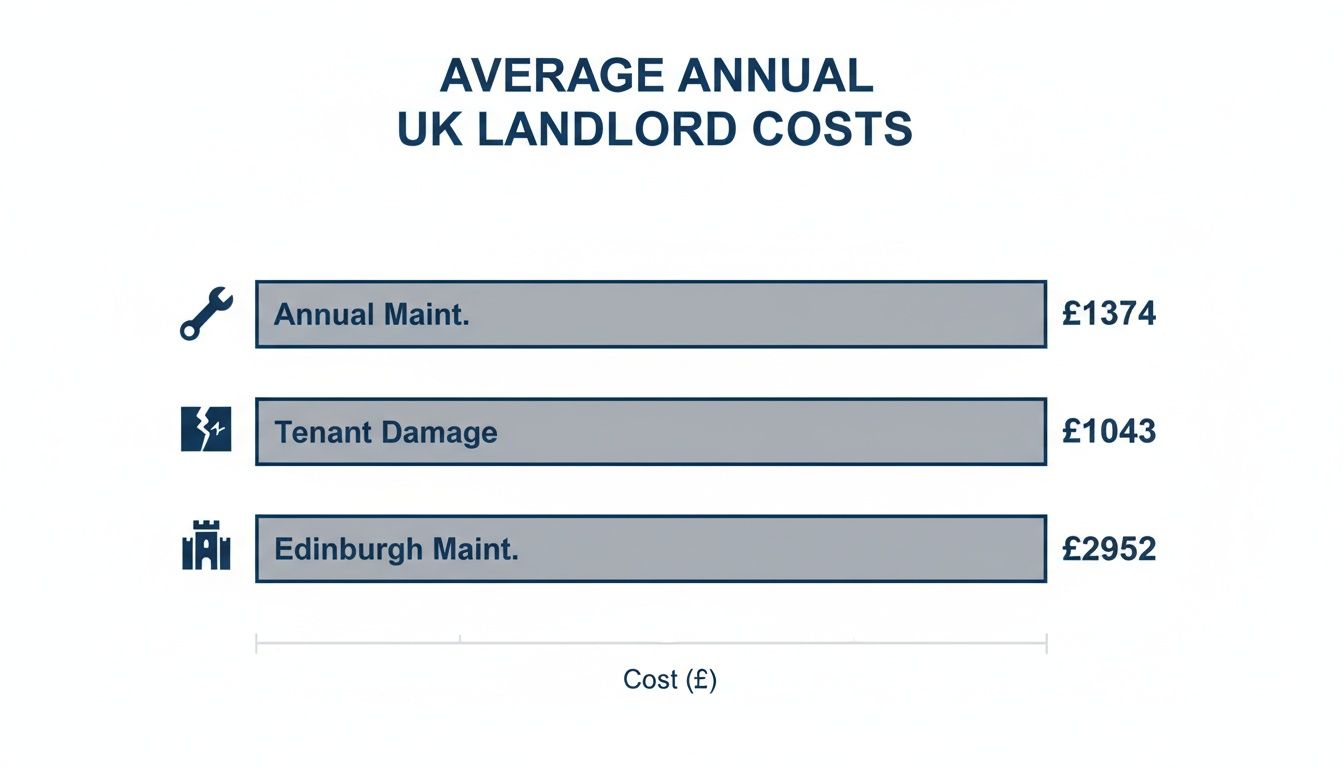
As you can see, while routine maintenance is a significant annual expense, the costs from tenant damage and regional price variations can be just as impactful. You need a maintenance budget that's both planned and flexible.
Pillar 3: Compliance and Safety Works
This pillar is the one you can’t argue with—it's legally mandated. Compliance work covers all the inspections, certificates, and installations required to make sure your property meets UK safety regulations.
Getting this wrong can lead to severe penalties, including hefty fines and even imprisonment. On top of that, it could completely invalidate your landlord insurance.
Key compliance tasks you absolutely must stay on top of include:
- Gas Safety Certificates (CP12): This is an annual inspection by a Gas Safe registered engineer.
- Electrical Installation Condition Reports (EICR): A thorough check of the property's wiring, which is required at least every five years.
- Fire Safety Measures: This covers fitting and testing smoke and carbon monoxide alarms, plus conducting fire risk assessments for HMOs.
Pillar 4: End of Tenancy Works
The final pillar zeroes in on that crucial changeover period between tenants. End-of-tenancy maintenance, often called 'void works', is all about getting the property back to a pristine, lettable condition as efficiently as possible.
A smooth process here minimises your void periods and helps you attract high-quality tenants at the best possible rent. It typically involves deep cleaning, touching up paintwork, and handling any minor repairs to give the property a fresh, welcoming feel for its new occupants.
Navigating Landlord Compliance and Safety Laws
Staying on the right side of the law isn’t just good practice—it's a non-negotiable part of being a landlord. This isn't about ticking boxes. It's about a fundamental duty of care that protects your tenants, your property, and your investment.
Get it wrong, and the consequences can be severe. We’re talking unlimited fines, potential imprisonment, and the real risk of your insurance being invalidated right when you need it most.
Think of compliance as the legal foundation of your rental business. If that foundation is cracked or poorly maintained, everything you've built on top is at risk. This is where professional property maintenance services for landlords become essential, providing the certified expertise to navigate a pretty complex legal landscape. These regulations aren't optional extras; they're the absolute baseline for operating a rental property in the UK.
The costs involved are significant and a major part of any landlord's budget. In fact, repairs and maintenance dominate the expense sheets for most UK landlords. HMRC data for 2023-2024 shows that 66.1% of 1.90 million unincorporated landlords declared £6.20 billion in these costs, making it one of the largest allowable deductions. You can dig into the official property rental income statistics from the UK government for the full picture.
Core Safety Certificates You Cannot Ignore
Certain certificates are mandatory, and keeping them up to date is a continuous responsibility. Each one tackles a specific, high-risk area of the property to make sure it's safe for your tenants to live in.
These are the absolute must-haves:
- Gas Safety Certificate (CP12): This needs renewing annually by a Gas Safe registered engineer. It’s the official check that all gas appliances, fittings, and flues are working safely.
- Electrical Installation Condition Report (EICR): An EICR is required at least once every five years. A qualified electrician must carry out this deep dive into your property's entire electrical system to flag any potential dangers.
- Energy Performance Certificate (EPC): This certificate rates your property's energy efficiency and is valid for 10 years. Right now, a rental property must have a minimum rating of 'E', but it's worth keeping an eye out for future changes.
These documents aren't just paperwork. They are your proof that you've taken the right steps to ensure tenant safety, and they form a crucial part of your legal defence if an incident ever occurs.
Managing compliance is about creating a system, not just reacting to expiry dates. A proactive schedule, managed by a professional partner like All Well Property Services, ensures you are always compliant, organised, and protected.
Understanding Fire Safety Regulations
Beyond gas and electrics, fire regulations are a critical area of responsibility for any landlord. The rules have become much stricter over the years, especially for Houses in Multiple Occupation (HMOs), but the core principles apply to all rental properties.
Here are your key duties:
- Smoke Alarms: You must have at least one working smoke alarm on every storey of your property used as living accommodation. You also need to test them on the first day of any new tenancy.
- Carbon Monoxide Alarms: A carbon monoxide alarm is legally required in any room with a fixed combustion appliance, like a gas boiler or a log burner. Gas cookers are the main exception.
- Fire Risk Assessments: While they are mandatory for all HMOs, carrying out a fire risk assessment is simply best practice for any rental property. It helps you systematically identify and deal with potential fire hazards. You can learn more about professional fire risk assessments and why they are so important.
- Furnishings: Any furniture you provide must meet the fire resistance standards laid out in the Furniture and Furnishings (Fire) (Safety) Regulations 1988.
By building these legal duties into your maintenance plan, you turn compliance from a headache into a straightforward process. This approach doesn't just keep you on the right side of the law; it shows tenants you're a responsible, professional landlord who genuinely cares about their well-being.
Planning Renovations That Boost Your Property's Value
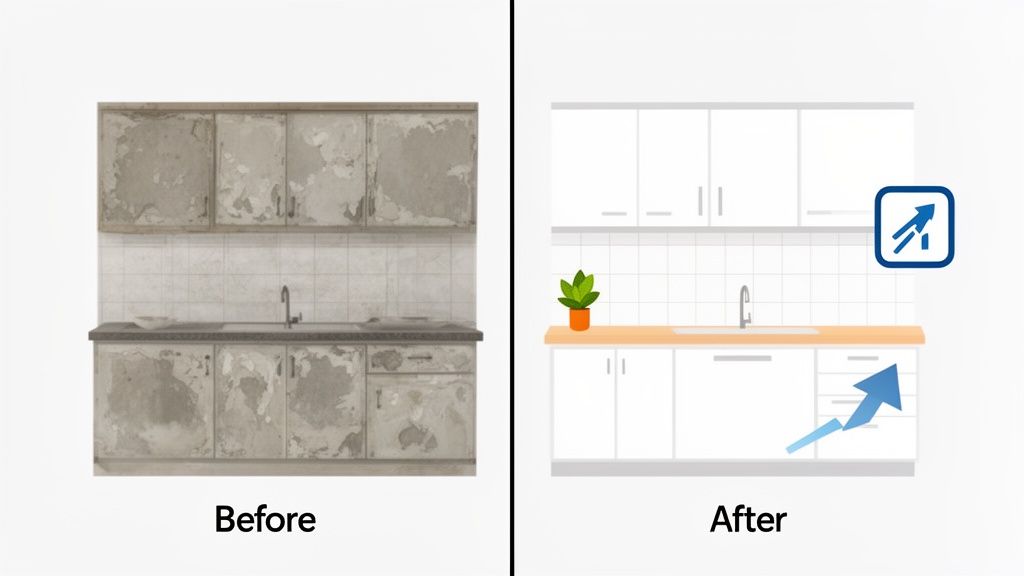
Beyond the daily grind of fixing leaks and servicing boilers, the most successful landlords think bigger. They see that strategic renovations—or capital improvements—are not just expenses but powerful investments that protect and grow their property's long-term worth.
This isn't just about keeping things ticking over; it's about making calculated upgrades. The kind that attracts better tenants, justifies a higher rent, and gives the property’s market value a serious boost. Shifting your mindset from simply repairing to actively investing is a game-changer for maximising your returns.
Major property upgrades are becoming a common reality for UK landlords. In fact, recent data shows that 68% of letting agents have seen their landlords undertake expensive capital works. These projects often mean new kitchens or bathrooms (seen in 59% of cases) and complete heating system replacements (34%). As you can discover in the full Propertymark report, these big investments are becoming essential for properties to stand out in a competitive rental market.
Distinguishing Repairs from Value-Adding Improvements
It’s absolutely crucial to get your head around the difference between a repair and an improvement. A repair just brings something back to its original state—think patching a small roof leak or fixing a faulty hob. An improvement, on the other hand, genuinely enhances the property's value, extends its life, or adapts it for a new use.
- Repair Example: Replacing a few cracked tiles in the bathroom.
- Improvement Example: Retiling the entire bathroom with modern, high-quality materials as part of a full remodel.
While everyday repairs are deductible expenses in the year they happen, improvements are capitalised and depreciated over time. This distinction is vital for your tax planning, of course, but more importantly, it helps you split your budget smartly between essential upkeep and projects focused on growth.
Strategic renovations are about future-proofing your asset. A new, energy-efficient boiler isn't just a replacement; it's a selling point for eco-conscious tenants and a way to lower future running costs, adding tangible value for years to come.
High-Impact Renovations That Attract Premium Tenants
Let's be honest, not all renovations are created equal. To get the best bang for your buck, you need to focus on the areas that tenants really care about. These are the upgrades that make a property feel more modern, comfortable, and desirable.
Here are some of the most effective renovations for boosting rental appeal and your bottom line:
- Kitchen Remodels: The kitchen is often called the heart of the home for a reason. A modern, functional kitchen with up-to-date appliances, contemporary worktops, and smart storage is a massive draw for prospective tenants and can easily justify a significant rent increase.
- Bathroom Upgrades: For many renters, a clean, stylish bathroom is a deal-breaker. Replacing an old, tired suite, adding a power shower, or improving ventilation can completely transform the space and add considerable value.
- Heating System Replacements: Swapping an old, inefficient boiler for a modern combi-boiler is a smart move. It cuts the risk of winter breakdowns, improves the property's Energy Performance Certificate (EPC) rating, and appeals to tenants who are rightly concerned about their energy bills.
By focusing your capital on these high-impact areas, you do more than just maintain your property. You actively invest in its future profitability, making sure it stays competitive and continues to generate strong returns. If you're wondering where to start, you might find our guide on which home improvements add the most value a useful read.
How to Choose the Right Maintenance Partner
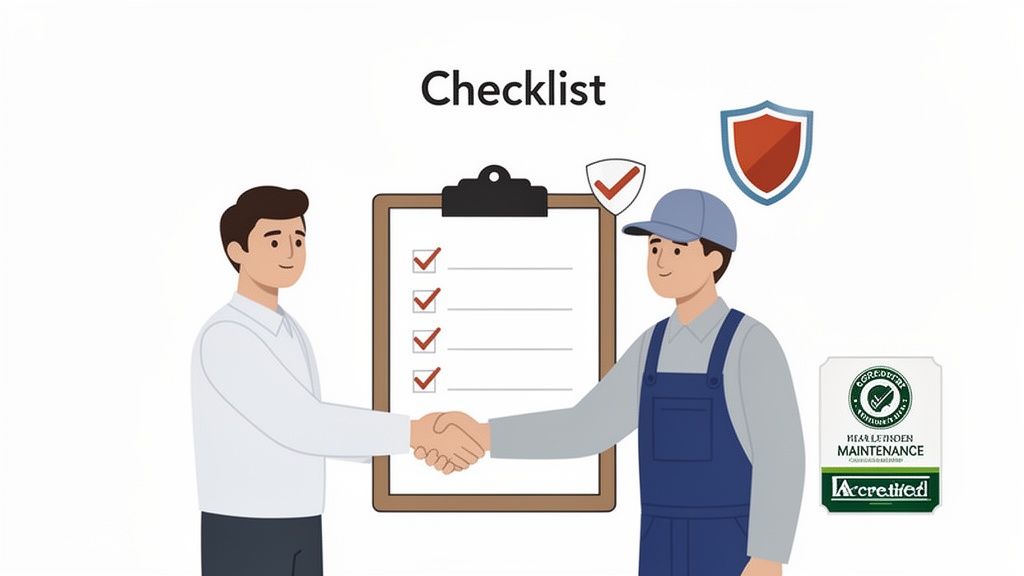
Finding a reliable maintenance contractor can feel like searching for a needle in a haystack. But it’s one of the most important decisions you’ll make. Get it right, and your asset is protected, your tenants are happy, and you stay on the right side of the law.
Get it wrong? You’re in for costly delays, shoddy work, and a whole lot of stress.
This isn’t just about comparing prices. Real value comes from dependability, expertise, and clear communication. To find a partner who gets the job done right, every single time, you need a solid framework for checking them out properly.
Look Beyond the Quote at Core Credentials
First things first, let’s cover the absolute basics. Any serious contractor offering property maintenance services for landlords should have their essential paperwork ready to go. Think of these as the non-negotiables—the ticket to even get in the door.
Before you start talking about the job, ask to see proof of:
- Public Liability Insurance: This is a deal-breaker. It protects you financially if there’s an accident on your property while they’re working.
- Industry Accreditations: For skilled trades, these are vital. You need an electrician who is NICEIC approved and a gas engineer who’s on the Gas Safe Register. These aren't just fancy logos; they’re your proof of competence and safety.
- Genuine Customer Reviews: Forget the one-line testimonials on their own website. Look for detailed reviews on independent platforms like Google where people describe the specific job and their experience.
Assess Their Communication and Professionalism
Pay close attention to how a contractor communicates from the very first enquiry. It’s a huge clue as to how they’ll act once they’re on the job. Are they quick to respond to calls and emails? Do they actually listen and ask smart questions?
A professional will give you a detailed, itemised quote that clearly breaks down the costs of labour and materials. If you just get a vague, single-figure estimate, that’s a red flag. This transparency is what builds trust and stops you from getting hit with nasty surprises later.
A great maintenance partner operates like a strategic ally. They don’t just fix problems; they offer advice, anticipate future issues, and communicate with you proactively. This collaborative approach, which we champion at All Well Property Services, transforms maintenance from a reactive chore into a proactive asset management strategy.
This kind of professionalism shows they respect your time and your investment. It’s the foundation for a good long-term relationship.
Use a Vetting Checklist to Guide Your Decision
To make this whole process more straightforward, use a checklist. It helps you compare every potential partner using the same criteria, so you can make an objective, well-informed choice instead of just defaulting to the cheapest quote.
This simple tool will help you ask the right questions and focus on what truly matters.
Contractor Vetting Checklist for Landlords
Here’s a practical checklist to help you evaluate and select a reliable property maintenance partner.
| Vetting Criteria | What to Look For | Why It Matters |
|---|---|---|
| Qualifications | Gas Safe, NICEIC, CHAS, or other relevant trade body memberships. | Confirms they are legally qualified and competent to perform specialised and high-risk work safely. |
| Insurance | A valid and current Public Liability Insurance certificate. | Protects you from financial liability in case of accidents, injuries, or damage to your property. |
| Reputation | Detailed, positive reviews on Google, Checkatrade, or industry forums. | Provides unbiased social proof of their reliability, quality of work, and customer service standards. |
| Communication | Prompt replies, clear explanations, and a professional quoting process. | Indicates how organised and reliable they will be throughout the project, preventing misunderstandings. |
| Transparency | Itemised quotes that clearly separate labour and material costs. | Ensures there are no hidden fees and helps you understand exactly what you are paying for. |
By taking a structured approach like this, you can confidently pick a maintenance partner who not only has the right skills but also shares your commitment to quality. That’s how you build a partnership that saves you stress and protects your property for years to come.
Turning Your Contractor Into a Strategic Partner
The best relationships between landlords and their maintenance teams are more than just a quick phone call when a pipe bursts. Instead of simply reacting to problems, experienced landlords build a proper collaboration that actively saves them time, money, and a whole lot of stress down the line. The goal is to create a long-term alliance that shifts your entire approach from frantic fire-fighting to smart, proactive property care.
This means moving beyond one-off jobs and treating your contractor as a partner who genuinely understands your property and your goals. When they know your portfolio inside out, they can offer better advice, spot potential issues before they escalate, and help you plan your budget more effectively. Honestly, this partnership is the key to getting the most value out of professional property maintenance services for landlords.
Defining Expectations with Service Level Agreements
A brilliant tool for building this partnership is the Service Level Agreement (SLA). Don't think of it as a rigid, stuffy contract, but more like a clear and simple rulebook that everyone agrees on. It gets rid of any guesswork and makes sure both you and your contractor are on the same page.
A well-put-together SLA defines agreed-upon response times for different types of maintenance issues. This ensures that a real emergency gets the urgent attention it needs, while routine jobs are handled efficiently without any unnecessary panic or inflated costs.
For example, a solid SLA might set out:
- Emergency Response (e.g., major leak, no power): A guarantee to be on-site within two to four hours, 24/7.
- Urgent Repairs (e.g., broken boiler, blocked drain): A commitment to attend within 24 hours.
- Routine Jobs (e.g., dripping tap, faulty light fitting): To be scheduled for the next available slot within three to five working days.
By setting these expectations up front, an SLA completely changes your maintenance process. It gives you peace of mind, keeps tenants happy, and allows your maintenance partner to manage their resources properly—which ultimately leads to better service for everyone involved.
Building a Proactive Maintenance Plan Together
The real power of a great partnership comes from planning ahead together. Sit down with your contractor and map out a proactive maintenance schedule that’s tailored to your specific property. This is all about looking beyond the immediate fixes and creating a calendar for preventative tasks throughout the year.
This shared plan lets your partner spot and fix small problems before they blow up into costly disasters. Patching a small issue on a roof is far cheaper than dealing with major water damage later on. And servicing a boiler once a year is a fraction of the cost and hassle of an emergency replacement in the dead of winter.
This forward-thinking approach, built on trust and clear communication, is what truly protects your investment. It turns your maintenance spend from an unpredictable headache into a managed, value-adding strategy that boosts your returns and secures your property’s future.
Got Questions About Property Maintenance? We've Got Answers
Even the most organised landlords run into questions about the nuts and bolts of property maintenance. Getting straight, practical answers is the key to managing your properties with confidence and sidestepping those common headaches.
Here are the clear, no-nonsense answers to some of the questions we hear all the time from landlords like you.
Who’s Responsible for What: Landlord or Tenant?
This is probably the number one point of confusion, but the split in responsibilities is actually quite straightforward. At its core, your job as a landlord is to make sure the property is safe, secure, and habitable.
That means you’re on the hook for:
- The building’s structure and exterior, including the roof, walls, and windows.
- The big systems – think plumbing, electrical wiring, and the central heating.
- Any appliances that came with the property, like the boiler, cooker, or fridge.
- Making sure all mandatory safety checks, like the annual Gas Safety Certificate, are done on time.
Your tenants, on the other hand, are responsible for the general upkeep and small, day-to-day bits. This usually means things like changing lightbulbs, popping new batteries in the smoke alarms, and keeping the place clean to avoid problems like pests. Your tenancy agreement should spell all of this out in plain English.
How Should I Handle Out-of-Hours Emergencies?
A burst pipe or a total power cut isn't something that can wait until 9 am on Monday. These things happen, and having a solid plan in place before they do is absolutely essential.
The best way to handle this is to have a maintenance partner with a 24/7 emergency call-out service. It means a qualified professional can get out there fast—day or night—to get the situation under control, minimise any damage, and look after your tenants. Make sure your tenants have this direct emergency number from the day they move in.
One Company or a Collection of Individual Tradespeople?
This is a big one. Do you hire an all-in-one maintenance company, or find individual tradespeople for each job as it comes up? While calling a local plumber for a one-off leak might seem cheaper on the surface, trying to juggle multiple contacts can become a real time-drain, fast.
Using a single, full-service provider like All Well Property Services just makes life easier. You have one phone number to call, one invoice to pay, and a dedicated team that actually knows your property and its history. This approach saves a huge amount of admin and guarantees a consistent quality of work, no matter the job.
For most landlords, especially if you have more than one property, the sheer efficiency and peace of mind you get from a single trusted partner is worth its weight in gold. It turns property maintenance from a chaotic scramble into a smooth, professionally managed operation.
Ready to streamline your property maintenance and protect your investment? The expert team at All Well Property Services offers comprehensive, reliable, and compliant solutions for landlords across London. https://allwellpropertyservices.co.uk
Created with the Outrank app