


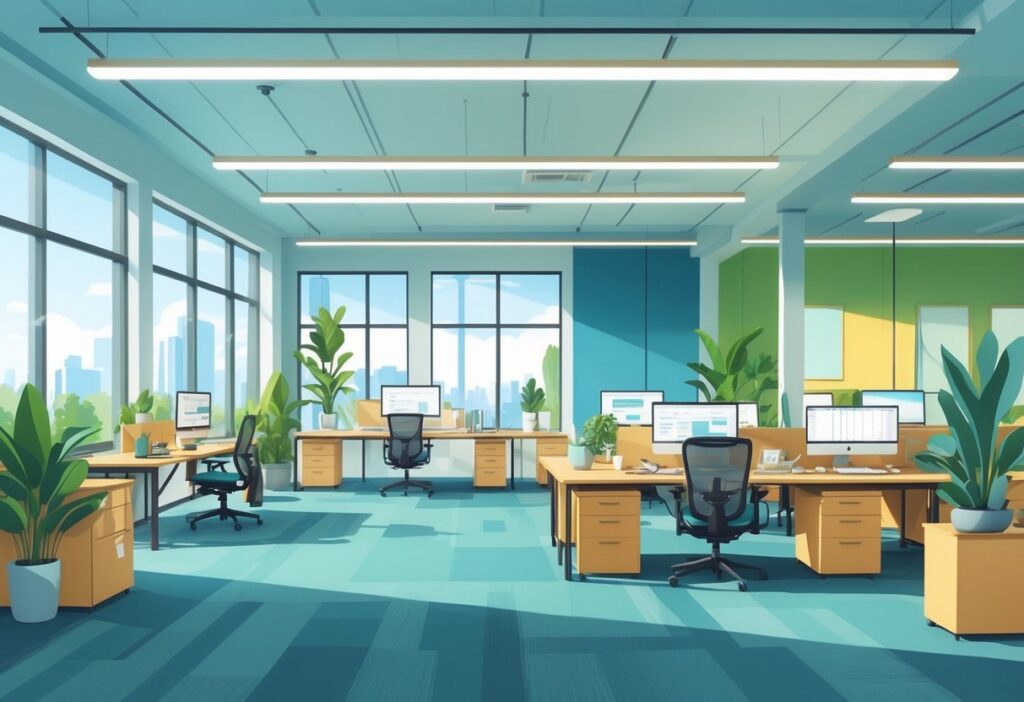
The colours you pick for your office walls, furniture, and décor shape how your team feels and performs every day. There’s plenty of research showing that certain shades can ease stress, help people focus, and even make folks enjoy their jobs more. Strategic colour selection can improve workplace productivity by creating environments that support both mental wellbeing and efficient task completion.
Your workspace’s colour scheme can affect everything from how creative people feel to how long they can concentrate. Blues are great for calm focus—perfect for high-pressure jobs. Yellow sparks innovation and really shines in spaces where teams brainstorm. Green helps people find balance and eases eye strain, especially when you’re glued to screens all day.
Each work zone needs its own colour approach. Meeting rooms do well with energising colours that get people talking, while quiet areas need soothing shades that help with concentration.
Key Takeaways
- Strategic office colour schemes directly influence employee productivity, creativity, and overall wellbeing in the workplace
- Blue promotes focus and calm, yellow inspires creativity, and green provides balance whilst reducing eye strain
- Different work zones require tailored colour approaches that match their specific functions and activities
Understanding the Impact of Office Colour Schemes
Colour psychology is a big deal in office design—it shapes how people think, feel, and get things done. Each colour triggers its own psychological response, which can either help or hurt productivity and creativity.
The Science Behind Colour Psychology in Offices
Research finds that colours literally change how our brains work and how we behave. When you look at different colours, your brain releases chemicals that affect mood and how you process information.
Blue lights up the brain areas tied to calm and focus. Lund University even found that blue office walls can lower stress and help people concentrate. That’s why blue just makes sense for tough, detail-heavy jobs.
Yellow fires up the parts of your brain that handle creativity and memory. Your mind sees yellow as energising, making it easier to think outside the box. But if you use too much yellow, it can get overwhelming and make your eyes tired.
Green works on your nervous system, easing eye strain and helping you stay balanced. It’s a colour that reminds us of nature and helps reset your brain during those long stretches at your desk.
Red gets your heart pumping and raises blood pressure, making you more alert. That can be good for detail work, but go overboard and it might just make everyone anxious.
How Colours Influence Focus, Creativity, and Concentration
Different colours support different kinds of work. Cool colours like blue and green make it easier to focus by calming things down and cutting distractions.
Warm shades like yellow and orange crank up creativity and mental energy. They’re best for spaces where people need to bounce ideas around and collaborate.
| Colour Type | Mental Effect | Best Used For |
|---|---|---|
| Blue | Enhanced focus | Individual work areas |
| Green | Balanced concentration | General office spaces |
| Yellow | Creative thinking | Meeting rooms |
| Red | Increased alertness | Detail-oriented tasks |
Your colour scheme should fit the main tasks in each space. Analytical work goes better with cooler tones, while creative projects really benefit from warm accents.
Colour intensity matters too. Muted shades give a gentle boost without being too much. Bold colours can be effective, but you need to balance them carefully for everyone’s wellbeing.
Best Office Colours to Enhance Productivity and Wellbeing
Certain colours really do improve how people work and feel at the office. Blue helps with focus and clarity, green cuts down on eye fatigue and keeps things calm, and yellow or orange accents lift creativity and energy.
Blue: Promoting Focus and Mental Clarity
Blue brings calm and stability to workspaces, making it easier to concentrate. Studies show that cool blue tones lower stress during tough tasks.
It’s a solid pick for meeting rooms and quiet zones. Try blue accents on walls, furniture, or even small décor details.
Lighter blues keep things clear and fresh, while darker blues add a touch of professionalism—perfect for formal spaces.
Best applications for blue:
- Individual workstations for deep focus
- Conference rooms for big meetings
- Study or quiet zones
- Break rooms if you want a relaxing vibe
Pair blue with neutrals like white or grey. That way, the space stays inviting and doesn’t get too chilly or sterile.
Green: Enhancing Calmness and Reducing Fatigue
Green feels natural and helps with eye strain, especially if you’re staring at screens all day. It keeps energy levels steady throughout the workday.
Softer greens work great in areas with lots of computer use. Shades like sage or teal make long work sessions more comfortable.
Green can ease mental fatigue and support employee wellbeing. There’s evidence that even looking at natural green scenes helps people refocus after tough tasks.
Effective green colour options:
- Sage green for computer-heavy desks
- Forest green in collaborative areas
- Teal for flexible meeting spots
- Mint green in break areas
Use green where people spend a lot of time—open-plan offices, personal desks, and project areas all benefit.
Yellow and Orange Accents: Sparking Creativity and Optimism
Yellow and orange accent colours bring energy to creative spaces. These warm tones help people think positively and come up with new ideas.
Go easy on yellow—use it for accent walls or a few key furniture pieces. Too much can get overwhelming and actually make it harder to focus.
Orange is awesome in brainstorming rooms or anywhere you want a creative, upbeat mood. It helps people feel optimistic and open-minded.
Strategic placement for warm accents:
- Breakout spaces for quick meetings
- Creative studios or design rooms
- Reception areas for a friendly vibe
- Kitchen and social spots
Balance these brights with neutral backgrounds like white or beige. That keeps the energy up without making the space too intense for long stretches.
Using Colour Schemes for Different Work Zones
Different parts of your office need different colour palettes to match what happens there. Concentration zones do best with calming blues and greens, while collaborative spaces really come alive with energetic yellows and warm neutrals.
Schemes for Concentration and Private Work Areas
Blue tones set the stage for productive, focused work. There’s solid evidence that blue helps people concentrate and reduces fatigue during detail-heavy tasks.
Pick soft blues like powder or sky blue for private office walls. These shades feel calm but not cold.
Green accents work nicely with blue in concentration areas. Try sage or forest green on a feature wall to cut eye strain from screens.
Your colour palette might look like this:
- Primary: Light blue or blue-grey walls
- Secondary: White or cream for trim and ceilings
- Accent: Green plants or artwork
Skip bright reds or oranges in these spots—they can make people restless and distract from focused work.
Neutral greys work well as a base, especially with blue accessories. This combo keeps things professional and quietly supports productivity, thanks to colour psychology.
Palette Choices for Collaborative Spaces and Meeting Rooms
Warm yellows get people talking and thinking creatively. Try butter yellow or gold on a feature wall to energise brainstorming sessions.
For collaborative areas, use energising colours that encourage interaction:
| Colour | Best Use | Effect |
|---|---|---|
| Yellow | Feature walls | Boosts creativity |
| Orange | Accent pieces | Increases enthusiasm |
| Warm grey | Main walls | Provides balance |
Orange accents—like chairs or artwork—add pep without taking over. These warm colours help people feel more open and ready to collaborate.
Use neutral backgrounds like warm grey or beige to keep things from getting too busy. That way, accent colours pop without overwhelming the room.
Green plants are always a win. They clean the air and bring a touch of nature that boosts mood and creativity in any meeting space.
Balancing Colour Palettes and Accents in Office Design
Smart use of accent colours keeps things interesting without making the office feel chaotic. Mixing neutral, warm, and cool tones helps everyone stay focused and creative.
Incorporating Accent Colours for Dynamic Spaces
Accent colours add personality and energy, but you don’t want them to take over. Try to keep accents to about 20% or less of your surfaces.
Feature walls are a great spot for bold colours. Paint one wall behind the reception or in a meeting room in deep blue or forest green for a statement.
Smaller furniture pieces work well as accents too. Think bright chairs, colourful storage, or even quirky desk accessories. Bonus: they’re easy to swap out if you want a change.
Good places for accents:
- Behind the reception desk
- Conference room focal walls
- Break room features
- Ends of corridors
Artwork and graphics are flexible accent options. Large prints or branded elements add colour without needing a paintbrush.
Stick to 2-3 accent shades throughout the office. It keeps things unified and avoids a jumbled look.
Combining Neutrals, Warm, and Cool Tones
Your colour scheme needs a balance between different temperature groups. Start with neutral colours as your foundation.
Use 60% neutrals like white, grey, or beige for walls and major surfaces. Add warm tones through wood furniture, orange accents, or soft yellow details.
These colours make spaces feel welcoming and encourage conversation. Cool tones like blue or green work well in focus areas.
They help people concentrate and stay calm during stressful tasks.
Balanced colour distribution:
- 60% – Neutral base colours
- 30% – Secondary warm or cool tones
- 10% – Bold accent colours
Different zones need different approaches. Use cooler colours in concentration areas like private offices.
Add warmer tones to social spaces like kitchens and lounges. Test your colour palette with small samples first.
Paint test patches or use removable elements before committing to large areas.
Wellbeing, Satisfaction, and Company Culture
The colours you pick for your office really affect how employees feel at work. They also shape how people see your company.
Strategic colour choices create environments that support mental health. They reinforce the values and identity your organisation stands for.
Colour’s Role in Employee Wellbeing and Satisfaction
Your office colours significantly influence employee mental health and job satisfaction. Research shows that workplaces dominated by sterile whites, greys, and beiges can contribute to feelings of sadness and depression amongst staff.
Stress Reduction Through Colour:
- Blue tones lower heart rate and blood pressure
- Green reduces anxiety and prevents eye fatigue
- Soft neutrals create calming environments
When employees work in thoughtfully coloured spaces, they feel more energised and focused. These responses often lead to real benefits for your organisation.
Wellbeing Outcomes:
- Reduced workplace stress levels
- Lower absenteeism rates
- Improved mental health support
- Enhanced overall job satisfaction
Different colours support specific wellbeing needs. Blue environments help employees maintain concentration during analytical tasks.
Green spaces provide visual rest during long work periods. Yellow accents boost mood and optimism in collaborative areas.
Your colour choices should accommodate neurodiversity within your workforce. Bright yellows and reds can overstimulate some employees, while calming greens and muted tones usually work well for most people.
Reinforcing Brand Identity and Company Values Through Colour
Your office colours speak for your company culture before you do. They create a visual language that reflects your organisational values and strengthens your brand identity.
Brand Alignment Strategies:
- Use brand colours in reception areas for strong first impressions
- Apply complementary colours in work zones to support wellbeing
- Balance brand consistency with psychological benefits
If your brand uses bold colours like bright red, use them sparingly. Place these colours as accents in meeting rooms and choose supportive colours for daily work areas.
Cultural Reinforcement:
- Innovation-focused companies: Incorporate yellow and orange for creativity
- Trust-based organisations: Use blue tones for reliability and focus
- Growth-oriented businesses: Apply green for balance and renewal
Your colour scheme should reflect whether you value collaboration, individual focus, or creative thinking. Open collaborative spaces benefit from warm, energising colours.
Quiet work zones need calming, concentration-supporting hues.
Innovative and Biophilic Approaches to Office Colour Schemes
Nature-inspired colour palettes blend natural elements with strategic colour choices to enhance workplace performance. Modern offices are now adopting multisensory approaches that mix living plants, natural materials, and earth-toned colour schemes.
Integrating Biophilic Design with Colour
Biophilic design connects your workspace to nature using carefully chosen colours and materials. Green and brown tones create calming atmospheres that help reduce stress.
You can pair wood-grained desks with green upholstery for maximum effect. Terracotta tiles and live plants amplify stress-reducing benefits.
Blue and green colour palettes work best when paired with natural elements:
- Living walls with deep forest greens
- Water features alongside ocean blues
- Stone textures with earthy browns
- Natural lighting to enhance plant displays
Your feature walls should use organic patterns and textures. Moss or bark textures in neutral browns add visual interest and keep things biophilic.
Research suggests multisensory biophilic environments improve cognitive performance more than single-element approaches. You get better results when your colour schemes include natural materials, textures, and living elements—not just paint.
Modern Trends and Case Studies in Colourful Offices
Contemporary office design now embraces bold accent walls with neutral bases. Tech companies love bright blues and yellows to stimulate creativity while keeping productivity up.
Popular modern colour combinations include:
| Primary Colour | Accent Colour | Effect |
|---|---|---|
| Warm grey | Forest green | Focus enhancement |
| Cream | Terracotta | Stress reduction |
| White | Ocean blue | Energy boost |
Financial firms often go for sage greens and warm browns to show stability. Creative agencies pick vibrant oranges and deep purples for feature walls.
You can create zoned colour schemes for different work areas. Quiet zones use muted greens and blues.
Collaboration spaces feature energising yellows and oranges. Modern offices layer several colour tones instead of sticking with just one.
Your palette should include three to five complementary shades that flow between spaces but keep each zone distinct.
Frequently Asked Questions
Office colour choices spark lots of questions about their impact on work performance and staff wellbeing. Research says certain colours can boost focus by up to 15%, but poor choices may increase stress and sap motivation.
What are the best colour schemes for enhancing concentration in an office environment?
Blue is the top colour for concentration. It lowers heart rate and blood pressure while improving mental focus.
Light blues work well in research areas and meeting rooms. Navy blue accents help keep attention during long tasks.
Green also enhances concentration without causing eye fatigue. It’s great for workstations where people spend long hours.
Combine blue and green with neutral whites or greys for a balanced environment that supports sustained focus.
Avoid using only cool colours. Add small touches of warm colours like soft yellows to keep things from feeling cold.
How can colour psychology impact employee wellbeing and productivity in the workplace?
Colours directly affect your brain’s chemical responses. Blue increases calming chemicals, while red raises energy and heart rate.
Green reduces stress hormones and helps prevent mental fatigue. Yellow gets creativity chemicals flowing in the brain.
People working in well-designed colour environments report 25% higher job satisfaction. They also take fewer sick days compared to those in bland, neutral spaces.
Proper colour use can lower workplace stress quite a bit. This often leads to better team relationships and less staff turnover.
Colours also impact sleep and energy. The right workplace colours help keep a healthy work-life balance.
Which colours should be avoided in office settings to prevent a decrease in motivation?
Skip pure white walls everywhere. White makes spaces feel sterile and can reduce creativity or make people feel isolated.
Use grey and beige sparingly. Studies link these colours to low energy and even depression at work.
Bright orange can be too much in large doses. It may increase anxiety and make it hard to concentrate.
Pure black shouldn’t dominate office spaces. It can feel oppressive and doesn’t reflect natural light well.
Avoid neon or fluorescent colours entirely. They cause eye strain and headaches during long workdays.
Could you suggest any evidence-based colour palettes that promote a positive work atmosphere?
The “Productivity Palette” mixes soft blue walls with green accent furniture. Add white trim and natural wood for warmth.
For creative teams, try sage green as your base. Bring in warm yellow accents and cream neutrals for balance.
The “Focus Formula” uses light blue walls with navy accents. Include touches of warm grey and plants for a bit of natural green.
Financial and analytical teams do well with deeper blues and white backgrounds. Add a little green through plants or artwork.
Reception areas look great with warm neutrals and yellow accents. This gives a welcoming vibe while staying professional.
What are some effective strategies for integrating vibrant colours into a professional office design?
Try accent walls instead of painting whole rooms. One coloured wall per space adds impact without overwhelming anyone.
Use furniture and soft furnishings to introduce colour. Chairs, cushions, and artwork make it easy to change things up later.
Create colour zones for different functions. Use blue in focus areas and yellow in creative spaces.
Bring in colour with biophilic elements. Plants add calming green and improve air quality naturally.
Consider removable options like wall graphics or coloured lighting. These let you change things up seasonally without a big commitment.
Balance vibrant colours with neutral backgrounds. That way, you avoid sensory overload but still keep things looking professional.
How do different shades of colour influence staff mood and mental health in an office?
Light blue shades tend to promote calmness and clear thinking. Darker blues, though, can come off as cold if you don’t have enough lighting or warm accents.
Pale green helps reduce anxiety. It also supports emotional balance.
Forest green, on the other hand, might feel a bit heavy if your space lacks natural light.
Soft yellows boost mood and bring a sense of optimism. But honestly, bright yellow sometimes causes visual strain or even bumps up stress.
Muted purples encourage creative thinking. Bright purple? Maybe a bit too much for day-to-day work, if you ask me.
Warm greys offer stability without the chill of cooler greys. I’d probably steer clear of dark greys, since they can feel pretty depressing after a while.
Think about how much natural light your office gets before picking shades. Northern light tends to make colours look cooler, while southern light warms everything up a bit.